
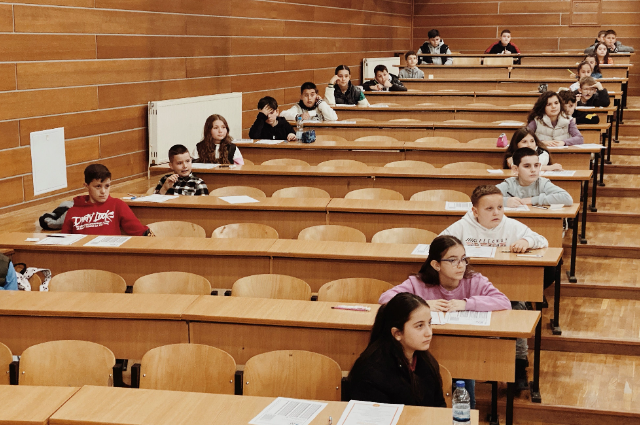
"A report card can measure marks, but it can never measure a child's mind."
Every year in India, millions of students enter classrooms carrying not only books and notebooks but also invisible burdens. Behind confident smiles, school uniforms, college bags and examination hall tickets lie silent battles with anxiety, fear, exhaustion and self-doubt. While academic success has always been valued in Indian society, the pressure to achieve perfection has quietly evolved into a mental health crisis that demands urgent attention.
As someone who has observed this reality closely in Mumbai and through the experiences of people around me, I have seen how conversations among students often revolve around marks, entrance examinations, career choices and expectations rather than happiness, creativity or emotional well-being. This silent suffering rarely makes headlines until it ends in tragedy. By then, it is already too late.
Academic pressure is no longer merely an educational concern; it has become a public health issue affecting the emotional, psychological and physical well-being of young people across the country.
One of the biggest contributors to this crisis is India's examination-centred education system. From an early age, students are taught that good marks determine their future. Success is often defined by percentages, ranks and entrance examination scores instead of curiosity, creativity or character. Whether preparing for board examinations or highly competitive tests such as JEE, NEET, CUET, CAT or UPSC, students spend years in an environment where every examination feels like a life-changing event.
Learning gradually becomes memorising. Understanding gives way to rote learning. Education, which should encourage exploration and independent thinking, often turns into a race where everyone is expected to cross the same finish line. In this relentless competition, many students begin to believe that their worth depends entirely on academic performance.
The pressure does not end at school. India's coaching culture has created an additional layer of stress. Thousands of students attend coaching classes before sunrise or late into the evening after school. Their days are packed with lectures, assignments, mock tests and constant evaluations. Sleep becomes a luxury, leisure disappears, and hobbies are slowly abandoned.
Many students relocate to educational hubs, leaving behind the emotional security of home. Cities such as Mumbai, Delhi, Pune, Hyderabad, Bengaluru and coaching centres like Kota attract ambitious students from every corner of the country. However, alongside new opportunities come loneliness, homesickness and the overwhelming responsibility of living independently. Away from family support, many struggle silently with emotional distress while trying to meet impossibly high expectations.
Family expectations, although often rooted in love and concern, can unintentionally become another source of emotional pressure. Parents naturally want the best for their children. They invest time, money and hope in their education. Expensive coaching classes, tuition fees and years of sacrifice create an emotional expectation that children must succeed at any cost.
In many Indian households, careers in engineering, medicine, civil services or other traditionally respected professions continue to be viewed as symbols of success. Students who dream of pursuing literature, fine arts, design, music, sports or vocational careers sometimes feel compelled to suppress their passions. Instead of asking, "What makes you happy?" they are often asked, "What will people say?"
This fear of social judgment has become deeply embedded in our culture. The phrase "Log kya kahenge?" continues to influence important decisions in countless families. For many students, failure is not frightening because of the examination itself but because they fear disappointing their parents, relatives, neighbours and society.
Social media has further intensified these pressures. Every day, students are exposed to carefully curated success stories, admission announcements, achievement posts and celebration photographs. While these moments reflect genuine accomplishments, constant comparison creates unrealistic standards. Many young people begin to feel inadequate simply because they compare their everyday struggles with someone else's highlight reel.
The emotional consequences are becoming increasingly visible.
Anxiety, depression, panic attacks, burnout and chronic stress are no longer isolated experiences. Many students experience constant worry, racing thoughts, difficulty concentrating and overwhelming fear of failure. Some lose interest in activities they once loved. Others withdraw from friends and family, believing no one will understand their pain.
The body also begins to speak when the mind is overwhelmed. Persistent headaches, unexplained fatigue, disturbed sleep, poor appetite, stomach problems and difficulty concentrating often become warning signs of emotional distress. Academic performance, ironically, begins to decline precisely because the pressure has become unbearable.
Behavioural changes deserve equal attention. A cheerful student may suddenly become unusually quiet. Someone who once enjoyed conversations may begin avoiding social interaction. Irritability, emotional outbursts, hopelessness or a complete loss of motivation should never be dismissed as laziness or lack of discipline. These may be silent cries for help.
Unfortunately, many students continue suffering because mental health remains surrounded by stigma. Emotional struggles are sometimes misunderstood as weakness, irresponsibility, or insufficient determination. Instead of receiving empathy, students are told to "be stronger," "study harder," or "stop overthinking." Such responses unintentionally discourage honest conversations and prevent young people from seeking professional support.
This situation becomes even more difficult for students who already experience discrimination. Young people from socially marginalised communities, economically disadvantaged backgrounds or LGBTQ+ communities often face additional prejudice, bullying and exclusion. Their emotional burden extends beyond academics, making mental well-being even more difficult to maintain.
Although awareness about mental health has improved in recent years, access to professional support remains uneven. Many schools and colleges still lack qualified counsellors despite growing recognition of students' psychological needs. The shortage of trained mental health professionals means that countless students who require timely intervention never receive it.
Yet this crisis is not without hope.
Meaningful change begins when we stop measuring children only by marks and begin valuing them as complete human beings.
Parents can play an extraordinary role by replacing fear with encouragement. A child who feels accepted regardless of examination results develops confidence that no report card can provide. Conversations at home should focus not only on academic progress but also on emotional well-being, friendships, interests and personal growth.
Teachers, too, hold tremendous influence. A compassionate educator who notices behavioural changes, encourages questions without humiliation and creates a psychologically safe classroom can transform a student's educational journey. Schools should become places where students feel supported rather than constantly judged.
Educational institutions must integrate mental health education into everyday learning instead of treating it as an occasional awareness programme. Professional counselling services, peer support groups, stress management workshops and emotional literacy should become essential components of student development. Equally important is reducing excessive academic burden while promoting critical thinking, creativity, collaboration and life skills in line with the broader vision of holistic education.
Students themselves also need practical strategies for protecting their mental health. Maintaining realistic study schedules, taking short breaks, engaging in physical exercise, practising yoga or meditation, spending time with supportive friends, pursuing hobbies and limiting unhealthy social media comparison can significantly improve emotional resilience. Most importantly, seeking professional help should never be viewed as a sign of weakness. Asking for help is an act of courage.
As a society, we must redefine what success truly means. A fulfilled, emotionally healthy young person contributes far more to the nation than someone who achieves high marks while silently carrying unbearable emotional pain. Education should nurture compassionate, resilient, creative and thoughtful citizens—not individuals who constantly fear failure.
The true purpose of education is not simply to produce successful professionals but to help human beings live meaningful, balanced and dignified lives.
India has always believed that education has the power to transform lives. That belief remains true. However, education can fulfil its purpose only when it protects both the intellect and the mind. Marks may open doors, but mental well-being enables people to walk through them with confidence.
The silent crisis of academic pressure can no longer remain silent. Every student deserves to be heard before reaching breaking point. Every parent deserves the knowledge to recognise emotional distress. Every teacher deserves the resources to support struggling learners. And every young person deserves the freedom to dream, learn, fail, recover and succeed without sacrificing their mental health.
When we begin valuing peace of mind as much as academic achievement, we will not simply create better students—we will build a healthier, kinder and stronger India.