
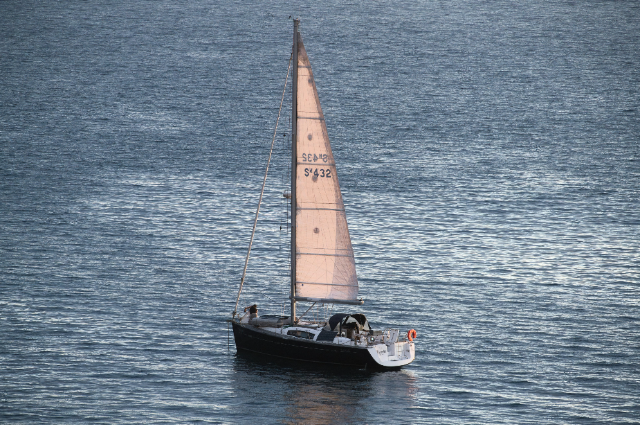
Imagine being sixteen years old and standing alone on a yacht in the middle of an ocean so vast that there is no shoreline in sight, no familiar face nearby and no easy way home. Around you are towering waves, unpredictable winds and thousands of kilometres of open water. For most people, such a picture belongs to an adventure film. For Jessica Rose Watson, it became her reality. On 18 October 2009, the Australian teenager sailed out of Sydney Harbour aboard her bright-pink yacht, Ella’s Pink Lady, beginning a voyage that would keep her at sea for 210 days. Her ambition was extraordinarily simple to describe and extraordinarily difficult to achieve: she wanted to sail solo, nonstop and unassisted around the world. At sixteen, she became the youngest person at the time to accomplish that feat, returning to Sydney on 15 May 2010 after travelling more than 22,000 nautical miles and surviving seven major knockdowns. Yet reducing Jessica Watson’s life to a sailing record would miss the most important part of her story. Her journey was shaped long before she reached the starting line. It was shaped by a childhood in which the sea was part of everyday life, by a family willing to take an unconventional path, by a young girl who learned to transform fear into curiosity, and by years of preparation that turned an apparently impossible dream into a carefully planned expedition. Her story is therefore not merely about a teenager who crossed oceans. It is about how courage is built quietly, how confidence grows through preparation, and how an ordinary person can sometimes accomplish something extraordinary simply by deciding to begin.
Jessica was born on 18 May 1993 on Queensland’s Gold Coast, the second of four children of Roger and Julie Watson, a New Zealand-born couple who moved to Australia in 1987. Her childhood was far removed from the conventional picture of growing up in one permanent home. The Watson family spent years living aboard a 16-metre cabin cruiser, and the children were educated through distance learning while life unfolded around them on the water. Later, the family also lived for a period in a specially designed double-decker bus. There was adventure in this unusual upbringing, but there was also something more valuable: an early lesson in adaptability. Jessica and her siblings—Emily, Tom and Hannah—grew up learning that home could be wherever the family was, and that unfamiliar surroundings did not necessarily have to be frightening. Sailing became part of family life rather than a distant sporting ambition. Jessica has recalled that she learned to sail with her family when she was eight, although she was initially timid and frightened by the experience. That detail makes her later achievement even more meaningful. Courage, in her story, did not begin with the absence of fear; it began with learning to live alongside it. Her childhood also included an important educational challenge. Jessica has spoken publicly about overcoming dyslexia, while her schooling through distance education required independence and discipline. Years later, she would become a storyteller, author and public speaker, turning experiences that once seemed difficult into strengths. Her family did not simply give her a boat and a dream; they gave her an environment in which curiosity, responsibility, exploration and self-reliance could grow together.
The dream of sailing around the world did not arrive suddenly. When Jessica was about eleven, her mother read her and her siblings a bedtime story about Jesse Martin, the Australian sailor who had completed a solo circumnavigation of the world as a teenager. The story planted a question in Jessica’s mind: if another ordinary young person could attempt something so extraordinary, why could she not dream about doing it too? What began as curiosity gradually became a serious ambition. By twelve, the idea of sailing around the world had taken root, and Jessica began treating it not as fantasy but as a project that demanded knowledge, training and discipline. Her parents supported the dream while understanding the enormous responsibility it involved. Jessica studied navigation, weather and marine safety and accumulated practical experience at sea. The preparation was as important as the eventual voyage because sailing alone across the world requires much more than physical courage. A solo sailor must understand weather systems, navigation, boat maintenance, communications, emergency procedures and the psychology of isolation. Jessica also had to learn how to remain calm when conditions became unpredictable. The sea could not be negotiated through confidence alone; it demanded competence. This distinction is one of the most valuable lessons in her biography. Dreaming was only the beginning. Jessica had to earn the confidence required to pursue the dream. Her preparation also demonstrated something that is often forgotten when extraordinary achievements are celebrated: spectacular moments usually rest upon years of invisible work. The world would eventually see the pink yacht crossing the finish line in Sydney. It would not see every hour of training, every technical lesson, every difficult conversation and every moment in which a teenager had to decide that the dream was still worth pursuing. Before Jessica Watson became a symbol of courage, she was a young person learning how to become responsible for her own ambition.
But the road to Sydney Harbour was almost destroyed before the official voyage even began. During a sea trial in 2009, Ella’s Pink Lady collided with a 63,000-tonne bulk carrier. The accident caused severe damage to the yacht and destroyed its mast. For a teenager preparing for one of the most demanding sailing challenges imaginable, it was a devastating setback. It also intensified the criticism that had surrounded her expedition from the beginning. Jessica’s age had already attracted questions from sections of the public and media. Was sixteen too young? Was the journey too dangerous? Could a teenager cope with months of isolation, violent weather and the responsibility of keeping herself alive thousands of kilometres from land? After the collision, those questions became even louder. To critics, the accident appeared to confirm their fears. To Jessica, however, it became another lesson in preparation and resilience. She returned to the task of repairing the yacht rather than allowing one frightening experience to define the entire dream. The incident also exposed an important truth about ambition: determination does not mean pretending that failure or danger does not exist. It means confronting what has gone wrong, learning from it and deciding what must be done next. Jessica’s response was not reckless bravado. She worked with her support team, examined what had happened and continued preparing. That support network was crucial. Although she would eventually spend 210 days alone on the ocean, she never reached the starting line alone. Behind the teenager at the helm stood her parents, coaches, mentors, technical specialists and supporters who had helped transform an audacious idea into a professional sailing campaign. This distinction matters because Jessica’s story is sometimes told as though she simply challenged the world by herself. In reality, her independence was strengthened by preparation and by people who helped her become capable of handling responsibility.
On 18 October 2009, the preparation finally became reality. Jessica sailed from Sydney Harbour aboard the 34-foot Ella’s Pink Lady, beginning a journey across some of the most demanding waters on the planet. Her route took her across the Pacific, around Cape Horn, through the Atlantic, around the Cape of Good Hope, across the Indian Ocean and back towards Australia. The geography alone was intimidating, but the greater challenge was that she had to manage the boat, navigation, weather, equipment and her own emotions without another person physically beside her. The ocean became both workplace and home. During the Pacific crossing, severe weather tested the yacht and its young skipper. Later came the Southern Ocean, Cape Horn and the Atlantic, where isolation could become as demanding as physical danger. Jessica experienced rough seas, equipment problems, fatigue and the constant responsibility of remaining alert. Ella’s Pink Lady was knocked down repeatedly during the voyage, yet the yacht’s design allowed it to recover. Jessica herself had to recover each time emotionally as well. Her days were not composed only of dramatic storms. There were also quiet stretches filled with routine: checking equipment, managing supplies, navigating, eating, sleeping when possible and maintaining the systems on which her life depended. She stayed connected with the outside world through communications and her online journal, allowing supporters to follow a journey that otherwise would have been almost unimaginable. She also discovered moments of beauty within the isolation—open skies, marine life, stars and the extraordinary stillness of the ocean. This contrast became central to her experience. The same sea that could frighten her could also leave her speechless with wonder. The voyage therefore became more than an endurance test. It became an education in uncertainty, patience and perspective.
The most demanding lessons often arrived when the ocean refused to cooperate. The Southern Ocean brought powerful weather, enormous waves and conditions that required constant attention. Cape Horn, one of the most famous and feared passages in sailing history, became a psychological milestone as well as a geographical one. Once she had passed it, Jessica still had thousands of nautical miles ahead. The Atlantic brought another form of difficulty: solitude. There were long periods when the world seemed reduced to water, sky and the small yacht beneath her feet. Then came the Cape of Good Hope and the Indian Ocean, where exhaustion and mechanical wear became increasingly important. After months at sea, equipment had been exposed to relentless conditions, while Jessica herself had been living with interrupted sleep and continuous responsibility. Repairs were no longer occasional inconveniences; they were part of survival. A torn sail, damaged equipment or a malfunctioning system could become a serious problem when there was nobody nearby to take over. Yet the voyage also revealed the strength of routine. Jessica had to solve one problem at a time. She could not afford to become overwhelmed by the thousands of miles still ahead. Her task was often simply to deal with the next wave, the next repair, the next weather system and the next decision. That is perhaps one of the most powerful lessons her story offers to people far beyond sailing. Difficult goals can become unbearable when viewed all at once. They become manageable when broken into the next necessary step. Jessica’s experience also changed her understanding of solitude. In later reflections, she explained that being alone did not necessarily mean being lonely because she remained connected to her team and was driven by a strong sense of purpose. Her journey showed that resilience is not the absence of vulnerability. It is the ability to continue functioning, thinking and hoping while vulnerability is present.
On 15 May 2010, after 210 days at sea, Jessica Watson sailed back into Sydney Harbour. The return became one of the defining public moments of her life. Thousands of people gathered to welcome her, and Australia watched as the young sailor brought Ella’s Pink Lady home. The teenager who had once been questioned for being too young had completed the voyage she had spent years preparing for. The then Australian Prime Minister Kevin Rudd publicly welcomed her as an extraordinary Australian, while Jessica herself resisted being turned into a distant symbol. Her response was characteristically grounded: she described herself not as a hero but as an ordinary person who had a dream, worked hard and proved that something was possible. That attitude is important because it prevents her achievement from becoming a story about superhuman courage. Jessica did not become extraordinary because she was born without fear. She became extraordinary because she continued working despite fear. Her achievement was also accompanied by a technical debate over the traditional distance criteria sometimes applied to a circumnavigation. Because her route remained within a relatively narrow range of latitudes, it did not meet the 21,600-nautical-mile criterion used by some authorities as the equivalent of travelling around the Earth at the equator. Nevertheless, the voyage was widely recognised as a historic achievement, and Jessica was named Young Australian of the Year in 2011. In 2012, she received the Medal of the Order of Australia for her service to sailing and youth. Her achievement had already moved beyond the boundaries of sport. It had become a story about preparation, youth, courage and the ability to remain committed when other people doubt the possibility of what you are attempting.
The end of the voyage, however, was not the end of Jessica Watson’s story. In fact, what followed reveals another dimension of her character: she did not spend the rest of her life trying to repeat the same extreme achievement. She continued sailing and competing, but she also pursued education and a professional career. In 2011, she competed in events including the Mini Fastnet and the Round the Island Race, and later that year she took part in the Sydney to Gold Coast Yacht Race. In December, at eighteen, she skippered a young crew in the Sydney to Hobart Yacht Race; the team finished second in its class and became the youngest crew to compete in the race at that time. These experiences showed that her identity extended beyond the single historic voyage. Jessica subsequently studied marketing and communications and went on to complete an MBA. She became involved with Deckee, a marine technology and community platform, and later built a professional career away from the spotlight of extreme sailing. Her official biography now describes her as a management consultant in Deloitte’s Human Capital consulting team, working on areas including technology adoption, transformation and team performance. She also became a Youth Representative for the United Nations World Food Programme, travelling to places including Laos and refugee camps in Jordan and Lebanon and speaking about the importance of food security and education. Her life therefore developed in a direction that is especially meaningful: the teenager who once crossed oceans began helping other people think about challenges in their own lives. Her bestselling memoir, True Spirit, transformed her experience into a written story, while a later middle-grade novel, Indigo Blue, reflected her continuing relationship with storytelling. In 2023, her voyage reached a new generation through Netflix’s feature film True Spirit, based on her memoir.
Perhaps the most enduring part of Jessica Watson’s biography is not the number of nautical miles she travelled, the storms she survived or the records associated with her name. It is the way her story changes meaning as we look at it from different stages of her life. At sixteen, her challenge was to cross the ocean. As an adult, her challenges became education, career, leadership, relationships, humanitarian work and the ordinary responsibilities of building a meaningful life. She has spoken about the importance of being prepared, starting before everything feels perfect and understanding that difficult goals are supposed to challenge us. She has also reflected on the need to stop and appreciate the journey rather than becoming so focused on the destination that the experience itself disappears. That may be the deepest lesson hidden inside the story of Ella’s Pink Lady. We often imagine courage as one dramatic decision, but Jessica’s life suggests something quieter: courage is also preparation, discipline, patience and the willingness to begin again after something goes wrong. Her journey began with a bedtime story and a child wondering why an ordinary person could not attempt something extraordinary. Years later, that question had carried her across oceans and into history. Yet her greatest message may be that extraordinary lives do not require extraordinary beginnings. Jessica was a child who was initially afraid of sailing, a student who faced dyslexia, a teenager whose j was publicly questioned, and a young woman who had to learn how to turn an enormous dream into thousands of practical decisions. She did not wait until fear disappeared. She learned how to sail with it. And that is why her story continues to speak to anyone standing before a difficult beginning. The horizon may look impossibly far away, but every journey begins with one decision: to prepare, to begin, and to keep going. As Jessica has said, “You don't have to be someone special to achieve something amazing. You've just got to have a dream, believe in it, and work hard.”
References:
- “The Teenager Who Spent 210 Days Alone at Sea and Shocked the World.” News18.
- “Meet Jessica Watson: The 16-Year-Old Sailor Who Survived Brutal Oceans Alone for 210 Days After a Terrifying Cargo Ship Collision.” The Times of India.
- “Jessica Watson Is Still Dreaming Big.” Vogue Australia.