
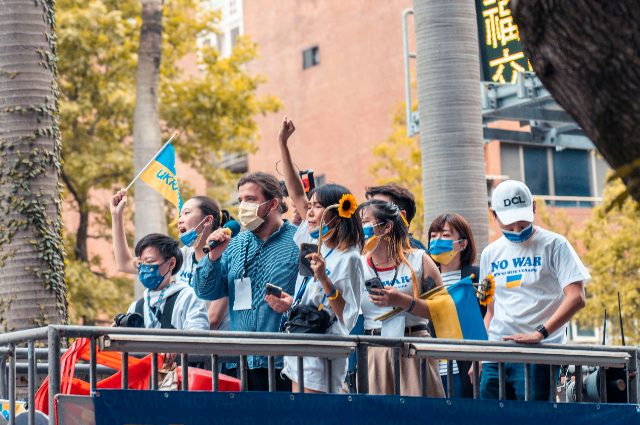
A relatively small feminist movement that emerged in South Korea has suddenly become part of an American political conversation thousands of kilometres away. Known as 4B, the movement is built around four deliberate refusals: no marriage, no childbirth, no dating and no sex with men. Its roots lie in South Korea’s intense gender conflict, where younger women have challenged traditional expectations surrounding relationships, motherhood, beauty, work and family life. For years, however, 4B remained largely unfamiliar outside Korean feminist and online communities. That changed dramatically in November 2024, after Donald Trump won the United States presidential election. Social-media posts encouraging American women to consider 4B began spreading rapidly, particularly on TikTok and other platforms. Some women presented the movement as a response to concerns about reproductive rights, gender equality and the political direction of the country. The sudden visibility made 4B appear, at least online, to be moving from a relatively marginal South Korean movement into a global feminist symbol. Yet the American conversation was never an exact copy of the Korean movement. The political circumstances were different, the histories were different, and the meaning attached to personal refusal was different. What began as a response to specific conditions in South Korea was being interpreted through America's own arguments about abortion, marriage, sexuality and women's autonomy. Social media made the transition almost instantaneous, allowing an idea developed in one cultural setting to be detached from its original context and given new political meanings elsewhere. The result was not simply a debate about whether women should date or marry men. It became a larger argument about feminism, politics, gender, autonomy, reproductive choice and protest. It also raised an uncomfortable question about what happens when a movement born from one society's gender politics is transplanted into another. That is where the story of 4B becomes more complicated than the viral posts suggest.
What Exactly Is 4B?
The name 4B refers to four Korean terms beginning with “bi”, commonly translated in this context as “no” or “refusal”. The four principles are bihon, meaning no marriage; bichulsan, meaning no childbirth; biyeonae, meaning no dating; and bisekseu, meaning no sex with men. Together, they represent a deliberate rejection of the heterosexual relationship and family structures that some South Korean feminists view as deeply connected to gender inequality. The movement is therefore different from simply being unmarried, child-free or single because of personal circumstances. Its significance lies in understanding those choices as conscious forms of feminist refusal. The movement developed through online feminist spaces rather than around one universally recognised founder or organisation. Its emergence is generally placed in the mid-2010s, when South Korea was experiencing a renewed wave of digitally organised feminist activism. One important online space was Megalia, a controversial feminist community known for “mirroring” misogynistic language in an attempt to expose its violence and absurdity. The community became part of a broader digital environment in which young women exchanged personal experiences, feminist arguments and strategies for confronting misogyny. During this period, ideas associated with refusing marriage, childbirth, dating and sex with men began circulating among some feminist communities. The movement also developed alongside the Escape the Corset campaign, through which women challenged strict beauty expectations by rejecting makeup, cosmetic procedures and other forms of compulsory feminine presentation. These movements shared an emphasis on bodily autonomy and resistance to social expectations. 4B nevertheless developed its own focus on heterosexual relationships, reproduction and marriage. It was not a conventional membership organisation requiring every feminist to follow the same lifestyle. Rather, it became a framework through which some women understood personal decisions as collective political resistance. That distinction matters because describing 4B simply as a campaign telling all Korean women to avoid men obscures its decentralised nature. At its centre was a question about whether women could create meaningful lives outside institutions they believed reproduced unequal gender roles. The movement therefore combined personal choice with a broader critique of the social structures surrounding women.
The South Korean Context: Why Did 4B Emerge?
To understand why 4B became meaningful to some South Korean women, it is necessary to look beyond the four refusals themselves. South Korea has experienced extraordinary economic development, but that modernisation has not erased gender inequality from everyday life. Women have faced persistent disparities in employment, pay, career progression and domestic responsibilities. South Korea has also recorded the highest gender pay gap among OECD countries for many years, making economic inequality an important part of the country's gender debate. Marriage can bring additional expectations around childcare, housework and caring for family members, responsibilities that have often fallen disproportionately on women. Younger women have therefore increasingly questioned whether the traditional path from education to employment to marriage and motherhood provides genuine equality. At the same time, feminist activism expanded rapidly through digital communities during the 2010s. Online misogyny, sexual harassment and gender-based abuse became central concerns within these spaces. The 2016 murder of a young woman near Gangnam Station became a particularly powerful symbol after the attacker reportedly said that women had ignored him. The killing prompted widespread feminist mourning and protest, with many women arguing that misogyny could not be dismissed as the behaviour of one disturbed individual. Digital sex crimes added another layer to these fears, including hidden-camera offences, the distribution of intimate images and later scandals involving online sexual exploitation. Feminist protests also challenged beauty standards that demanded considerable time, money and emotional effort from women. Meanwhile, the country's demographic crisis created another source of tension. South Korea's fertility rate fell to exceptionally low levels, reaching 0.72 in 2023, but the demographic decline should not be treated as proof that 4B caused it. Low fertility has many causes, including housing costs, employment insecurity, delayed marriage, childcare pressures and changing attitudes towards family life. The important point is that some women interpreted government efforts to encourage marriage and childbirth as another form of pressure on their bodies and futures. The so-called “pink birth map”, released in 2016 and criticised for mapping areas according to the number of women of reproductive age, became a symbol of this resentment. For some feminists, the issue was no longer simply whether women could succeed within existing institutions. It was whether those institutions deserved their participation at all. In that environment, refusing marriage, motherhood, dating and sex could be understood not as resignation, but as a deliberate rejection of a social system that many participants believed had repeatedly failed them.
The American version of the 4B conversation gained extraordinary visibility after the November 2024 presidential election. Donald Trump's victory prompted intense debate among some American women about reproductive rights, gender politics and the future of women's autonomy. On TikTok, X and other social-media platforms, posts encouraging women to consider 4B circulated rapidly. Some presented abstinence from relationships with men as a form of political resistance, while others treated the movement more loosely as a decision to remain unmarried or child-free. The difference between these interpretations was significant. In South Korea, 4B had developed through years of specific feminist debates about gender inequality, digital violence, marriage, reproduction and state demographic policy. In the United States, the movement entered a political environment heavily shaped by the debate over abortion rights and the consequences of the Supreme Court's 2022 Dobbs decision. For some American women, therefore, 4B became less a literal commitment to all four principles and more a symbolic language for refusing expectations they associated with conservative politics. Social media amplified the most dramatic version of that message because simple declarations were easier to share than a complicated history. Critics consequently argued that American discussions sometimes reduced 4B to a fashionable online trend without understanding its Korean origins. The political reality was also more complicated than a simple women-versus-men story. Many American women voted for Trump in 2024, showing that women were not politically united in their response to his return to the presidency. Gender alone could not explain the election result. The viral adoption of 4B therefore represented the reaction of particular groups of women rather than a collective decision by American women as a whole. Some saw it as serious feminist resistance, while others considered it performative, unrealistic or politically simplistic. What mattered was that a movement created in one country's specific gender conflict had suddenly become a vocabulary for another country's political anxieties. The American adoption of 4B therefore became less a direct continuation of the Korean movement and more a new interpretation of it.
Enter the Professor: The Person Who Complicated the Narrative
The academic perspective becomes important precisely because viral social media tends to make complicated movements look simple. The professor and scholar whose analysis enters this discussion helps shift attention away from the catchy language of “four no's” and towards the historical conditions that produced them. Academic research on 4B shows that the movement cannot be separated from South Korea's particular history of gender relations, feminist activism, labour inequality, reproductive politics and digital culture. Rather than treating 4B as a universal formula that can simply be imported into another country, this perspective asks what the movement actually meant to the women who developed and practised it. That distinction changes the American conversation considerably. A refusal that emerged from experiences of Korean marriage expectations, workplace inequality, digital sex crimes and pronatalist pressure cannot automatically carry the same meaning in the United States. The professor's analysis also highlights the importance of understanding 4B as a form of political refusal rather than merely a lifestyle trend. Women participating in such practices may see personal decisions as connected to wider structures of power. At the same time, academic analysis does not require accepting every claim made in the name of 4B. The movement itself has been criticised for its politics of exclusion, its relationship to biological essentialism and the limits of individual withdrawal as a strategy for structural reform. This is precisely why scholarly examination matters. It can hold two ideas together at once: that women's refusal can be politically meaningful and that political meaning does not automatically make a movement universally applicable. The professor's intervention therefore complicates the American narrative without necessarily dismissing 4B. It asks readers to distinguish between learning from a movement and reproducing a simplified version of it. In a social-media environment where a Korean feminist movement can become an American political slogan within days, that distinction is particularly important. The more closely 4B is examined, the less it resembles a single, universally agreed feminist doctrine.
The Biggest Internal Debate: Who Does 4B Include?
One of the most difficult controversies surrounding 4B concerns gender identity and the question of inclusion. Some critics argue that strands of South Korean radical feminism associated with the movement have been influenced by gender-essentialist ideas that define womanhood primarily through biological sex. This has generated accusations of trans-exclusionary politics and criticism from transgender, non-binary and intersectional feminists. The debate is not simply a disagreement about terminology. It reflects a much larger divide within contemporary feminism over who should be included in feminist organising and how gender itself should be understood. Some feminists place greater emphasis on biological sex and the material consequences of being female, while others argue that feminism must include transgender and non-binary people whose experiences are also shaped by gender discrimination. The disagreement becomes particularly complicated when a movement is explicitly organised around relationships between women and men. Questions arise about whether transgender women can fully participate, how transgender men should be understood within the framework and whether the original four refusals can be separated from the movement's broader ideas about womanhood. These debates have sometimes become extremely hostile online, where complex feminist disagreements are quickly reduced to labels. Supporters of 4B may regard criticism as an attempt to dismiss women's experiences, while critics may see exclusionary ideas as incompatible with an inclusive feminist movement. Neither reaction captures the entire debate. Feminism has never been a single ideological tradition, and disagreements over sex, gender, sexuality, class and race have existed across feminist movements for decades. The controversy surrounding 4B therefore reveals something important about the movement itself: it does not fit neatly into one universal political category. Criticising exclusionary tendencies is not the same as dismissing every woman who chooses not to marry or date men. Similarly, recognising women's autonomy does not require accepting every ideological claim made by participants. The trans-inclusion debate ultimately demonstrates how difficult it is to create a feminist movement around a single definition of womanhood in an increasingly diverse political landscape.
Protest or Personal Retreat?
The deeper question behind 4B is whether withdrawal can genuinely change society. Choosing not to marry, have children, date or have sex with men can certainly transform an individual's life. It can give some women greater control over their time, money, bodies and emotional energy. But personal freedom and structural change are not necessarily the same thing. Supporters argue that if enough women reject marriage and reproduction, institutions built around traditional gender roles may eventually be forced to change. In this interpretation, refusal becomes a form of collective economic and reproductive pressure. Marriage, unpaid domestic labour and motherhood are not viewed as purely private matters because they are connected to wider economic and social systems. A woman who refuses to participate in those systems can therefore understand her decision as political. Critics, however, question whether individual withdrawal can reform workplaces, governments, family law or unequal divisions of labour. They argue that institutions generally require organised political action, legislation and collective campaigns to change. There is also a practical concern that complete withdrawal from heterosexual relationships may provide safety and autonomy for some women while leaving others isolated. Not every woman experiences relationships, marriage or motherhood in the same way. Some may reject patriarchal expectations while still believing that relationships themselves can be transformed. Others may conclude that the safest or most empowering option is to step away entirely. Both positions can exist without cancelling the other. 4B is powerful precisely because it challenges the assumption that participation in traditional institutions is inevitable. Yet its limitations are equally important because refusing an institution is not automatically the same as dismantling it. The tension between personal autonomy and collective reform is therefore not a weakness unique to 4B. It is one of the oldest questions in political activism: whether meaningful change begins by transforming the system from within or by withdrawing consent from it altogether.
China and the Globalisation of 4B
The international story of 4B does not end in the United States. Its ideas have also attracted attention among women in China, where feminist activism operates under very different political and digital conditions. China's tightly controlled online environment can make open political organising difficult, and feminist discussions may face censorship or restrictions. Yet ideas can still travel through digital networks, private communities and coded language. Some Chinese feminists have developed or discussed frameworks influenced by 4B, including the broader 6B4T concept, which extends the original refusals into areas such as consumption, cultural practices and solidarity among unmarried women. This demonstrates how feminist ideas can change when they cross borders. A movement created in South Korea does not arrive in another country as a perfectly preserved package. Instead, women reinterpret it according to their own experiences of work, family, sexuality, beauty standards, political restrictions and economic pressures. That process can create new forms of solidarity, but it can also erase important historical differences. The gender problems experienced by women in South Korea are not identical to those experienced by women in China, the United States or India. Treating them as interchangeable would therefore weaken rather than strengthen transnational feminism. Social media makes this challenge especially visible because algorithms reward short, emotional and easily recognisable messages. The four refusals can be understood literally by some people and symbolically by others. Some may adopt particular principles without identifying themselves as part of a movement at all. Others may use 4B as a language for questioning marriage, motherhood or heterosexual relationships without following every principle. This makes it difficult to determine whether 4B is genuinely becoming a global movement or simply becoming globally visible online. Renewed attention should not automatically be interpreted as mass participation. What is undeniable, however, is that the movement has crossed the cultural boundaries within which it originally developed. Its journey from South Korean feminist forums to American TikTok and Chinese feminist discussions shows how quickly ideas about gender and resistance can now travel across borders.
What 4B Really Tells Us
4B began in a specific South Korean context shaped by gender inequality, digital misogyny, feminist activism, reproductive politics and dissatisfaction with traditional expectations surrounding women. It later became an unexpected symbol in American political discourse, particularly after Donald Trump's 2024 return to the presidency. As it travelled, however, its meaning changed. In South Korea, it emerged from a particular history of feminist refusal; in the United States, it became connected to reproductive rights and political protest; elsewhere, it has been interpreted through different struggles over family, gender and autonomy. The professor's intervention matters because it reminds us that viral narratives rarely contain the full history of the movements they popularise. Understanding 4B requires more than repeating its four principles. It requires understanding why those principles became meaningful in the first place. The movement raises difficult questions about relationships, reproduction, gender, unpaid labour, bodily autonomy and political resistance. Its critics question whether personal withdrawal can produce meaningful structural change, while its supporters see refusal itself as a form of power. Its internal debates over trans inclusion also demonstrate that feminist movements are rarely ideologically uniform. Meanwhile, its growing visibility in China and other countries shows how quickly feminist ideas can move beyond their original borders. But global visibility should not be confused with a unified global movement. Millions of women are not suddenly following the same four rules simply because the phrase 4B is trending online. The more important development may be the willingness of women in different societies to question assumptions that once appeared unavoidable. The real question is not whether every woman should follow 4B, because there can be no universal answer to that. The more revealing question is why the idea of opting out has become compelling enough for so many women to discuss, debate and reinterpret. Perhaps the real story of 4B is not that women around the world are suddenly choosing to leave men behind, but that more women are asking what they are expected to give up in order to belong to the relationships, families and societies built around them.
References:
- “What Is South Korea’s 4B Movement and Why Indian Social Media Wants It Here: Explained” — Financial Express
- “When Women Withdraw: The Global Politics of Refusal — Feminist Resistance, Digital Diffusion, and the Transnational Life of 4B” — Yale Journal of International Affairs
- “A Look at the Feminist 4B Movement” — Deccan Herald
- “4B Movement: The ‘Four Nos’ That Scared Patriarchy — Is India Ready?” — The Times of India