
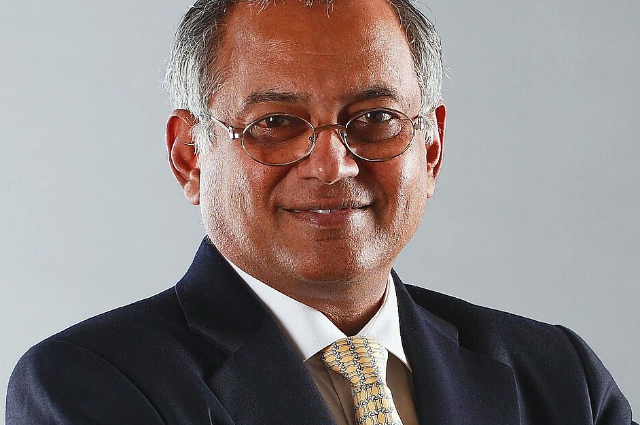
For nearly five decades, Venu Srinivasan has been an influential name in India's automobile industry. The grandson of TVS Group founder T. V. Sundaram Iyengar, he transformed a family business into a major automobile manufacturing group with an international presence. However, his career is now attracting attention for reasons beyond industrial achievements. Disagreements over family wealth, questions about corporate governance and his involvement in the ongoing power struggle within the Tata Group have brought his leadership under public scrutiny. Srinivasan took charge of Sundaram-Clayton in 1979 at 27, after studying mechanical engineering at the College of Engineering, Guindy, and completing a management degree at Purdue University in the United States. His early association with the family business reportedly included working as a mechanic during his college vacations. His leadership was tested during the labour unrest and financial difficulties at the Hosur plant in the late 1980s. In 1990, he ordered a three-month shutdown of the plant, which eventually led to a long-term wage settlement and a new industrial relations framework. He also introduced Japanese-style Total Quality Management (TQM), making quality improvement a central part of the company's operations. Sundaram-Clayton received the Deming Prize in 1998, followed by TVS Motor Company in 2002, becoming the first two-wheeler manufacturer in the world to receive the award. In 2019, Srinivasan became the first Indian industrialist to receive the Deming Distinguished Service Award for promoting quality management internationally. He also served as president of the Confederation of Indian Industry and received the Padma Shri in 2010 and Padma Bhushan in 2020. These achievements established his reputation as an industrialist, but the question of how he would eventually transfer ownership and control of his business empire to the next generation has become a far more complicated issue.
The present family dispute involves Srinivasan, his wife Mallika Srinivasan and their children, Lakshmi Venu and Sudarshan Venu. The disagreement is not simply about which child will manage which company; it concerns the economic ownership and valuation of the family's business interests. Lakshmi is associated with Sundaram-Clayton and serves as vice-chairperson of TAFE, while Sudarshan is chairman and managing director of TVS Motor Company. Mallika is the chairperson and managing director of TAFE. The wider TVS family underwent a restructuring process in 2020, when four branches of the founding family agreed to separate their business interests and reduce cross-holdings. However, Mallika and Lakshmi maintain that this arrangement cannot be treated as a completed settlement within Srinivasan's immediate family. At the centre of the present disagreement is a memorandum of understanding signed by the four family members on March 21, 2024. According to the position attributed to Venu and Sudarshan, the agreement formalised the division of business interests, with Lakshmi associated with Sundaram-Clayton and Sudarshan with TVS Motor. They maintain that the division was based on earlier valuations and financial obligations arising from the wider family settlement. Reports citing people familiar with their position have also stated that Lakshmi's proposed allocation included Mallika's interests in TAFE, Sundaram-Clayton's die-casting business and a Chennai residential property, while Sudarshan's allocation included TVS Holdings and associated debt. Mallika and Lakshmi, however, reject the suggestion that the 2024 MoU completed an economic settlement. They argue that it concerned trademarks, brand usage and non-compete obligations rather than the division of family wealth. They also maintain that TAFE belongs to the separate Amalgamations Group and should not be included in the settlement of the Venu family's economic interests. Mallika has publicly stated that both children have legitimate economic interests that must be recognised fairly. The central question is whether management responsibilities and business allocations can be treated as an agreement on ownership when the parties disagree about valuation, consent and the actual division of assets.
The disagreement became more visible following developments at Sundaram-Clayton in early 2026. Reports described governance tensions involving Lakshmi and her father, including changes in senior management, the resignation and subsequent withdrawal of the resignation of company secretary P. D. Dev Kishan, and the departure of chairman R. Gopalan from the chairmanship. In March 2026, Srinivasan returned as chairman and managing director of Sundaram-Clayton, nearly two years after stepping away as part of a succession arrangement. The episode raised questions about the division between professional management, boardroom authority and family control. Another important development occurred in April 2025, when disclosures indicated that Sudarshan Venu had become a significant beneficial owner of TVS Holdings through trust structures. Since TVS Holdings is the promoter holding company of TVS Motor, the ownership structure became an important part of the succession discussion. The disagreement subsequently moved towards legal preparation. Eight caveats were reported to have been filed on October 12 and 13 in Chennai's City Civil Court and Commercial Court, with four filings in each court. Venu and Sudarshan filed caveats naming Lakshmi, while Mallika and Lakshmi also filed caveats against Venu and other family members. A caveat under Section 148A of the Code of Civil Procedure is a precautionary legal filing that gives a person the right to be heard before a court passes an order on an application affecting their interests. It does not establish that a lawsuit has been decided or that any party has committed wrongdoing. On October 27, Mallika and Lakshmi reiterated their willingness to resolve the matter through transparent discussions and dialogue. They have maintained that no final economic settlement has been reached and that any fair division must involve valuation, mutual consent and recognition of ownership rights. The filings indicate that both sides are preparing for possible legal proceedings, even as the mother and daughter continue to publicly favour a negotiated resolution. The dispute has therefore developed into a question of succession that could have implications for the future ownership structure of the family businesses.
Srinivasan's influence, however, extends beyond the TVS Group. His association with the Tata Group began in August 2016, when Tata Sons appointed him as a non-executive director. His appointment came shortly before the removal of Cyrus Mistry as Tata Sons chairman in October 2016. Srinivasan was part of the committee involved in identifying Mistry's successor and was widely regarded as a supporter of Ratan Tata during the confrontation. His relationship with Ratan Tata subsequently developed into a more influential institutional position. He became associated with the leadership of the Tata Trusts, which collectively hold approximately 66 per cent of Tata Sons. He served as vice-chairman of major Tata trusts and became one of the important figures connecting the philanthropic institutions with the group's corporate governance structure. After Ratan Tata's death in October 2024, Noel Tata became chairman of Tata Trusts. The transition brought new differences over the group's governance and future direction. Srinivasan initially appeared aligned with Noel Tata. In October 2025, he joined Noel Tata and Vijay Singh in opposing the continuation of Mehul Mistry as a trustee. Srinivasan was also unanimously reappointed as a lifetime trustee of Tata Trusts in October 2025 and subsequently became vice-chairman of Sir Dorabji Tata Trust for a three-year term. However, the relationship between Srinivasan and Noel Tata later became strained over questions concerning the composition of the trusts, the future ownership structure of Tata Sons and whether the holding company should be listed on the stock exchanges. Srinivasan also approached the Maharashtra Charity Commissioner in April 2026 with a complaint concerning the composition of the Sir Ratan Tata Trust board. The complaint contributed to the regulator's decision to defer a Tata Trusts board meeting in May pending an inquiry. These developments showed that Srinivasan was no longer simply a respected industrialist holding positions in the Tata institutions; he had become an active participant in decisions affecting the group's governance. His growing involvement also placed him in the middle of disagreements that had previously remained largely within the boardroom.
The differences became particularly visible at the Tata Sons board meeting held on September 17, 2026. Two important issues were considered: the proposed reappointment of N. Chandrasekaran as executive chairman for another five years and the future listing of Tata Sons. Srinivasan supported both proposals, while Noel Tata opposed them. The board proceeded with the decisions by majority, although Noel subsequently challenged the process through which the resolutions had been passed. His objections were not limited to disagreement over the outcome. In a letter dated October 26 to the Tata Sons company secretary, copied to the directors, Noel questioned why Chandrasekaran's reappointment had not been clearly identified in the original or revised meeting agenda. He also sought the audio and video recordings, meeting minutes, voting records and details of the resolution filed with the Ministry of Corporate Affairs. He questioned whether the required selection committee and voting procedures under the company's Articles of Association had been followed. Another important issue involved Hanno One Warehousing, a company associated with Chandrasekaran's immediate family. Reports stated that TVS Motor had leased approximately 17.41 acres of land near its Hosur plant to Hanno One in June 2025 for 29 years. The company was reportedly developing a warehousing facility for TVS Motor. A separate industrial infrastructure arrangement near the Mysuru factory was also mentioned in Noel's letter. Tata Trusts had earlier stated that its trustees had not received disclosures from Srinivasan concerning the Hanno One and TVS Motor relationship and that it would consider an appropriate institutional response if the allegations were established. Noel subsequently questioned Srinivasan's participation in the Nomination and Remuneration Committee and the September 17 board meeting, arguing that the reported commercial relationship raised a potential conflict of interest while Chandrasekaran's reappointment was being considered. The Tata Group's position, as reported by the Indian Express, was that the venture was a private business associated with Chandrasekaran's son and that Chandrasekaran had informed relevant group companies. A group source also maintained that the transaction did not require disclosure to Tata Trusts. These competing positions have not established wrongdoing by Srinivasan. Nevertheless, they have raised serious questions about disclosure, fiduciary responsibility and the standards expected from a director nominated by charitable trusts. The issue is particularly significant because the decision involved the continuation of the group's executive chairman and the future structure of one of India's largest business houses.
The controversies surrounding Srinivasan are not limited to corporate governance and family succession. He has also faced a legal challenge connected with the alleged theft and unauthorised replacement of an antique peacock idol at Chennai's Sri Kapaleeswarar Temple during renovation work in 2004. Srinivasan was a member of a government-appointed committee overseeing the restoration. The Tamil Nadu Police registered an FIR in 2018, and the Idol Wing submitted a final report in 2022 naming him and others. Srinivasan denied involvement, maintaining that he was not responsible for the temple's day-to-day administration and had personally contributed Rs 70 lakh towards its restoration. On February 16, 2024, the Madras High Court quashed the FIR against him. The order was subsequently challenged before the Supreme Court. During the October 2026 hearings, the Tamil Nadu government argued that the original antique idol had existed before its alleged replacement. The matter continued to attract judicial attention, with further proceedings reported on October 29. No final finding of guilt against Srinivasan should be inferred from the pending challenge. His wider record also includes the Srinivasan Services Trust, established in 1996, which has worked in rural development, healthcare, education, women's empowerment and environmental conservation. His contribution to manufacturing and quality management remains significant. Yet professional achievements cannot remove the need for scrutiny when questions arise about family ownership, boardroom decisions and institutional accountability. The TVS dispute raises questions about whether a family business succession can be considered complete without a mutually accepted economic settlement. The Tata controversy raises a different question about whether a director's responsibilities to the institution and its beneficiaries must take priority over personal or professional associations. In both situations, the central issue is not simply who holds a position or controls a company, but how decisions are made, disclosed and justified. Srinivasan's industrial legacy is substantial, but his present challenges show that building an institution and ensuring transparent governance are two different responsibilities. His achievements deserve recognition, but they cannot place his decisions beyond examination. The eventual outcome of the family dispute, the Tata governance disagreement and the pending legal proceedings will determine how this chapter of his public career is judged.
References:
- “Venu Srinivasan Family Business Dispute Escalates to Chennai Court as Both Sides File Caveats” – The Times of India.
- “Inside the Multi-Front Battles Facing Venu Srinivasan” – Swarajya.
- “TVS Family Members File Caveats in Chennai Courts Amid Wealth Dispute” – Business Standard.
- “TVS Family Feud Reaches Court with Caveats; Mallika Srinivasan, Lakshmi Venu Push for Dialogue” – CNBC-TV18.
- “TVS Family Dispute: Mallika, Lakshmi Seek Amicable Resolution After Venu Srinivasan, Sudarshan File Caveats” – Moneycontrol.
- “TVS Motor’s Venu Srinivasan and Daughter Lakshmi File Caveats Against Each Other Over Inheritance” – The Economic Times.