
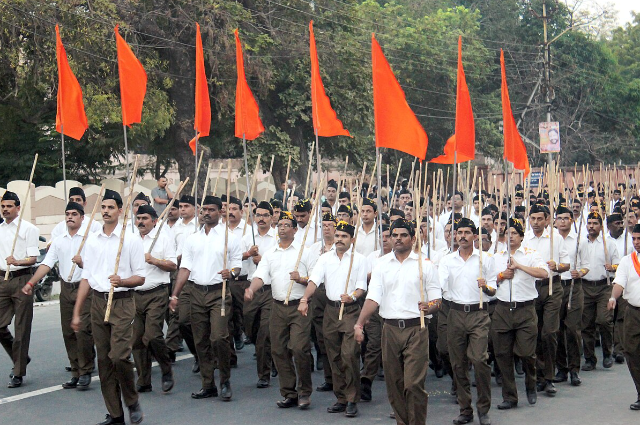
The Rashtriya Swayamsevak Sangh (RSS), one of India's most influential Hindu nationalist organisations, has completed a century of activity, becoming a significant force in the country's social, cultural and political landscape. Founded on September 27, 1925, in Nagpur, Maharashtra, by Dr Keshav Baliram Hedgewar, the organisation celebrated its centenary in 2025. Over the decades, it has developed from a small group of volunteers into a nationwide network with connections to organisations working in politics, education, labour, religion and social service. Its influence is particularly visible through its ideological relationship with the Bharatiya Janata Party (BJP), which has governed India under Prime Minister Narendra Modi. The RSS describes itself as a cultural and character-building organisation committed to strengthening society through discipline, service and national consciousness. However, its emphasis on Hindutva, or Hindu nationalist thought, has generated persistent debate about religious identity, minority rights and the relationship between religion and citizenship in a constitutional democracy. Supporters credit the organisation with promoting community service, cultural pride and social cohesion, while critics argue that its ideological vision privileges the Hindu majority and risks marginalising religious minorities. Understanding the RSS therefore requires more than examining its public activities or political connections. Its origins, organisational structure, historical record and competing interpretations of its role in India must be considered together.
The origins of the RSS can be traced to the political and social atmosphere of colonial India, particularly the debates surrounding Hindu identity, national unity and the struggle against British rule. Hedgewar, a physician from Nagpur who had been involved in nationalist politics, founded the organisation on Vijayadashami, a Hindu festival associated with the triumph of good over evil. Influenced by contemporary Hindu nationalist thinkers, including Vinayak Damodar Savarkar, Hedgewar believed that organising Hindu society and developing disciplined volunteers were essential to national regeneration. Other figures associated with the organisation's early formation included B.S. Moonje, Ganesh Damodar Savarkar, L.V. Paranjpe and B.B. Tholkar. The organisation's name was formally finalised on April 17, 1926, and its early activities developed around regular gatherings known as shakhas. The first such daily gathering was held at Mohitewada in Nagpur on May 28, 1926. These meetings introduced physical exercises, marching, stick drills, collective activities, discussions and ideological instruction. The saffron flag, or Bhagwa Dhwaj, became an important symbol of the organisation, while a shared routine was intended to develop discipline and a sense of collective identity. Hedgewar's approach placed considerable emphasis on long-term organisational work rather than participation in every major political campaign. During the freedom struggle, the RSS concentrated largely on expanding its volunteer network and promoting Hindu social consolidation instead of joining mass movements led by the Indian National Congress. Historians continue to examine this choice within the wider history of India's independence movement, including the organisation's relationship with colonial authority, Hindu nationalist politics and the competing strategies adopted by anti-colonial groups.
At the heart of the RSS is the shakha, a local gathering that provides the foundation for its organisational activities. Shakhas are generally held in neighbourhoods, parks and open grounds, where volunteers participate in physical exercises, games, drills, discussions, prayers and activities intended to develop discipline and social responsibility. The format and frequency of gatherings may vary, with weekly meetings and other local programmes complementing daily shakhas. At the national level, the organisation is headed by the Sarsanghchalak, a position currently held by Mohan Bhagwat, while Dattatreya Hosabale serves as its Sarkaryavah, or general secretary. Organisational responsibilities extend through regional and local networks, allowing activities to be coordinated across different parts of the country. The RSS uses the term swayamsevak for its volunteers and pracharak for full-time organisers who devote themselves to expanding and coordinating its work. Prime Minister Narendra Modi is among the prominent political figures whose early public and organisational experience included work as an RSS pracharak. Unlike a conventional political party, the RSS does not operate through the same public membership-registration model used by many formal organisations. Its recruitment and participation are largely organised through local contacts and attendance at shakhas, making its precise membership difficult to establish independently. The organisation has described itself as a volunteer movement rather than a political party, while researchers have examined the flexibility and influence of its wider network. Its structure enables it to maintain a grassroots presence, but the scale of that presence also raises questions about how its activities, finances and relationships with affiliated organisations can be understood by the public.
The RSS is also closely associated with the Sangh Parivar, a broad network of organisations that share elements of its Hindu nationalist outlook while working in different areas of public life. The BJP is the most politically prominent organisation in this network and emerged from the Bharatiya Jana Sangh, founded in 1951 with the involvement of leaders associated with the wider RSS movement. The Jana Sangh subsequently gave way to the formation of the BJP in 1980. Other organisations associated with the Sangh Parivar include the Akhil Bharatiya Vidyarthi Parishad (ABVP), which works among students; the Bharatiya Mazdoor Sangh (BMS), which operates in the labour sector; the Vishva Hindu Parishad (VHP), which focuses on religious and cultural issues; and Vidya Bharati, which is associated with educational institutions. Vanvasi Kalyan Ashram is another organisation working among tribal communities. These bodies have their own organisational structures and responsibilities, and they should not automatically be treated as interchangeable with the RSS itself. Nevertheless, their shared ideological background and overlapping networks have contributed to the RSS's reach beyond its own shakhas. The relationship between the RSS and the BJP is especially significant because it connects a volunteer-based ideological movement with electoral politics and the exercise of governmental power. The RSS maintains that it is not a political party, while its critics and political observers argue that its influence extends into policy debates, political mobilisation and the broader direction of the BJP. This relationship has also prompted questions about the degree of independence exercised by the two organisations. Their connection is therefore central to understanding how the RSS has become an influential participant in India's public life without functioning as an electoral party in its own name.
The organisation's historical record has also been shaped by three major bans imposed after independence. The first came on February 4, 1948, following Mahatma Gandhi's assassination by Nathuram Vinayak Godse on January 30 that year. Godse had previously been associated with the RSS, although the extent and nature of his later organisational affiliations have remained contested in public debate. The RSS denied institutional responsibility for the assassination. The government imposed the ban amid concerns about violence and the political atmosphere surrounding Gandhi's murder. The ban was lifted in July 1949 after the organisation accepted conditions that included adopting a written constitution. The second ban followed the declaration of the Emergency by Prime Minister Indira Gandhi in June 1975. During the Emergency, civil liberties were restricted, political opponents were detained, and several organisations faced state action. The RSS was among the organisations banned, and its network became involved in resistance to the Emergency, although the period also needs to be understood within the wider struggle over democratic freedoms. The ban was lifted after the Emergency ended in 1977. The third ban was imposed in December 1992, following the demolition of the Babri Masjid in Ayodhya on December 6. The demolition by a Hindu nationalist crowd triggered widespread communal violence across India. The RSS was among the organisations banned by the central government in the aftermath. The ban was subsequently lifted in June 1993 after the relevant legal review process. These episodes remain important to assessments of the organisation's relationship with the state, political mobilisation and communal tensions. They also illustrate why the RSS's history cannot be reduced either to its own account of national service or to the allegations made against it; each event requires examination of the contemporary evidence, official decisions and subsequent historical research.
Beyond politics and ideology, the RSS and organisations associated with it undertake activities in education, healthcare, rural development and disaster relief. Volunteers have participated in relief efforts during floods, earthquakes and other emergencies, helping distribute food, essential supplies and assistance to affected communities. During the COVID-19 pandemic, RSS volunteers and affiliated service organisations also took part in food distribution, mask provision, blood donation initiatives and other forms of assistance. Educational organisations associated with the wider network operate schools and programmes intended to promote learning and cultural values, while other initiatives focus on healthcare, community development and work among disadvantaged populations. Supporters point to these activities as evidence of the organisation's commitment to public service and its ability to mobilise volunteers at the grassroots level. They argue that regular participation in shakhas encourages discipline, cooperation and responsibility towards the community. The organisation also presents cultural awareness and social cohesion as central to its mission. However, these claims and contributions should be evaluated alongside questions about the social and ideological framework within which the work is undertaken. The RSS has historically been an organisation for men, while the Rashtra Sevika Samiti, established in 1936 by Laxmibai Kelkar, provides a separate organisational space for women through activities involving physical training, education, cultural instruction and community service. The Samiti describes itself as a distinct organisation inspired by a similar outlook rather than simply a women's membership division of the RSS. Its activities have generated their own discussion about women's empowerment, traditional family values and the role of women in public life. Consequently, the RSS's social influence extends beyond its formal organisational boundaries, while the work of its affiliated bodies must be distinguished from activities undertaken directly by the Sangh.
Despite its extensive network and service activities, the RSS remains the subject of substantial ideological and historical criticism. Its central concept of Hindutva places Hindu civilisation and cultural identity at the heart of its understanding of the Indian nation. The organisation presents this outlook as an expression of India's civilisational heritage and argues that people from different backgrounds can share a common national identity. Critics, however, contend that defining national belonging primarily through Hindu cultural identity can marginalise Muslims, Christians and other minority communities, even when formal citizenship is constitutionally equal. Questions about caste have also shaped the debate. The RSS has promoted social harmony and has increasingly emphasised the need to overcome caste-based divisions, while critics and scholars have questioned how effectively its ideology and organisational practices address entrenched caste inequalities. Its historical leadership and early social base have also been examined in research on caste, political power and Hindu nationalism. The organisation's relationship with India's freedom struggle remains another area of scrutiny, particularly because it did not participate as an organisation in major mass campaigns such as the Quit India Movement of 1942. Historians differ in their interpretations of its early priorities, its understanding of nationalism and its contribution to political developments after independence. The legacy of M.S. Golwalkar, who succeeded Hedgewar as the second Sarsanghchalak and led the RSS for several decades, is also debated because of his writings on national identity, religion and society. Supporters regard the RSS as a force for cultural continuity and national unity, whereas critics see aspects of its ideological tradition as exclusionary. A balanced assessment must distinguish the organisation's stated principles, its documented actions, the views of its leaders and the conclusions reached by independent researchers.
The question of institutional accountability has become another important point of debate as the RSS marks its centenary and continues to exercise considerable influence in Indian public life. In June 2026, Karnataka Home Minister Priyank Kharge wrote to Bhagwat seeking clarification about the RSS's legal status, organisational structure, sources of funding, income, expenditure, assets and tax compliance. Kharge argued that an organisation with such a substantial public presence should meet appropriate standards of transparency and constitutional accountability. His intervention renewed questions about the legal framework under which the RSS operates and the extent to which information about its finances and administration is publicly available. Bhagwat rejected the demand as politically motivated and maintained that the RSS works openly through public programmes and local shakhas. He argued that registration is not a universal requirement for every organisation and drew a comparison with Hindu Dharma, saying that the religion itself is not registered. His response reflected the RSS's position that its existence and activities are well known and that the demand for registration should not be used to question its legitimacy. The exchange did not, by itself, establish that the organisation had violated any law; the questions raised by Kharge and the response from Bhagwat represent competing positions in an ongoing public debate. As India continues to examine the relationship between civil society, political influence and institutional accountability, the RSS's century-long history offers an important case study. Its growth, volunteer network, service activities, political connections and ideological controversies have made it impossible to understand modern Indian public life without considering its role. The central challenge for researchers, journalists and citizens is to assess that role through verifiable evidence, distinguish fact from political argument, and examine both the organisation's stated objectives and the consequences of its activities for India's plural and constitutional democracy.
References:
- “India’s Most Powerful Hindu Nationalist Organisation Marks Centenary” — BBC
- “Rashtriya Swayamsevak Sangh: A Look at Its Origins, Ideology and Rise (1925–1966)” — The Hindu
- “Milestones in the Journey” — RSS Official Website
- “The Genesis of the RSS, and Its History of Mystery” — India Today
- “RSS Women’s Wing Focuses on Gender-Specific Roles to Uphold Family Values” — The Indian Express
- “RSS Pushes for Greater Role of Women in Public Life, Rejects Feminism of the West” — ThePrint
- “Will the RSS Lose Control of Its Most Successful Creation?” — Frontline
- “Opinion | Why the RSS’s Role in Nation-Building Is Unparalleled” — NDTV
- “Why RSS Was Banned Three Times in the Past” — Deccan Herald
- “Short History of the Bans Imposed on RSS Since 1947” — The Indian Express
- “‘Hindu Dharma Not Registered’: RSS Chief Mohan Bhagwat on Priyank Kharge’s Open Letter” — Hindustan Times