
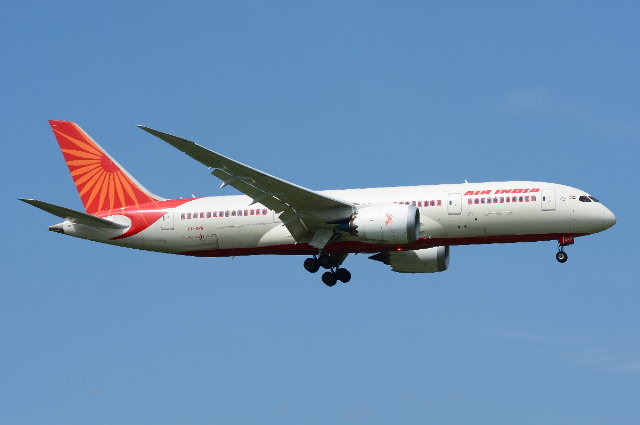
Some tragedies become more than headlines. They become memories that a nation carries for years. The Air India Flight 171 crash in Ahmedabad on 12 June 2025 was one such moment. It was not simply an aviation accident; it was a human tragedy that left hundreds of families broken, raised difficult questions about aviation safety, and reminded India that every journey carries not only passengers but also dreams, responsibilities and loved ones waiting at the destination.
I still remember the moment I first saw the news. Like millions of Indians, I found it difficult to believe. Air India is a name that generations have associated with trust. After becoming a part of the Tata Group, that sense of confidence had only grown stronger. My first reaction was disbelief. I kept hoping the reports were wrong. As the day progressed, the news became more painful. Reports confirmed that almost everyone on board had lost their lives, including Captain Sumit Sabharwal, the cabin crew and many innocent passengers. The aircraft also crashed into the B. J. Medical College hostel, taking the lives of people who had never boarded the flight. The reality was heartbreaking.
The crash claimed 260 lives, including 19 people on the ground, while many others suffered injuries. Families travelling together, students, professionals, children and elderly passengers all became part of one unimaginable tragedy. Every victim had a story. Every empty seat at a dining table represented a life interrupted forever.
Among those who lost their lives was the Jetva family from Diu. Parents Girish and Himakshi, along with their young children, Adiv and Takshi, were travelling together when the accident occurred. Mahesh Jirawala, a filmmaker, was riding home on his scooter when the aircraft crashed into the hostel complex, making him one of the innocent victims on the ground. Families such as the Patels endured weeks of uncertainty while waiting for DNA identification before they could finally perform the last rites of their loved ones. The grief extended far beyond the crash site.
Only one passenger, Vishwash Kumar Ramesh, survived the disaster. While his survival appeared miraculous, it came with unbearable personal loss, as he also lost his own brother. Survival does not erase grief. It simply changes the form in which a person carries it.
What made this tragedy even more painful was that it occurred only seconds after take-off from Sardar Vallabhbhai Patel International Airport. The aircraft came down in a densely populated area, demonstrating how vulnerable cities become when residential development expands close to airport boundaries. The crash reopened an important national discussion about urban planning, airport safety zones and the need for stricter regulations governing construction near flight paths. As cities continue to grow, public safety must remain more important than commercial expansion.
The accident also highlighted the remarkable courage of ordinary citizens. Before organised rescue teams fully arrived, residents rushed towards flames and debris, using whatever they could find to help survivors. Ambulances, firefighters, police personnel, hospital staff, the National Disaster Response Force and the Indian Army worked together under extraordinary pressure. Ahmedabad Civil Hospital activated its mass-casualty protocols almost immediately, ensuring that injured victims received treatment during the crucial golden hour. Doctors, nurses and emergency workers demonstrated not only professional excellence but also extraordinary compassion.
The process that followed was equally demanding. Due to the intensity of the fire and destruction, conventional identification was impossible in many cases. Advanced DNA matching became essential for identifying victims and returning their remains to grieving families with dignity. Behind every scientific procedure was a family waiting for certainty, hoping for closure while carrying unimaginable pain.
The tragedy also reminded India that aviation safety cannot rely solely on advanced technology. Modern aircraft are among the safest forms of transport, yet no system is beyond scrutiny. The preliminary report released by the Aircraft Accident Investigation Bureau noted that the engine fuel switches moved to the cutoff position shortly after take-off. However, the investigation did not conclude why this occurred. Questions remain under examination, and the aviation community continues to study every available piece of evidence. In matters involving public safety, careful investigation is more valuable than quick conclusions.
Regardless of the final findings, the accident has already encouraged important discussions within the aviation industry. Experts have called for more rigorous simulator training to prepare pilots for extremely rare system failures. Airlines have reviewed inspection procedures for aircraft fleets, while regulators have examined opportunities to strengthen pre-flight validation, operational monitoring and emergency preparedness. Every lesson learned has the potential to prevent another family from experiencing similar heartbreak.
Equally important is the need for transparent communication during major national tragedies. Families deserve timely, honest and compassionate updates throughout the investigation process. Long periods of uncertainty often deepen emotional suffering. Public confidence grows when investigations remain independent, evidence-based and free from speculation.
The Ahmedabad tragedy also teaches us something beyond aviation. It reminds us of the fragility of life. A routine journey can become a life-changing event within seconds. We often postpone conversations, delay expressing gratitude or assume tomorrow is guaranteed. Incidents like this remind us that kindness, love and presence are never wasted.
The response of the Tata Group also reflected the importance of corporate responsibility during moments of national grief. Financial assistance was announced for affected families and support was extended for relief efforts. Such measures provide meaningful help during difficult times. Yet every grieving family understands one painful truth: no amount of compensation can replace a mother, father, child, sibling or friend. Money may ease practical burdens, but it cannot restore a life or heal an empty home.
As someone who followed this tragedy from the very first day, I still find it difficult to watch the footage or read the stories of the families. Even after a year, the images remain painful. I have never experienced an aircraft accident personally, yet this tragedy affected me deeply because every victim represented someone who simply expected to reach home safely. Their dreams ended in a matter of seconds.
The true legacy of Flight 171 should not be remembered only through statistics or investigation reports. It should be remembered through meaningful reforms that strengthen aviation safety, improve emergency response, encourage responsible urban planning, and ensure transparent investigations. More importantly, it should remind us to value every human life with the dignity it deserves.
Some silences echo louder than words. The silence that followed the fall of Flight 171 continues to speak to India. It asks us to build safer skies, stronger institutions and more compassionate communities. The greatest tribute we can offer the 260 lives lost is not simply remembrance but determination—to learn, to improve and to ensure that such a tragedy is never repeated.
When the sky fell silent over Ahmedabad, India lost far more than an aircraft. It lost parents, children, friends, colleagues and dreams that would never reach their destination. Their memories deserve not only our prayers but also our commitment to creating a future where every journey ends safely, every family is protected, and every lesson from tragedy leads to hope.