
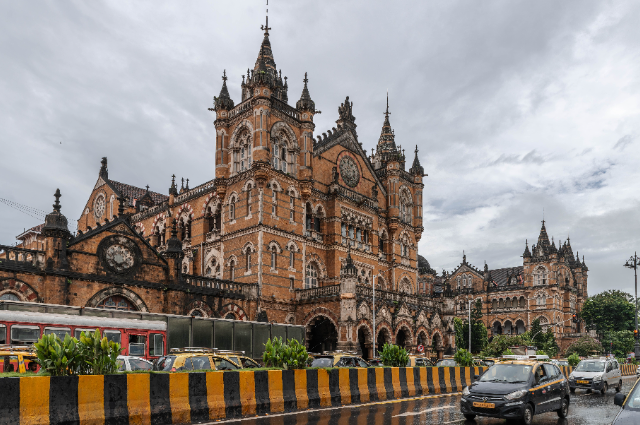
In a city where glass towers can rise in the time it takes an old wall to gather another layer of dust, some of Mumbai’s oldest buildings continue to stand quietly, watching generations walk past them. Their stone walls may be weathered, their windows may have lost some of their original shine, and their wooden doors may carry marks left by decades of hands, but they still possess something that a new building cannot buy: memory. I am 24, and whenever I travel through South Mumbai, I find myself looking up at buildings that many people pass without noticing. Fort, Colaba, Kala Ghoda, Churchgate, Ballard Estate, Byculla and the streets around CSMT do not feel like ordinary parts of a modern city to me. They feel like pages of a book that has been left open for generations. I have walked through these areas many times, sometimes without any particular destination, simply because I enjoy their architecture and the unusual calm that can exist between busy streets. The old balconies, stone façades, arched windows, carved details, and high ceilings remind me that Mumbai was built layer by layer. Yet every time I admire one of these structures, another question follows: how long will it remain there? Mumbai needs homes, offices, transport, safety and modern infrastructure. Old buildings cannot be preserved merely because they are old, especially when they become unsafe or too expensive to maintain. But should redevelopment mean that every historic structure must eventually disappear? That is the difficult question behind Mumbai's heritage debate. The real conflict is not between the past and the future. It is between forgetting the past and finding a way to carry it forward.
South Mumbai, often used to describe the historic southern part of the city, contains an extraordinary mixture of institutions, neighbourhoods, commercial districts, religious buildings and public spaces. Fort, Colaba, Ballard Estate, Churchgate, Kala Ghoda, Byculla and areas extending towards Tardeo each carry different layers of Mumbai's development. The area grew from a collection of islands and a colonial trading settlement into a major commercial and cultural centre. The British developed Bombay as a port and administrative centre, while Indian, Jewish, Parsi, Gujarati, Muslim, Christian and other communities shaped its commercial and social life. The nineteenth century brought major public buildings, educational institutions, libraries, railway architecture and civic spaces. Later, reclamation projects allowed the city to expand towards Marine Drive and encouraged the construction of Art Deco residential and commercial buildings. UNESCO describes the Victorian Gothic and Art Deco ensembles of Mumbai as evidence of the city's transformation through two major waves of urban development. The World Heritage property includes the Victorian Gothic buildings around the Oval Maidan and the later Art Deco buildings, showing how Mumbai changed while retaining an important architectural relationship between its different eras. This history matters because heritage is not limited to a single monument. It can exist in an entire streetscape, where one building gives meaning to the next and where a road, square, garden or neighbourhood becomes part of the story. Walking through Fort can therefore feel different from walking through a newly constructed business district, even when both are filled with offices and people. The difference is not simply age. It is character. It is the feeling that the street itself has witnessed something before we arrived.
The architecture of South Mumbai makes this history visible. The buildings around the Oval Maidan demonstrate how Victorian Gothic architecture was adapted to Indian conditions, including the use of balconies and verandas. The Gothic buildings were not simply copies of European structures; they developed through an exchange between European architectural ideas and local materials, craftsmanship and climatic requirements. The Art Deco buildings that appeared later created another architectural language, blending international Art Deco ideas with Indian influences in what UNESCO describes as Indo-Deco. The result is a city where pointed arches can exist within walking distance of streamlined Art Deco balconies, where stone Gothic towers rise near modern commercial buildings, and where a century-old façade can still frame the daily rush of buses, taxis, office workers and tourists. CSMT is perhaps one of the clearest examples of this architectural mixture. UNESCO describes it as an outstanding example of late nineteenth-century railway architecture combining Victorian Gothic Revival and traditional Indian architectural features. It also became a symbol of Mumbai as a major mercantile port city. When I look at such buildings, I do not see only stone, glass, wood and metal. I see decisions made by architects and craftsmen who worked in a very different Mumbai. I see materials that were transported, carved, fitted and assembled long before computers could produce an architectural drawing in seconds. I see details that may never be reproduced in the same way again. This is why old architecture can create such a strong emotional response. It reminds us that buildings were once made not only to occupy space but also to express an idea about the city.
The Asiatic Society's Town Hall in Fort is one building that makes this idea particularly powerful. The present Town Hall was completed in 1833 after years of planning, financial difficulty and construction. Designed by Colonel Thomas Cowper, it is a monumental example of neoclassical architecture, with its imposing steps and Doric columns. The building has been connected with the intellectual and civic life of Bombay for generations, while the Asiatic Society has preserved books, manuscripts, maps, coins and other material connected with India's history. A building like this demonstrates why heritage cannot be measured only by the condition of its walls. Its importance also comes from what happened inside it. Lectures, debates, scholarship and public discussions gave the structure a cultural life that continued long after the people who built it were gone. Today, the building remains connected with the Asiatic Society and the Maharashtra State Central Library. The surrounding Horniman Circle also forms part of the historic urban character of Fort. When I imagine the building in an earlier Bombay, I do not imagine an empty monument. I imagine people climbing those broad steps, carrying books, papers and arguments into a city that was still developing its modern identity. That is what makes an old building feel alive. Its greatest heritage may not be the stone itself, but the human activity that the stone remembers. If redevelopment removes such places without understanding their meaning, the city may gain additional floor space but lose something that cannot be measured in square metres.
The same feeling can be found in the David Sassoon Library in Kala Ghoda. Established from the legacy of the Mechanics' Institution and supported by David Sassoon, the library's building was completed in 1870 and is associated with Mumbai's nineteenth-century intellectual and educational life. Its Venetian Gothic architecture, yellow stone exterior and decorative details have made it one of the recognisable heritage structures of the area. Nearby, the J. N. Petit Library represents another part of the city's cultural history, particularly the contribution of Mumbai's Parsi community to education and public life. These libraries matter because they are not dead museums. They were created for people to read, learn, meet and exchange ideas. Their continued existence raises an important question: can heritage buildings remain useful while retaining their character? I believe they can, and they must. Conservation should not turn every old structure into something that people can only photograph from outside. A heritage library should be allowed to remain a library where possible. A historic commercial building should be able to accommodate appropriate contemporary uses. An old public hall can become a cultural institution without losing its architectural identity. The challenge is to decide what can change and what should not. A staircase may need repair. Electrical systems may need upgrading. Fire safety may require modern intervention. Accessibility may need improvement. None of these things automatically means that the entire building has to be erased. Good conservation asks a more intelligent question: what can we change without destroying what makes this place special?
This is where the argument becomes complicated, because old buildings are not always romantic. They can be expensive to maintain. They can have structural problems. Some may have inadequate plumbing, electrical systems, sanitation, fire protection or accessibility. People who live or work in old buildings deserve safety, dignity and better facilities. It would be unfair to tell residents that they must remain in unsafe conditions simply because someone else finds their building beautiful. Mumbai's redevelopment debate therefore cannot be reduced to “heritage lovers versus builders”. For many residents, redevelopment can mean a safer home, more usable space, modern services and relief from years of repair problems. MHADA itself recognises situations where old cessed buildings become difficult or uneconomical to repair, and its framework includes both repair and reconstruction mechanisms. This is the part of the heritage debate that outsiders sometimes forget. The person living behind an old wooden window may love the building too, but they also have to deal with leaking roofs, ageing pipes, maintenance bills and structural concerns. A young architect may see an irreplaceable façade while a resident may see a dangerous ceiling. Both perspectives can be true. That is why conservation must include people, not just buildings. A heritage policy that protects architecture while ignoring the people who inhabit it will eventually lose public support.
The question becomes even more urgent in neighbourhoods where redevelopment is already changing the physical landscape. Khotachiwadi is one of the most emotional examples. Its narrow lanes and Indo-Portuguese-style homes create a village-like atmosphere within the density of South Mumbai. For someone who loves old Mumbai, walking through Khotachiwadi can feel like entering a different time. But its survival has never been guaranteed. In 2026, a part of the neighbourhood known as Khanderao Block was demolished for redevelopment. Reports noted that the demolished structures were outside the notified heritage precinct itself, while Khotachiwadi Lane remains part of the heritage precinct. The redevelopment is expected to provide larger homes for existing residents, illustrating the difficult compromise between better housing and preservation of neighbourhood character. This example is important because it prevents the debate from becoming sentimental. Not every demolition of an old structure is automatically an attack on heritage, just as not every new building is automatically an enemy of history. The real question is whether the historic character of the wider neighbourhood is being understood before decisions are made. If residents receive better housing but the surrounding cultural landscape disappears piece by piece, something has still been lost. If a dangerous structure is replaced while its important architectural and community elements are carefully documented and respected, the outcome can be different. Heritage protection therefore needs precision rather than slogans.
Ballard Estate offers another way to think about the relationship between history and modern use. The district grew as a major commercial area connected to Mumbai's port and maritime economy. Its streets, buildings and urban layout continue to carry the memory of the city's commercial past. Today, the challenge is not necessarily to turn Ballard Estate into a frozen historical photograph. A more useful approach is to make the precinct active while retaining its architectural identity. Mumbai Port's Integrated Masterplan 2047, for example, proposes revitalising the Ballard Estate heritage precinct through restoration of heritage buildings, improved streetscapes, better pedestrian conditions and the possible activation of underused courtyards with public uses. That approach interests me because it suggests that conservation does not have to mean abandonment. An old district can still have cafés, offices, cultural activities, public spaces and new forms of urban life. Even historic structures can have a future if people are allowed to use them intelligently. A building becomes vulnerable when it is treated either as disposable property or as untouchable scenery. The better possibility lies somewhere between those extremes. Mumbai does not have to choose between a living city and a historic city. It can attempt to be both. The city has already changed many times in its history, and the challenge now is to make the next change with greater awareness.
The heritage question also becomes personal because buildings are ultimately connected to people. Think of the librarian opening an old library in the morning, the shopkeeper lifting a shutter in a nineteenth-century commercial building, the office worker climbing an old staircase, the caretaker who knows which window sticks during the monsoon, or the resident who has lived in the same neighbourhood for decades. These people may never appear in an architecture book, but they are part of the building's story. The history of Mumbai is not only the history of governors, industrialists, architects and wealthy merchants. It is also the history of workers, readers, students, traders, families and ordinary residents who gave these buildings daily life. South Mumbai's religious buildings tell a similar story. Churches, temples, synagogues, agiaries and other places of worship show how different communities became part of the city's social fabric. St Thomas' Cathedral, the Afghan Church, the Keneseth Eliyahoo Synagogue and historic temples around Malabar Hill are not simply architectural objects. They represent communities, beliefs and generations. This is why I find the word “heritage” incomplete when it is used only to describe façades. A façade can be restored, but a community can disappear. A staircase can be repaired, but the memories attached to it may be impossible to recreate. The preservation of Mumbai therefore requires attention to both built heritage and living heritage.
There is also a larger history beneath these buildings. Bombay did not begin as the South Mumbai skyline that we recognise today. The city developed from seven islands and grew through trade, land reclamation, port activity and expanding commercial networks. The British acquisition and later development of Bombay transformed it into an important trading centre. The demolition of the old fortifications in the nineteenth century opened land for new urban development, and the city then built monumental public institutions, railway structures and commercial districts. UNESCO's account of the Victorian Gothic and Art Deco ensembles describes this transformation from a fortified trading outpost into an internationally important mercantile city. The buildings therefore tell us not only what Mumbai looked like but what Mumbai valued at different moments. Railway architecture represented movement and industrial progress. Libraries represented education. Courts represented law. Financial buildings represented commerce. Churches, temples and synagogues represented communities. The port represented the city's connection with the wider world. Even the streets themselves reveal how urban planning changed. This is why replacing a building can sometimes be more significant than replacing a structure. It can erase evidence of how the city became what it is. When we lose enough evidence, future generations may know that Bombay was once historic, but they may no longer be able to experience how that history felt at street level.
Mumbai does have heritage protections, and they matter. UNESCO's World Heritage documentation notes that Mumbai introduced heritage legislation in 1995 and established the Mumbai Heritage Conservation Committee to support the protection of heritage buildings. Current development regulations also provide specific controls for listed heritage buildings and precincts, with heritage authorities involved in decisions concerning development, redevelopment, repairs and alterations. These rules are important because without regulation, market pressure could make conservation extremely difficult. At the same time, regulations alone cannot preserve a city. A building can be legally protected and still deteriorate if it lacks money, maintenance or a workable use. UNESCO itself has pointed to development pressures affecting the wider setting of Mumbai's World Heritage property and has called for effective documentation, conservation and management. This is an important warning. Heritage protection should not begin only when demolition equipment arrives. Buildings need regular inspection, maintenance, documentation and responsible use long before they reach a crisis. Owners and residents need realistic ways to fund conservation. Authorities need transparent decisions. Architects need to understand both modern requirements and historical materials. Developers need incentives to see value in conservation rather than only value in additional construction. Citizens also need to notice what they are losing before it is too late.
There is another reason redevelopment is attractive in Mumbai: land is extremely valuable. South Mumbai is not an empty historical district preserved outside the pressures of the modern economy. It is a living centre of offices, institutions, homes, restaurants, transport networks and businesses. Every plot has economic value, and every generation wants more space, better infrastructure and greater efficiency. It would therefore be unrealistic to argue that Mumbai should preserve every old structure exactly as it is. Some buildings are unsafe. Some have already lost much of their original architectural value. Some may be poorly suited to their present use. In certain cases, reconstruction may genuinely be necessary. The question should therefore not be “old or new?” but “what deserves to survive, what can change, and how can the change be responsible?” The answer may involve adaptive reuse, façade conservation, structural strengthening, sensitive additions, improved services or carefully planned redevelopment around significant heritage structures. The city's own history proves that change is not the enemy of heritage. Mumbai's architecture exists because earlier generations changed the city. The Victorian buildings replaced older urban patterns; Art Deco emerged from a newer phase of development; reclamation created land that did not previously exist in the same form. Heritage itself is evidence of change. The mistake would be to assume that because something is new, it has no value, or because something is old, it must remain untouched forever.
The impact of losing heritage is also difficult to measure because the loss is often invisible at first. A new building may provide more floors, more apartments or more commercial space. It may look efficient on paper. But when an old building disappears, the city may lose craftsmanship, proportions, streetscape, material knowledge and stories that took generations to accumulate. The loss becomes clearer when many buildings disappear from the same neighbourhood. One demolished structure may seem insignificant. Ten may alter a street. Fifty may transform the identity of an entire area. UNESCO has recognised that Mumbai's historic ensembles retain value not merely because individual buildings are attractive but because their architectural forms, scale, planning relationships and setting work together. This is why the question matters to a young Mumbaikar like me. I may not have lived through the Bombay of the nineteenth or early twentieth century, but I can still walk through its surviving spaces. I can still see the same kind of stonework that generations before me saw. I can still enter a library whose history began long before my birth. I can stand near CSMT and watch modern Mumbai move around a building that has survived enormous social and technological change. That experience connects me to a city I never knew personally. If those links disappear, my generation will inherit a faster city but a thinner memory.
Perhaps the greatest mistake would be to treat heritage as something that belongs only to wealthy tourists, architects, historians or people who enjoy taking photographs. Heritage belongs to the public because cities are shared memories. A student sitting in an old library, a commuter passing a Gothic tower, a family visiting a historic place of worship, a worker entering a century-old office and a young person like me stopping to admire an old balcony all experience the city differently, but all are part of its living history. Conservation can also support tourism, cultural education and local economies when done thoughtfully. Yet heritage should not become an expensive stage set created only for visitors while local communities are pushed away. The people who live and work around historic places must have a voice in their future. Khotachiwadi shows why community matters. Ballard Estate shows how a historic business district can be revitalised. Mumbai's World Heritage ensemble shows that old buildings can continue to function as part of a modern city. These examples suggest that preservation does not have to mean stopping time. It can mean managing change with memory. It can mean allowing an old building to receive modern plumbing without removing its identity. It can mean making a building accessible without destroying its defining features. It can mean allowing a historic precinct to earn money while ensuring that its character is not sacrificed for short-term profit. Most importantly, it means asking questions before reaching for the easiest solution.
I do not believe Mumbai should become a museum. I want Mumbai to remain ambitious, crowded, creative, modern and alive. I want better homes, safer buildings, improved public transport, stronger infrastructure and opportunities for future generations. But I also want the young people of tomorrow to walk through Fort and wonder about the people who stood there before them. I want them to look at an old window and understand that it survived more than a century of rain, heat, political change and urban transformation. I want them to sit in a historic library, enter an old church or temple, walk through Kala Ghoda, see the architecture of CSMT, pass the buildings around the Oval Maidan, and understand that Mumbai did not suddenly become a global city. It was built through generations of labour, migration, commerce, culture, conflict, ambition and imagination. Heritage conservation, therefore, should not be about worshipping the past. It should be about respecting evidence. It should be about giving the future enough room to grow without making the past disappear. Development is necessary, but development without memory can become another form of loss. If an old building is unsafe, make it safe. If it is underused, find a new use. If it needs repair, invest in repair. If redevelopment is unavoidable, document what matters and protect the surrounding character. And when demolition is proposed, ask one simple question before the machines arrive: what exactly are we destroying, and can we build the future without destroying the memory that made this place Mumbai?
Whenever I return to South Mumbai, I still find myself looking up. I look at weathered stone, old windows, carved arches, balconies and doors that have probably been opened thousands of times before I ever touched them. I watch people hurry towards offices, students cross roads, shopkeepers open shutters and tourists photograph buildings that local commuters barely notice. The city around them keeps changing, just as it always has. New towers rise. Old businesses disappear. Streets are repaired. Buildings are renovated. Neighbourhoods become more expensive and more crowded. Yet some of those old structures continue to stand quietly, carrying the weight of everything that came before us. Perhaps that is why I do not want to ask whether Mumbai should choose heritage or development. I want to ask whether Mumbai is capable of something more intelligent: development with memory. A city should be allowed to grow, but it should not have to forget itself to grow. The past does not belong to the people who built these buildings, because they are gone. It does not belong only to their present owners either. It belongs, in some sense, to everyone who inherits the city after them. One day, I will be older, and the Mumbai I know today will also become someone else's history. I hope that when that day comes, there will still be old windows glowing in the evening light, stone walls carrying their marks, wooden doors opening onto familiar streets and young people stopping to ask why these buildings were allowed to survive. Because perhaps the true measure of a modern city is not how many old buildings it can replace, but how wisely it can make room for the future without erasing the past.