
India's automotive industry is undergoing one of its most significant policy transitions in decades. While electric vehicles (EVs) have dominated discussions on sustainable mobility, another contender has steadily gained attention: ethanol-based fuels. At the centre of this debate is E100 fuel, a high-ethanol fuel designed for flex-fuel vehicles (FFVs), and its place within the proposed Corporate Average Fuel Efficiency (CAFE) III norms. The controversy is not merely about choosing an alternative fuel but also about how government regulations influence technological choices through "super credits," which can determine the competitive advantage of one automotive technology over another. This evolving policy debate has become what industry observers often describe as the "super-credit war," where automakers, ethanol producers, environmental experts, and policymakers compete to shape India's future transportation strategy. Today, India needs lower pollution levels as environmental conditions continue to deteriorate. Reducing emissions of harmful gases would greatly benefit the country.
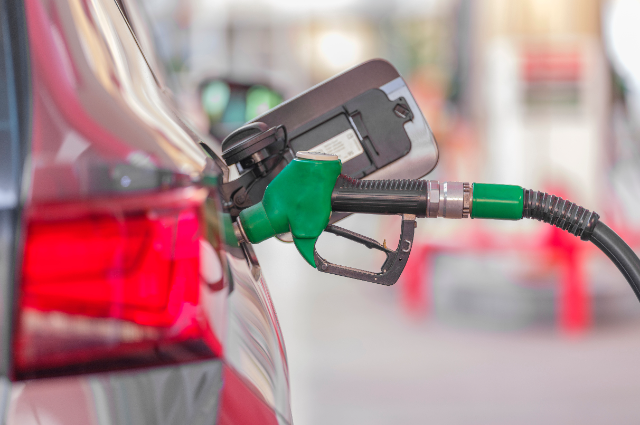
E100 is a fuel made almost entirely of ethanol (about 93–100% ethanol, depending on the standard). It is intended for flex-fuel vehicles (FFVs), which are specially designed to run on very high ethanol blends. The government promotes E100 to reduce crude oil imports, support domestic ethanol production, and lower carbon emissions. It contains nearly 100 per cent ethanol, a renewable biofuel produced primarily from sugarcane, maize, and agricultural residues. Unlike conventional petrol vehicles, automobiles running on E100 require specially designed flex-fuel engines capable of handling high ethanol concentrations without damaging engine components.
CAFE stands for Corporate Average Fuel Efficiency. These rules do not apply to individual cars. Instead, they require each automobile manufacturer (such as Maruti Suzuki, Hyundai, and Tata Motors) to ensure that the average fuel efficiency or CO₂ emissions of all the vehicles it sells remain within the government-prescribed target. CAFE III is the next phase of these regulations and is expected to introduce stricter emission standards than the previous phases.
To encourage cleaner technologies, the government may provide manufacturers with super credits. For example, if an electric car receives a super credit of three, it counts as three vehicles when calculating the company's average emissions. This helps manufacturers meet CAFE targets more easily. Similarly, flex-fuel and hybrid vehicles may also receive super credits, although the proposed values have been widely debated.
The Government of India has actively promoted ethanol blending as part of its broader objective of reducing dependence on imported crude oil, improving energy security, and supporting domestic agriculture. India aims to become more self-reliant rather than depending heavily on foreign energy sources. This approach can strengthen the country's economy, improve energy security, and support long-term national growth. India imports
more than 85 percent of its crude oil requirements, making the country vulnerable to international price fluctuations and geopolitical disruptions.
According to the Ministry of Petroleum and Natural Gas, India's ethanol blending program has already achieved nearly 20 percent ethanol blending in petrol several years ahead of its original target, representing a major policy success in reducing fossil fuel consumption.
One of the most debated aspects of the proposed CAFE III framework is the use of super credits, also known in regulatory discussions as Volume Derogation Factors (VDFs). Super credits allow certain categories of environmentally beneficial vehicles to count as more than one vehicle when manufacturers calculate their fleet-average emissions.
Nowadays, many consumers are switching to electric vehicles and other cleaner technologies that reduce fuel consumption and lower emissions of harmful gases. Similar incentive systems have previously been implemented in markets such as the European Union and China to encourage electric vehicle adoption during the early stages of market development. The controversy arises because multiple technologies are competing for these regulatory incentives.
A useful international comparison is Brazil, which is widely recognised as the global leader in ethanol-based transportation. Brazil launched its National Alcohol Program (Proálcool) during the 1970s oil crisis to reduce dependence on imported petroleum. Recent geopolitical conflicts have once again highlighted how wars and international tensions can disrupt fuel supplies. Countries that rely heavily on imported fuel often face shortages, rising prices, and supply-chain disruptions during such situations. Therefore, increasing domestic fuel production can reduce these risks and improve national energy security. Today, ethanol accounts for a substantial share of Brazil's road transport fuel consumption.
India's ethanol program has also shown remarkable progress in recent years. Government initiatives have expanded ethanol production beyond sugarcane molasses to include damaged food grains, maize, and other agricultural feedstocks. These initiatives aim to reduce harmful emissions while supporting the agricultural sector and promoting renewable energy. Advances in technology are also helping develop more efficient production methods that can reduce environmental damage while strengthening India's efforts toward self-reliance.
At the same time, critics caution that the rapid expansion of ethanol production must be carefully balanced against concerns related to water consumption, land use, food security, and regional agricultural disparities.
Automobile manufacturers also face practical engineering and commercial challenges in adopting E100 technology. Since these technologies are still evolving, the transition from conventional fuel systems to flex-fuel systems will require substantial investment, advanced technology, skilled manpower, and time. Manufacturers must modernise production facilities while ensuring that the transition remains commercially viable. At the same time, consumers
may hesitate to purchase flex-fuel vehicles if adequate fueling infrastructure and service networks are not available.
Without sufficient infrastructure and technological support, manufacturers may be reluctant to invest in large-scale production of flex-fuel vehicles. Likewise, consumers may hesitate to adopt them regardless of regulatory incentives. Policymakers must therefore strike a careful balance between environmental objectives, industrial competitiveness, energy security, and economic affordability.
As India moves toward its long-term climate and energy goals, the success of these regulations will ultimately be measured by their ability to encourage cleaner mobility while remaining economically sustainable, technologically inclusive, and beneficial to both industry and consumers.
References
- Ministry of Petroleum and Natural Gas, Government of India. Ethanol Blended Petrol Programme. https://mopng.gov.in
- NITI Aayog. Roadmap for Ethanol Blending in India 2020–2025. https://www.niti.gov.in
- Society of Indian Automobile Manufacturers (SIAM). https://www.siam.in
- International Energy Agency. India Energy Outlook. https://www.iea.org
- Business Standard. Debate over super credits under CAFE III norms. https://www.business-standard.com
- The Economic Times. CAFE III norms and flex-fuel vehicle discussions. https://economictimes.indiatimes.com
- Ministry of Road Transport and Highways, Government of India. https://morth.nic.in
- Agência Nacional do Petróleo (Brazil). Information on Brazil's ethanol and flex-fuel program. https://www.gov.br/anp