
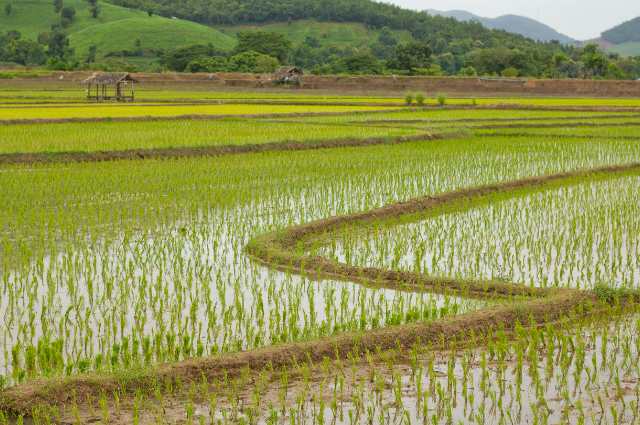
The article focuses on a village in Hung Yen Province, Vietnam, where the government approved the construction of a US$1.5 billion luxury golf resort and residential development associated with the Trump Organisation. To build the project, a large area of farmland had to be cleared.
The people living there are mostly farming families. Since the required land was already occupied and cultivated, over 4,000 households were asked to give up their land and relocate. For many of them, this wasn't just farmland; it was their home, their source of income, and the place where their ancestors had been buried for decades. And this is why it has become the centre of an international debate over land rights, economic development, and political influence.Thousands of villagers are being asked to leave land that has been cultivated by their families for generations to make way for a luxury golf resort and residential complex carrying the Trump brand, which was hard to be accepted by the people living there from years. Shifting and living on your land and finding a new spot is not easy. This land has helped thousands of farmers to build a life for themselves, and asking them to relocate due to development purposes is not something easy to deal with. And it’s not easy either to deal with higher authorities regarding a change of decision for changing the development plan.
The development, officially known as the Trump International Hung Yen project, covers approximately 990 hectares of land and includes three 18-hole golf courses, luxury hotels, high-end residential complexes, and commercial facilities. The project is being developed by Vietnamese real estate company Kinh Bac City (KBC), while the Trump Organisation is involved through a licensing and management agreement rather than direct ownership. They are indirectly a part of this whole development process, not directly contributing to the work but by helping with external work and management and making the process work more smoothly.
This organisation represents a major venture investment in Vietnam, and that was done during a period of strengthening economic relations between Vietnam and the United States. According to Reuters, the project is valued at approximately US$1.5 billion and is expected to become one of Vietnam's largest luxury tourism developments. To increase tourism in a place, they are relocating families,s especially people who contribute to Vietnam through farming and working on it’s Agriculture segment. Behind these ambitious plans lies a difficult reality for the communities living on the project site.
In Vietnam, farmland is legally owned by the state, while farmers receive long-term land-use rights rather than outright ownership. This legal framework gives authorities broad powers to reclaim land for projects considered beneficial to national development. They are exercising their rights only on their own given lands. Although compensation is required, affected residents have limited opportunities to negotiate or reject acquisition decisions. As it’s not their land they can’t deny or debate much; in the end, they have to listen and accept what they are told or given in return. For many villagers, the issue extends far beyond financial compensation.
The land being acquired is not simply an economic asset but a place deeply connected to family history. Some households have lived on the same land for generations, with ancestral graves located nearby. At this point, it’s more about emotions, family and other connections than monetary value. It can’t be compared, nor can everything be valued with numbers. As one farmer interviewed by Reuters explained, losing the land means losing both a livelihood and a connection to family heritage that has existed for decades.
The compensation packages have become one of the project's most controversial aspects. According to Reuters, several affected farmers reported receiving offers ranging between US$12 and US$30 per square meter of farmland, depending on location and land classification. For elderly farmers with limited employment opportunities, the prospect of starting over elsewhere creates significant uncertainty about their financial future.
One widely reported case involves farmer Nguyen Thi Huong, who was offered approximately US$3,200 and rice provisions in exchange for vacating her farmland. According to reports, farmers said that this value is not sufficient to start a new livelihood or shift to a new location and start everything from scratch, also stating that the entire village feared becoming unemployed after surrendering their fields. Her words and experience showed concern among various other farmers as well, who feel the same and reflect that compensation fails to reflect either the long-term earning potential of the land or its rapidly increasing market value following commercial development.
On the other hand, the controversy has also raised broader questions about balancing economic development with social justice. Supporters argue that large-scale investments such as the Hung Yen project generate employment opportunities, increase tourism revenue, attract foreign investment, and improve infrastructure. This is a positive situation for the place, and it will help grow the economy of the place as well and get funds too. Government officials have argued that projects like this contribute to national development by creating higher-value industries than traditional agriculture.
Ultimately, the story unfolding in Hung Yen Province represents more than a dispute over land prices. It reflects a broader challenge faced by many developing countries seeking rapid economic transformation while preserving the rights and welfare of rural communities. Infrastructure, tourism, and foreign investment undoubtedly contribute to the nation. These situations do not have a definite solution, there has to be compromise, adjustment and support from both the sides. Development is important for a place, so is ancestral property for the farmers.
As construction moves forward, the experience of Hung Yen's villagers will likely remain an important case study in debates over land rights, sustainable development, and the human cost of modernisation. Now, after a few years, we will know whether this model was successful enough and whether farmers were able to establish their livelihood and work.
References:
- Reuters. "Fistful of dollars and rice for Vietnam farmers displaced for US$1.5 billion Trump golf club." https://www.reuters.com
- Reuters. "Trump Organisation to develop US$1.5 billion golf course and hotel project in Vietnam." https://www.reuters.com
- World Bank. Vietnam Overview. https://www.worldbank.org/en/country/vietnam/overview
- United Nations Human Settlements Programme (UN-Habitat). Land Governance Resources. https://unhabitat.org/topic/land