
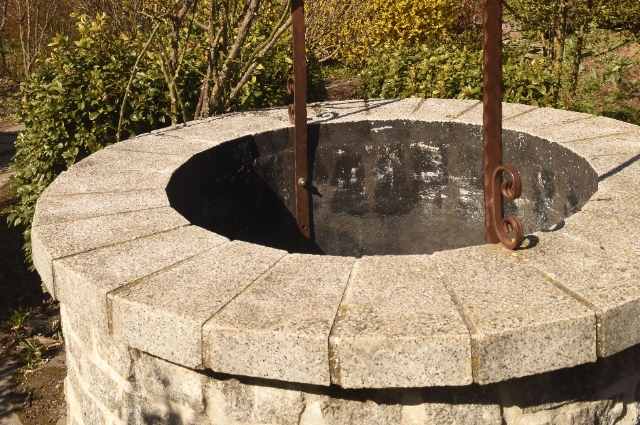
On a farm in Virparda village, in Gujarat's Morbi district, an ordinary well has turned into something nobody expected. The well is about 18 feet deep and belongs to a farmer named Pranjivanbhai Sadariya, and videos of its water rippling like ocean waves have been doing the rounds online for weeks now. What started as one farmer noticing something strange on a Sunday morning has turned into a full-blown roadside attraction, a genuine science puzzle, and honestly a pretty good example of how fast a rumour can spread once a video goes viral.
It all began on August 2. Sadariya said that when he reached his farm that day, water was already spilling over the edge of the well, and it just kept moving after that, like it never settled down. What makes this even stranger is that the well itself is very new. It was dug only about three months before the monsoon hit, and it filled up after a particularly heavy spell of seasonal rain. So you have a structure barely a season old, sitting quietly on a farm, that suddenly started behaving like a miniature sea.
The movement hasn't even been constant throughout. Local reports mention the water repeatedly turning turbid and moving in these wave patterns, then calming down for a day, only to start the next evening again. But even with the breaks, it was enough to pull in crowds from well beyond the farm itself. Villagers, people passing by on the highway, curious travellers- all of them started showing up just to watch. A working irrigation well turned into one of the most visited spots in Morbi almost overnight.
What really threw people off is that none of the neighbouring wells did anything similar. They just stayed still, completely normal, while this one well kept rippling. Naturally, that is exactly the kind of detail that gets people talking. If something regional was causing it, like an earthquake or a change in the water table, why would only this one well react?
So the theories started piling up fast. Online, you had everything from supernatural explanations to vague talk of underground geological shifts. Some villagers went with a coastal theory, suggesting the well was somehow connected to tidal movement since Morbi isn't too far from the Gujarat coastline. It's a nice story, and the Arabian Sea genuinely isn't that far away, but there has been no scientific backing for that idea at all.
The earthquake angle was the one officials moved on fastest, probably because it had the most potential to cause actual panic. District Geologist J S Vadher was clear that the waves weren't seismic, and officials also said they had checked in with the Institute of Seismological Research in Gandhinagar, which confirmed there's no active fault line anywhere in that area. That reassurance mattered a lot, because once people start fearing an earthquake, that fear travels a lot faster than any official statement trying to calm things down.
The explanation that officials actually gave leans on simple hydrogeology. Vadher explained that after heavy rainfall upstream, groundwater was recharging, and air that had been trapped in the pore spaces of the rocks was being released, which was what caused the disturbance in the well. In plainer terms, the monsoon pushes water through the ground, and whatever air was sitting in those tiny rock spaces has to escape somehow. In a well this new, without years of settled water and sediment, that escaping air might genuinely be enough to keep the surface moving the way it has been. District Collector Swapnil Khare backed this up too, saying the geology team believed it came down to an air trap below the water, and he asked people to stop spreading rumours that were only adding to the fear.
There's also a more technical term floating around, well seiche, which describes a standing wave oscillation inside an open well that keeps producing ripples or sloshing on its own. It sounds like a tidy explanation, but it's worth being a little careful with it since that term showed up mainly in social media posts, not in anything the officials themselves have said. Classic seiches usually need some kind of external trigger, often an earthquake far away, to start the water moving. So while the phrase is catchy, the actual explanation officials are working with is trapped air, not a textbook seiche, and that difference is worth keeping straight.
To their credit, officials haven't tried to oversell what they know. They've been upfront that the exact cause hasn't been fully confirmed yet. A quick visit by a district geologist is a decent starting point, but it was never meant to be the final word, and the administration seems to understand that too.
The next step is a proper, dedicated investigation. Khare mentioned that the state government had been informed and that a team from Gandhinagar would be sent to look into it further. The Gujarat Groundwater Research Institute has also been asked to carry out a more detailed study. As of now, there's no confirmed final report out yet, so the mystery around why this particular well reacted while its neighbours didn't is still technically open.
Meanwhile, life in Virparda has basically adjusted around its new local celebrity. A well that was dug purely for irrigation is now something people travel to see. There's something quietly funny about that. Nothing dramatic appears to be happening underground based on what's known so far, yet this one patch of farmland has become something people across the state are talking about.
If there's a bigger takeaway here, it's really about how quickly people reach for dramatic explanations when something unexplained shows up, and how important it is for officials to respond fast with actual science instead of letting rumours take over. In just a few days, this story produced ghost theories, earthquake panic, and tidal folklore, but it also got a fairly quick response from geologists, seismologists, and the collector's office. The scientific explanation might not be as exciting as a haunted well, but it's the one that actually helps people, since it tells everyone nearby that the ground isn't about to shift, and that the water in Sadariya's well is most likely just the monsoon finding its way through the rock beneath it.
References:
- https://theprint.in
- https://www.indiatvnews.com
- https://deshgujarat.com
- https://milantribune.com
- https://pragativadi.com