
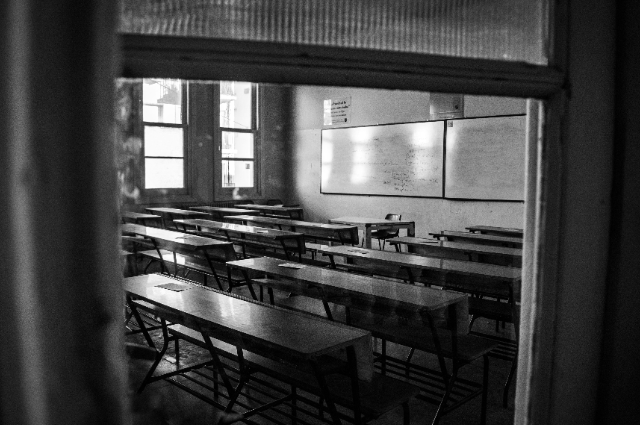
On November 1, 2025, a nine-year-old girl fell nearly 48 feet from the fourth floor of Neerja Modi School in Jaipur. Amaira Kumar Meena, a Class 4 student and the only child of her parents, was rushed to a nearby hospital but was declared dead on arrival. What could have been dismissed as a tragic accident has, over the following ten months, turned into one of Rajasthan's most closely watched cases of alleged institutional failure, pitting a grieving family against a school, a police investigation, and now the Rajasthan High Court.
Amaira's parents, Vijay Meena and Shivani Meena, have maintained from the first day that their daughter's death was not sudden. They say she endured bullying for close to eighteen months, with classmates directing verbal abuse at her that carried sexual undertones. Vijay has said he raised the issue directly with the school during a parent-teacher meeting, to no effect. Shivani has gone further, saying that a year before Amaira died, she forwarded her daughter's class teacher, Puneeta Sharma, a voice recording in which the child was crying and pleading not to be sent back to school. According to the family, that recording, like the repeated complaints before it, went unanswered.
The most damaging material to surface came in July 2026, when the family released CCTV footage from inside Amaira's classroom, recorded in the minutes before her death. The footage reportedly shows her approaching Puneeta Sharma twice, at one point with her hands folded, apparently seeking help after classmates allegedly showed her something inappropriate on a digital slate. Instead of intervening, the family alleges, the teacher dismissed her and threatened to send her to the principal. Amaira is then seen leaving the classroom alone, heading toward the stairwell that led to the fourth floor. Because the CCTV system had no audio, despite CBSE norms requiring it, exactly what she said in those final exchanges remains unknown.
The Central Board of Secondary Education did not wait for the police to act. A two-member inquiry committee visited the school on November 3, two days after Amaira's death, and submitted its findings on November 17. The report, on which CBSE issued a show cause notice to the school on November 21, was unsparing. It found that the spot where Amaira fell had been washed before forensic examiners could inspect it, that CCTV footage was neither monitored in real time nor preserved for the mandated fifteen days, that upper floor corridors and open areas had no safety nets, and that the school's counselling system and anti-bullying committee existed only on paper. Investigators concluded that both the class teacher and school management were, in their words, very well aware of Amaira's harassment and trauma, and that on the day she died, she had sought her teacher's help five separate times.
The consequences for the school followed quickly. On December 30, 2025, CBSE withdrew Neerja Modi School's affiliation up to the senior secondary level, citing violations of affiliation bye-laws and child safety norms, and barred it from admitting new students or promoting children into Classes 9 and 11. Students already enrolled in Classes 10 and 12 were permitted to sit their board examinations from the same school, a partial concession that has done little to satisfy Amaira's family, who see it as a mismatch between the scale of the failure and the scale of the consequence.
It is the criminal investigation, however, that has become the sharper point of conflict. On July 1, 2026, Jaipur Police filed a chargesheet naming three people: class teacher Puneeta Sharma, principal Indu Dubey, and school owner Saurabh Modi. But the charges were not applied evenly. Sharma alone was booked under Section 75 of the Juvenile Justice Act, which deals specifically with cruelty toward a child. Dubey and Modi were booked only under Sections 106 and 238 of the Bharatiya Nyaya Sanhita, covering death caused by a rash or negligent act and causing evidence to disappear, both considerably milder provisions than cruelty under the JJ Act.
Vijay Meena has publicly objected to this distinction, pointing out that the investigation dragged on for eight months and passed through three different investigating officers, yet still stopped short of holding the principal and owner to the same standard as the teacher. At a press conference held with the Sanyukt Abhibhavak Sangh, a parents' association, the family argued that the chargesheet effectively protects the school's top management while making an example of a single teacher, even though CBSE's own findings describe an institutional failure that went well beyond one classroom. They have demanded that abetment to suicide be invoked wherever legally applicable, alongside the cruelty provisions of the Juvenile Justice Act, and have said they intend to challenge the chargesheet before the Rajasthan High Court.
The dispute reflects a genuine structural tension rather than a simple case of official indifference. CBSE, as the affiliating body, only had to determine whether the school met its safety obligations, a threshold its inquiry found the school failed comfortably. Police, however, must tie specific evidence to specific criminal provisions that a court will test, and negligence is legally a lower bar to prove than cruelty or abetment, which require establishing intent or a deliberate pattern of harm. Whether the CCTV footage, the ignored complaints, and the voice recording amount to that higher standard is now a question the Rajasthan High Court will likely have to weigh.
For now, Amaira's parents are left fighting on two fronts nearly a year after her death: pressing CBSE's findings against a police case they view as too narrow, and pushing a court to see what they say the chargesheet does not. Whatever the High Court eventually decides, the case has already forced a wider reckoning over how Indian schools handle bullying complaints, how seriously CCTV and counselling mandates are actually enforced, and how the legal system draws the line between negligence and cruelty when the victim is a child who tried, repeatedly, to ask for help.
References:
- The Statesman — "She folded her hands, pleaded for help: New CCTV footage raises fresh questions around 9-year-old Amaira's death at Jaipur school" — https://www.thestatesman.com
- The Free Press Journal — "2025 Jaipur School Suicide Case: Parents Share CCTV Footage Of 'Amayra Running In Fear, Teacher Ignoring Her Pleas'" — https://www.freepressjournal.in
- The Week — "Jaipur school suicide: Did class 4 girl complain to teacher before jumping to death? Here's what CCTV shows" — https://www.theweek.in
- Careers360 (News18/Careers360 desk) — "CBSE notice to Jaipur school after Class 4 student's death; parents allege 1.5 years of ignored complaints" — https://news.careers360.com
- Careers360 — "CBSE cancels affiliation of Jaipur's Neerja Modi School over student's suicide" — https://news.careers360.com
- The Tribune — "Jaipur Class 4 girl begged teacher for help 5 times before her death: inquiry report" — https://www.tribuneindia.com
- Newsdrum — "Amaira Meena case: Why the Neerja Modi School chargesheet has triggered fresh outrage" — https://www.newsdrum.in