
Rajesh gave away the one thing that would have saved his own life. Kerala has spent weeks since then trying to figure out how to say thank you for that.
It happened on August 1, a Saturday, when the Kariyankode River tore through Cherupuzha in Kannur district after days of nonstop rain and landslides upstream. A 61-year-old farmer named Benny got stranded on a small river island called Meenthulli Thuruthu once the floodwaters cut off his way back to land. Rajesh, 36, a swimming and rappelling instructor who trained people at the Meenthulli Waterfalls, didn't wait around for anyone to tell him what to do. He went in with two other volunteers, a rescuer named Shibin and a rafter named Jithin, swimming nearly 40 metres across raging water to reach Benny, who was stuck about 50 metres from the bank. That's not a small ask. A river moving like that can take down a strong swimmer in seconds, and Rajesh knew this better than most, since he'd already lived through this exact kind of chaos as president of the Adventure and Disaster Management Club, having taken part in rescue work during the 2018 Kerala floods and the 2024 Wayanad landslides.
The three of them got to Benny and started the swim back. Somewhere on that return trip, Rajesh pulled off his own life jacket and put it on Benny instead. He trusted his own swimming enough to go without it. Minutes later, with no jacket on, he lost his grip on the safety rope and the current took him. Search teams looked for three days before finding his body near the Pulingome Bridge on Tuesday, August 4, several kilometres downstream from where he'd gone in.
What's stayed with people isn't just what he did in the water. It's everything that followed. His funeral in Kalliyoor, his hometown near Thiruvananthapuram, was held with full state honours. Chief Minister V D Satheesan went to the family's house himself and posted online that Rajesh's sacrifice and his love for other people would never be forgotten. Even political opponents agreed on this one. BJP state president Rajeev Chandrasekhar called him a hero across three separate disasters: 2018, 2024 and now this one. The Kerala High Court brought him up too, unprompted, during a completely unrelated hearing about a canal. Justice Devan Ramachandran said Rajesh proved that the greatest love is the kind that gives up everything, and called his sacrifice supreme and unmatched. A court doesn't usually stop mid-case to talk about a private citizen who drowned saving someone. That alone says something about how far this story travelled.
The part that actually moved me most wasn't the tributes, though; it was what the government did with its hands rather than its words. At Wednesday's cabinet meeting, the state didn't just hand out honours. It decided to finish building Rajesh's own house, the one he hadn't managed to complete himself. That single detail says more than any speech about how ordinary his life still was while he was doing something extraordinary. The same cabinet session also rolled out a much bigger flood relief plan. Families of everyone killed in the floods are getting a combined Rs 8 lakh, pulled together from the State Disaster Response Fund, the Chief Minister's Distress Relief Fund and the Prime Minister's National Relief Fund, plus another Rs 10,000 for funeral costs. Housing help went up for anyone whose home was destroyed, shop owners got Rs 10,000 each, and the state also announced longer-term fixes like an AI-based dam management system and better flood mapping, aimed at giving people more warning next time a river like the Kariyankode decides to break its banks.
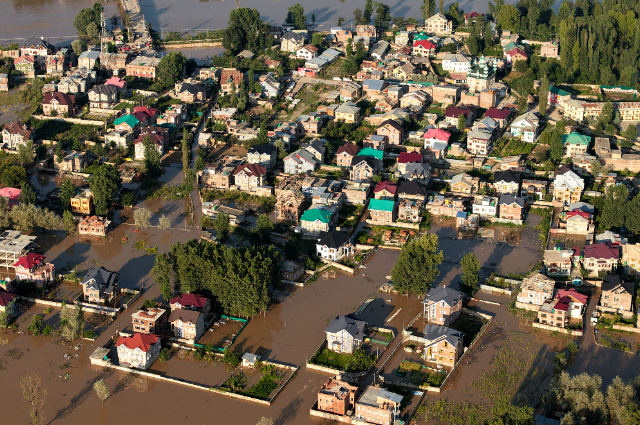
It's worth remembering how big the disaster actually was around this one story. By the time Rajesh was buried, the 2026 monsoon floods had already killed 25 to 26 people across Kerala, with four still missing, and pushed more than 18,000 people into over 400 relief camps. Farmers alone had lost an estimated Rs 67 crore worth of crops. Rajesh became the face people outside the state remembered, but he was one loss inside something much larger, and the relief package the government put together had to answer for all of it, not only the death that made the news.
What gets me about this whole thing is how avoidable his death technically was. Benny was already being pulled to safety. Rajesh could have kept the jacket on and taken his chances like everyone else. Nobody made him choose otherwise. He just did, in the middle of a flooded river, with no one watching to make him. Three disasters over eight years, and he walked toward every single one of them. On the fourth, the river didn't let him walk back.
References:
- Free Press Journal, Onmanorama, IANS Live, Kerala Kaumudi, LiveLaw.
- https://www.freepressjournal.in
- https://www.onmanorama.com
- https://ianslive.in
- https://www.onmanorama.com
- https://www.livelaw.in