
The Most Recognisable Face in India Wasn’t Always on Your Money.
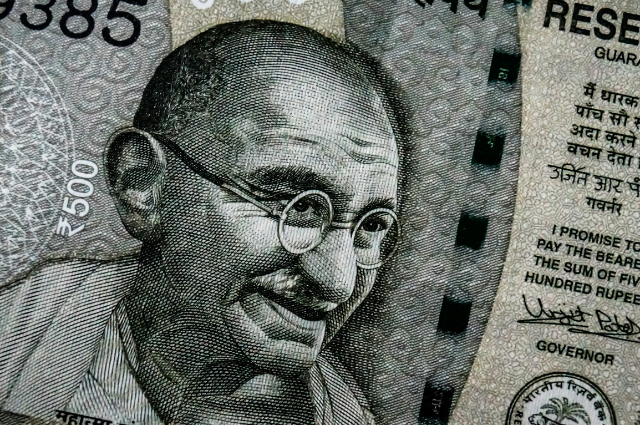
Take out any notes from your wallet. ₹10, ₹100, ₹500. Look at it. You see Mahatma Gandhi smiling, calm, in a pose that feels like it was made for currency.
But here’s the truth: independent India did not want him there. For 49 years after 1947, Gandhi was missing from regular Indian banknotes. The British King was removed, yes. But Gandhi? He was rejected. The Ashoka Lion was chosen instead.
Gandhi’s face didn’t win by ideology; it won because of technology. He ended up on every note in 1996, not because of sentiment, but because of counterfeiting. Human faces are harder to fake than lions'.
This is the story of how the most emotional symbol in Indian history became currency by accident.
“1947: The First Thing Free India Did Was Erase a King’s Face-”
On August 15, 1947, India had a problem. Every rupee in circulation had King George VI’s portrait. The new nation could not have its money carry the face of its former ruler.
So the Reserve Bank of India acted fast. Within months, the King’s profile was replaced. But not with Gandhi.
The first independent Indian notes carried the Lion Capital of Ashoka & the same emblem on our national seal. The ₹1 note in 1949, the ₹2, ₹5, ₹10, ₹100 & all had the Ashoka Pillar, not a person.
Why no Gandhi? The government of the 1950s was uncomfortable. Gandhi had been assassinated in 1948. The trauma was fresh. Nehru and the RBI worried that putting a recently martyred leader on currency would look like a personality cult. Independent India wanted to signal institutions, not individuals. The Lion Capital was safe. Secular. Uncontroversial.
So for two decades, Indian money looked like this: Ashoka’s lions on one side, agricultural scenes, dams, and tigers on the other. Gandhi was absent.
“1969: Gandhi’s First Appearance Was a One-Time Exception-”
Gandhi finally appeared on a banknote in 1969. But it wasn’t a regular note.
It was a commemorative ₹100 note issued for Gandhi’s birth centenary. One time only. Limited circulation. The design was based on a photograph of Gandhi taken in 1946 during his visit to the Viceroy’s House in Delhi.
Here’s the detail that matters: the photo was cropped. The original picture shows Gandhi sitting with Lord Wavell and other British officials during a negotiation. For the note, RBI cut everyone else out. They isolated Gandhi’s face, cropped his smile, and printed it.
Even then, the government hesitated. The note was released, but regular currency went back to Ashoka Lions immediately after. One senior RBI official later noted in interviews that there was “no policy” to continue with Gandhi. The centenary was over. So was Gandhi on currency.
He would not return for 27 more years.
“1987: The Counterfeiting Crisis That Changed Everything-”
By the 1980s, India had a massive problem: fake notes.
The Lion Capital and animal motifs on currency were easy to copy. Pakistan-based counterfeiters were flooding the economy with fake ₹100 notes. The paper was good. The printing was close. The Ashoka Lion didn’t have enough micro-detail to stop them.
RBI needed a security feature that machines of the 1980s could not replicate. They studied global currency. What did the US Dollar, British Pound, and Deutsche Mark have in common? "Human portraits".
It turns out the human face is one of the hardest things to counterfeit accurately. The brain is wired to notice tiny errors in eyes, skin texture, and expression. A fake lion looks like a lion. A fake Gandhi looks off — and people notice.
So in 1987, the RBI introduced a new series of notes with a security thread and watermark. And they needed a face.
They tested multiple options: Tagore, Nehru, and Patel. But there was one problem. Any political figure would start a fight. North vs South. Congress vs Opposition. Hindi belt vs non-Hindi states.
Gandhi was the only person who was above politics in 1987. He had been dead for 40 years. He had no party. He belonged to everyone and no one.
The choice wasn’t based on morality; it was purely practical.
“1996: Gandhi Becomes Permanent, And the Photo Has a Secret-”
In 1996, RBI launched the "Mahatma Gandhi Series" of banknotes. This time, it was permanent. All denominations — ₹5 to ₹1000 — would carry Gandhi’s face. The old Lion Capital notes were phased out.
The portrait used was the same 1946 cropped photo from the Viceroy’s House. But now it was everywhere.
Why 1996? Three reasons:-
Counterfeiting got worse: With colour photocopiers and offset printing becoming cheap, fake notes spiked. RBI needed intaglio printing and watermark portraits. Gandhi’s face was the best watermark candidate.
Global s: The IMF and World Bank were pushing countries to standardise currency security. Human portraits were the norm. India had to comply.
Political neutrality: By the 1990s, coalition politics meant you couldn’t put Nehru without upsetting non-Congress states. You couldn’t put Patel without upsetting Nehruvians. Gandhi was the compromise candidate.
So Gandhi won by being the least offensive option. Not the most loved — the least divisive.
The Irony: The Man Who Rejected Wealth Became the Face of Money- There is a deep irony here that no RBI report mentions.
Gandhi wrote in "Young India" in 1921: “I do not want to see the British lion replaced by the Indian lion.” He distrusted centralised symbols. He spun his own cloth because he rejected industrial, state-led economics. He famously said, “The earth has enough for everyone’s need, but not for everyone’s greed.”
And now his face is on 28 billion banknotes in circulation. It’s on the one thing he asked Indians to detach from.
He also never wanted to be deified. Yet currency does exactly that — it turns a human into an icon, repeated millions of times, never ageing, never changing. The cropped smile from 1946 is now more permanent than any statue.
The man who led the Dandi March to protest a tax now authenticates the tax you pay. The man who lived on ₹1 a day is now on the ₹500 note.
Conclusion: Currency Is Never Just About Money- Every country puts its values on its money. America puts presidents. The UK has monarchs. Japan puts writers and scientists.
India, for 49 years, put lions and dams — symbols of the state, not people. Then we put a man who distrusted the state.
We didn’t choose Gandhi because we agreed with him. We chose him because we couldn’t agree on anyone else, and because his face was harder to fake than a lion’s.
That says something about us. We are a nation that finds unity not in consensus, but in compromise. We are a nation that fights over history, so we put a dead man on our money because dead men don’t argue back.
So next time you hold a ₹100 note, look closely at that smile. It’s cropped from a photo where Gandhi was negotiating with the British. The irony is complete. The man who fought the Empire now guarantees the Empire’s former colony’s currency.
He didn’t want to be on the note. But in the end, India needed his face more than he needed our money.
And that’s why, when you pay for chai today, you’re holding a 1946 photograph, a 1996 security decision, and a 5,000-year-old civilisation’s complicated relationship with power: all in one piece of paper.
References:-