
India’s criminal law rewrite was pitched as decolonisation. On July 1, 2024, the Bharatiya Nyaya Sanhita replaced the 1860 Indian Penal Code. The grammar changed. The intent, in parts, did not. For male and transgender survivors of sexual violence, the new code did something the colonial one never managed: it removed the last clear statutory route to call their violation “rape.” The shift is technical, but the impact is human- no FIR under a rape section, no access to rape-specific procedures, and no official count of their trauma.
The core issue- Section 63 of the BNS defines the “offence of rape.” It says a man commits rape if he has penetrative sexual intercourse with a woman under specified circumstances without consent. The victim is “she.” The perpetrator is “he.” The law does not recognise a man or a third gender person as a victim of “rape.” Non-consensual penetrative acts against them fall outside Section 63 entirely. While other provisions like assault or hurt may apply, they carry different evidentiary standards, lower sentences, and lack the procedural safeguards the BNSS provides for rape survivors, such as Section 184 for recording statements by a magistrate.
What was lost when IPC was replaced- The IPC wasn’t gender-neutral either. Section 375 also defined rape as man-on-woman. But Section 377, “unnatural offences,” criminalised carnal intercourse “against the order of nature with any man, woman or animal.” Though Victorian in language and historically misused, it became the only provision under which non-consensual penetrative assault of an adult male could be prosecuted. After Navtej Singh Johar V, Union of India in 2018, the Supreme Court read down 377 to decriminalise consensual same-sex acts, but left it applicable to non-consensual acts. The BNS did not carry forward Section 377 and introduced no gender-neutral equivalent. Legal experts noted this created a “legislative vacuum” where forced penetration of a man is no longer a specific sexual offence. From July 1, 2024, police lack a “rape” section to invoke for male victims, pushing cases toward sections like 115 for hurt or 118 for grievous hurt, which are not designed for sexual violence.
Parliament was warned- the gap was flagged before the law passed. The Parliamentary Standing Committee on Home Affairs, in its 243rd Report on the Bharatiya Nyaya Sanhita Bill, 2023, recommended making the offence of rape gender-neutral for both victim and perpetrator. The Committee specifically cited the deletion of Section 377 and said the law should criminalise non-consensual sexual acts against any person. The government did not accept the recommendation. The Ministry of Home Affairs argued that Section 377 had been misused and that the Transgender Persons Act, 2019, provided protection for transgender persons under Section 18(d). That section, however, prescribes imprisonment of 6 months to 2 years, compared to 10 years to life for rape under Section 64 BNS.
The tokenism problem- BNS did modernise some language. It replaced “man” with “whoever” in offences like sexual harassment under Section 75 and voyeurism under Section 76. But the victim in those sections remains “her” and “she”. The code neutralised the perpetrator’s noun but kept the victim’s pronoun gendered. This creates ambiguity: can a man be “her” for modesty or harassment? Courts may interpret it expansively, but the drafting signals that the law still imagines women as victims and men as offenders. Male victims are left to argue inclusion instead of being explicitly protected. Legal commentators have called this “cosmetic neutrality” that fails to address substantive bias.
Constitutional angle- Articles 14, 15(1), and 21 guarantee equality before law, prohibit discrimination on grounds of sex, and protect dignity and bodily autonomy. The Supreme Court in NALSA V. Union of India in 2014 recognised transgender persons as a third gender entitled to equal protection. In KS Puttaswamy (2017, privacy and autonomy were held to be part of Article 21. A statutory scheme that gives one class a specific remedy for non-consensual penetration and denies it to others invites Article 14 scrutiny. The counter-argument is that Parliament may classify based on real differences and that rape laws address a specific social context of violence against women. Yet the disparity in punishment between Section 64 BNS and Section 18(d) of the Transgender Persons Act undermines that logic - the same act attracts radically different sentences based on the victim’s gender.
So in essence - the BNS modernised the language superficially but arguably regressed on male sexual violence protections compared to the IPC.
The IPC, for all its colonial baggage, had Section 377 as a fall-back. The BNS removed it without a replacement. India set out to replace a 164-year-old code and ended up narrowing the definition of who can be a rape victim. The Justice Verma Committee in 2013 had already recommended making rape gender-neutral for victims, but that was not adopted in the 2013 amendments and again not in the BNS.
The consequences are practical. NCRB data cannot record male rape victims because the statute doesn’t define them. Victim compensation schemes tied to “rape” under Section 396 BNSS may not apply. Medical protocols under Section 184 BNSS are linked to “rape” investigations. Without that label, survivors lose procedural rights. Lawyers and activists report that police stations are turning away male complainants or filing them under bailable, non-cognizable sections.
The fix is straightforward: insert a gender-neutral offence for non-consensual penetrative sexual assault, with equal punishment, or amend Sections 63-64 to cover all persons. Some High Courts may eventually read the law purposively, but criminal liability should not depend on judicial interpretation. Criminal statutes demand clarity.
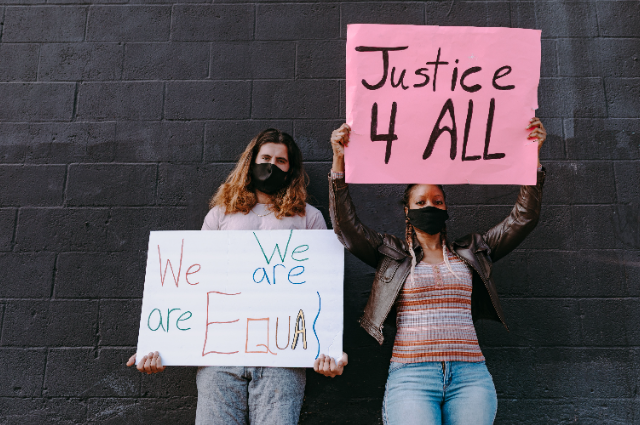
Law reflects what a society is willing to see. The myth that men cannot be raped, or that “real men” fight back, is still strong. A gendered rape law codifies that myth. Gender neutrality would not dilute protections for women. It woulSource: Citizens for Justice and Peace | CJP https://share.google/eE2COuGax7I9RPYBUd acknowledge that bodily autonomy belongs to everyone. India replaced a colonial law with a new one, but in doing so quietly erased legal protection for an entire category of rape victims. Modern wording, older blind spot. Until the statute changes, “justice for all” remains incomplete.
References:
- https://share.google/eE2COuGax7I9RPYBU
- https://share.google/jUvZeMqQiNQZJbh4i
- https://share.google/Im0v2BRxqphUFqrhe
- https://share.google/3ZubsOyUYMWq36psu
- https://share.google/3WCE674VR1CWFJ5pj
- https://share.google/1sho3ZO95Zm7cio83
- https://share.google/anbkuTkt3VeRT05fL
- https://share.google/4HKldVkd50NwEQyU8
- https://share.google/S8T62PZSHbNVoSlDj