
When Sharayu Daftary died in May 2025 at 91, the obituaries listed firsts. First woman president of ACMA. First elected president of Indian Merchants' Chamber. First woman on FICCI's executive committee. Padma Shri. 68 years in corporate governance.
But those who worked with her used a different title: Tai. Elder sister. Not madam, not chairperson.
Her life story is two arguments at once. One about industry: what a woman denied entry into her own family business can build with Rs 2 lakh and five workers. And one about dharma: what it means when a devout Jain says equality is not a modern concession to women, but what Jainism always meant.
Born Into Industry, Denied Industry: 1933 to 1958
Sharayu Daftary was born in 1933 into the Walchand family, one of independent India’s great industrial houses. Her grandfather, Walchand Hirachand Doshi, built Hindustan Construction Company, Premier Automobiles, Ravalgaon Sugar, and helped build India’s first shipyard and aircraft factory.
She grew up around factories, balance sheets, and nation-building talk. But when she asked to join the family business, she was refused. The reason given was simple and common for that era: she was a woman. The business would go to male heirs.
At 25, in 1958, instead of fighting a legal battle, she started her own. With Rs 200,000 borrowed and five workers, she founded Bharat Radiators Limited in Mumbai to make radiators and heat exchangers for automobiles.
She was its managing director from day one until her death. For 68 years. In an industry- auto components- that was almost entirely male. Her early years were about survival. Customers who assumed she was the secretary. Suppliers who asked to speak to the owner. A shop floor that had never taken orders from a woman. She stayed.
Building Bharat Radiators And A String Of Firsts
Bharat Radiators grew from a small shed into an OEM supplier to Telco (now Tata Motors), Bajaj, Mahindra and other major manufacturers. At a time when “import substitution” was national policy, she was making a critical component in India.
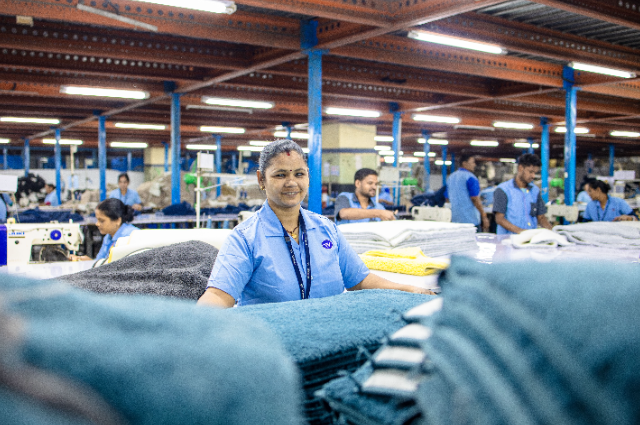
What set her apart as a leader, according to her workers, was not aggression but continuity. She visited the shop floor daily, knew workers by name, and kept a policy of not laying off workers during downturns, instead cutting costs elsewhere. That is where “Tai” came from.
Institutionally, she broke barriers that had stood for decades:
1971: First woman president of ACMA, Automotive Component Manufacturers Association of India. She was 38. She led the association when the auto industry was still nascent and negotiating licensing rules.
1981: First elected president of the Indian Merchants' Chamber (IMC), Mumbai. IMC, founded in 1907, had never had an elected woman president. She used that platform to push for women’s entrepreneurship cells.
First woman on the executive committee of FICCI. At a time when FICCI was the voice of big business in Delhi, her presence was symbolic and practical.
2004: Padma Shri for Trade and Industry.
She did not position herself as a “women’s industrialist.” She positioned herself as an industrialist who happened to be a woman, and then used that position to open doors for others.
Marriage, Family And A Different Model Of Support
Sharayu married Arvind Gaurishankar Daftary, a fellow industrialist. The marriage is often mentioned in her profiles because it was unusual for its time.
Arvind did not ask her to quit after marriage. He supported Bharat Radiators, helped with technical inputs, but left her clearly as managing director. They had three daughters, and she was open that she wanted her daughters to see a mother who worked.
In interviews, she said her mother-in-law once asked her why she needed to go to the factory every day. She replied that the workers were waiting. The family adjusted.
Her daughters did not join the auto components business directly, but all three became professionals, a fact she cited as her real success.
Jain Dharma And The Equality Argument- In her later years, Sharayu Daftary became deeply involved in Jain religious and educational work. She led the Dakshin Bharat Jain Sabha, one of the oldest Jain associations, and edited Jain Bodhak, a Jain monthly.
It is here that she made her most distinctive intellectual contribution. She argued, in speeches and editorials, that gender equality was not a modern reform imposed on Jainism, but intrinsic to Jain dharma from the start.
Her argument rested on three points from Jain texts:
- The soul has no gender: In Jain philosophy, the jiva is genderless. Liberation depends on karma and conduct, not on being male or female. Women can and have attained moksha.
- History of women ascetics: Jain tradition has a long lineage of sadhvis, with ancient texts like Kalpasutra mentioning women ascetics. If women could renounce the world, she argued, they could certainly run a factory.
- Ahimsa includes equality: Ahimsa, non-violence, is not just about not killing, but about not diminishing another being’s potential. Denying education or work to a woman, she wrote, is a form of himsa.
She was critical of later medieval interpretations that restricted women. She wrote that these were social accretions, not dharma. In her editorials in Jain Bodhak, she called for Jain institutions to give women equal roles in trusteeships and temple management, not as a favour but as a return to the original teaching.
For many younger Jains, especially women, this framing was powerful. It allowed them to argue for equality without being told they were being “Westernised.” They were being more Jain, not less.
Leadership As Humane Governance
Sharayu Daftary’s business longevity- 68 years in corporate governance- is rare anywhere in the world. She attended board meetings till months before her death.
People who served on boards with her note two traits: she read every paper, and she never raised her voice. In an era of corporate loudness, she was quiet and prepared.
At Bharat Radiators, she introduced profit-sharing for workers in the 1970s, a crèche in the factory in the 1980s, and continued paying workers during the COVID lockdowns when orders were zero.
When she was asked how she managed being a woman in a man’s industry, her answer was consistent: “I never thought about being a woman. I thought about the radiator. Is it leaking? Is it cooling? The radiator does not know who made it.”
Why Her Story Matters Now
India today has more women entrepreneurs than in 1958, but the share of women in manufacturing leadership is still under 10%. Family businesses still often pass to sons. The Walchand group itself, after disputes, fragmented.
Sharayu Daftary’s answer was not to wait for inclusion, but to build a parallel institution and outlast the bias. Bharat Radiators never became as large as Premier Automobiles, but it survived; it was hers, and it employed hundreds of families for six decades.
Her second answer, that Jainism always meant equality, is also timely. As debates about religion and gender get polarised, she offered a third path: look deeper into your own tradition, not outside it, to find equality.
When she passed away in May 2025, IMC and ACMA both held memorial meetings. But the most telling tribute was from her factory. Workers kept the factory open, garlanded her chair, and called her Tai one last time. Firsts matter. But sometimes the title that lasts is not president, but sister.
References:
- https://timesofindia.indiatimes.com
- https://indianexpress.com
- https://www.ficci.in/press-release/sharayu-daftary-passes-away
- https://www.jainheritage.org/sharayu-daftary-jain-bodhak
- https://www.walchandgroup.com/history