
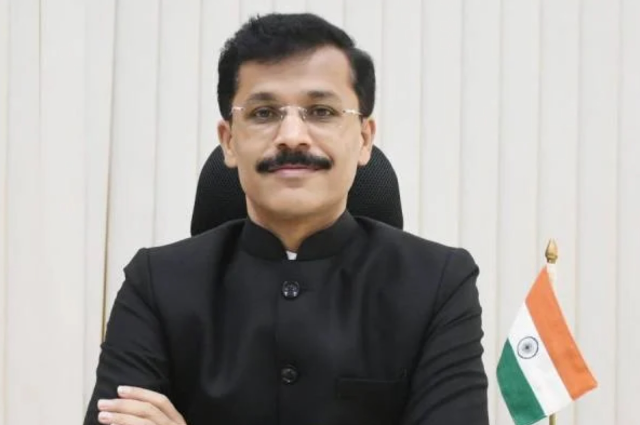
In Maharashtra’s bureaucracy, officers who make headlines usually don’t last long. Tukaram Mundhe is testing that rule. Within weeks of being appointed FDA Commissioner, the 2012-batch IAS officer launched what may be the most aggressive food-safety crackdown the state has seen in years. By the end of his first month, his teams had seized over 22 lakh kg of adulterated goods worth ₹29.11 crore, filed more than 235 FIRs, and sealed 274 illegal manufacturing units. The raids pulled back the curtain on synthetic milk rackets, toxic colour in sweets, and filthy packaging units operating in plain sight across Mumbai and Jalgaon.
The response was immediate. Industry lobbies pushed back. Political calls were made. And in the middle of it, the state assembly was forced to take a position. The government publicly backed Mundhe and confirmed he would stay as FDA Commissioner. Then, in a quieter move, it removed him from his additional charge as Guardian Secretary. The message was mixed, but clear: Maharashtra wants the crackdown, just not the discomfort that comes with it. Mundhe’s recent actions have now become a test case for how far an “uncompromising” officer can go in a system built on compromise.
The First 30 Days: Seizures, FIRs, and Shock Raids
Mundhe did not ease into the job. On day one, he signalled that the FDA would stop functioning as a licensing desk and start working like an enforcement agency.
The numbers tell the story. In roughly four weeks:
22+ lakh kg of adulterated material seized, valued at ₹29.11 crore. The haul included fake paneer, synthetic milk, adulterated oil, and food colours banned for consumption.
235+ FIRs registered against manufacturers, distributors, and shop owners.
274 units sealed for operating without licenses or in unhygienic conditions.
The geography mattered. Mumbai, with its massive consumption and distribution network, was ground zero. But Jalgaon and other tier-2 hubs were also hit hard, suggesting the problem was not just big-city scale but statewide.
Some raids went viral. Videos showed drums of liquid milk with detergent-like foam. Others showed sweets being coloured with industrial dyes hours before Ganeshotsav and Diwali orders were placed. For consumers, it was a jolt. For the industry, it was an ambush. Mundhe’s team used surprise inspections, night raids, and lab sample testing to bypass the usual “advance notice” culture that lets violators clean up before officials arrive.
What The Crackdown Exposed
The seizures were not random. They pointed to three recurring problems in Maharashtra’s food chain.
Synthetic milk and dairy fraud: Labs found milk adulterated with urea, starch, and detergent to increase volume. Paneer and khoya were made from skimmed milk powder mixed with vanaspati. With festival demand spiking, the profit margins were huge.
Unhygienic manufacturing and Dozens of units were operating out of residential buildings, with no pest control, open drains, and workers handling food without gloves. Packaging was done on floors.
Illegal units with political protection and Several sealed premises had been running for years despite pending notices. Business lobbies argued that “small manufacturers” would be ruined, while consumer groups argued that public health was being traded for votes.
The common thread: regulation had been reactive. Complaints were filed, samples were taken, and then files moved slowly. Mundhe flipped the model to proactive, high-visibility enforcement.
The Pushback: Why The Establishment Got Uncomfortable
A crackdown this large creates winners and losers. Consumers and honest manufacturers were the winners. The losers were the networks that had benefited from lax oversight.
Within days, industry associations met ministers. The argument was familiar: the raids were “harassment,” the penalties were “too harsh,” and the timing before festivals would “hurt the economy.” Behind closed doors, the pressure was about Mundhe’s style. He is known from earlier postings in Nashik and Navi Mumbai for bypassing middlemen, taking action first and explaining later, and using social media to publicise results.
That style wins public support but creates friction inside the system. Files that used to be settled with a fine were now becoming police cases. Names that used to be protected were now in FIRs. For an administration that relies on balancing business interests, voter sentiment, and bureaucratic hierarchy, Mundhe became a problem of optics.
The Assembly Vote and the Double Signal
The pressure reached the legislature. Questions were raised about the FDA’s “overreach” and its impact on small businesses. The government had two choices: rein Mundhe in, or own the crackdown.
It chose both. Publicly, the state confirmed that Tukaram Mundhe would continue as FDA Commissioner and that the campaign against adulteration would continue. That statement was aimed at consumers and the media. It framed the government as pro-public health.
Privately, the administration removed Mundhe’s additional charge as Guardian Secretary. The post is not directly related to FDA work, but it is a signal post. It is given to senior officers to coordinate district-level administration and is seen as a mark of trust. Stripping it while retaining him at FDA was the establishment’s way of saying: do the job, but don’t get too big.
That’s why it’s being called “the assembly vote that saved Mundhe’s FDA job.” The assembly debate forced the government to take a stand. It could not afford to be seen removing the officer leading the anti-adulteration drive right after such big seizures. So it kept him in the FDA, but clipped his wings elsewhere.
Mundhe’s Record: The Officer Behind The Headlines
To understand why this matters, you have to look at Mundhe’s career. He first came to public attention as Nashik Municipal Commissioner, where he took on the liquor mafia and encroachments. In Navi Mumbai, he was known for strict action on illegal constructions and COVID management.
His reputation is consistent: data-driven, media-savvy, and unwilling to wait for consensus before acting. That makes him popular with citizens and uncomfortable for entrenched interests. In the FDA, he brought the same template, targets, timelines, and public dashboards for seizures.
Supporters say Maharashtra needed this. Food adulteration is a silent public-health crisis linked to kidney problems, cancer, and child illness. Critics say the raids are theatrical and will hurt small vendors who lack capital to upgrade. The truth is likely in the middle: the problem is real, and the method is disruptive.
What Happens Next For Food Safety in Maharashtra
The immediate impact is already visible. Wholesale markets are asking for compliance certificates. Sweet shops are advertising “FDA-tested” ingredients. Consumer complaints to the FDA helpline have gone up.
But the long-term test is institutional. Can the FDA sustain this pace after the headlines fade? Three things will decide it:
Staff and labs: The FDA is understaffed. More food safety officers and faster lab testing are needed to process the volume of samples Mundhe’s raids are generating.
Legal follow-through: Filing 235 FIRs is one thing. Convictions are another. Courts are slow, and food-safety cases often drag for years. Without convictions, the deterrence weakens.
Political cover: As long as the government publicly backs the commissioner, the raids will continue. If that cover is withdrawn, the campaign will stall. The Guardian Secretary removal suggests the cover has limits.
The Bigger Picture
Mundhe’s month at FDA reveals a tension that exists in every regulatory agency. The public wants zero tolerance for adulteration. The economy wants flexible enforcement. The bureaucracy wants peace.
By seizing ₹29 crore of adulterated goods and putting 274 units out of business, Mundhe forced the state to choose. The assembly discussion and the government’s public backing mean the choice, for now, is enforcement. The quiet removal from Guardian Secretary means the choice also comes with boundaries.
Whether that’s enough depends on what happens after month one. If the FDA can turn raids into convictions, upgrade labs, and protect whistleblowers, Maharashtra could see a real shift in food safety. If not, this will be remembered as a burst of activity that ended when the pressure got too high.
For now, Tukaram Mundhe still has his job. And for the first time in years, adulterators in Maharashtra have a reason to be nervous about it.
Reference:
- YouTube https://youtu.be/MiecVF1qjZY?si=W4LQJfdM_U2jAg93
- https://youtu.be/2u0nxW0Rbms?si=LJXCcUZ6w8fsMTHU
- https://youtu.be/zI3PlTnLwKg?si=12KFZScIBModtGrU