
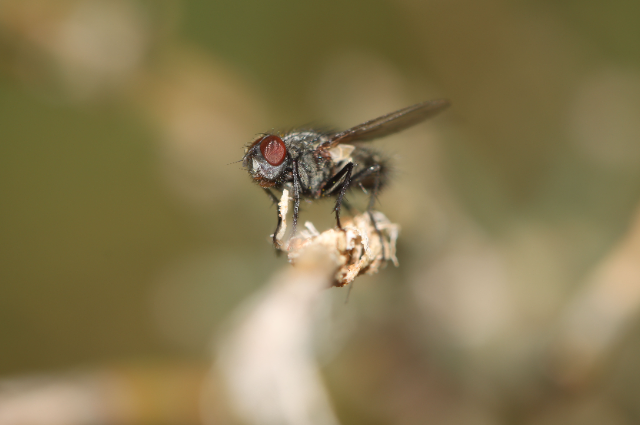
It sounds like something out of a horror film. A fly that lays eggs in living flesh. Its larvae hatch and burrow in, eating tissue while the host is still alive. That is the New World Screwworm, “Cochliomyia hominivorax”. For decades in the US, Canada, and Mexico, it was a problem of the past. Eradicated through one of the most successful public-health campaigns in agricultural history. Now it is back at the door. Cases are moving north through Central America and Mexico, and in 2025-2026 a travel-linked human case will be confirmed in the US. Beyond the visceral reaction, screwworm is an economic threat. It can tear through livestock, disrupt meat supply chains, and send food prices higher. Its return is a reminder that disease eradication is not permanent, and that a warming world is quietly reopening old doors.
What Screwworm Actually Is
The name is literal. “Screwworm” comes from the way the maggots twist into wounds like a screw.
Unlike houseflies that feed on garbage and dead animals, the female New World Screwworm seeks out living hosts. Any warm-blooded animal will do: cattle, sheep, goats, pigs, dogs, wildlife, and humans. She is attracted to any opening, a cut, a tick bite, a birthing canal, even the nose or eyes. She lays up to 400 eggs at the edge of the wound. Within 24 hours, the larvae hatch and begin feeding on live tissue. They release enzymes that keep the wound open and prevent healing.
If untreated, the infestation can kill an animal in a week. In humans, cases are rare but severe, usually linked to travel or open wounds in endemic areas. The pain, infection risk, and tissue damage are why it was once called the most costly livestock pest in the Western Hemisphere.
The key difference from other maggots, these do not eat dead flesh. They eat living flesh. That is what made it such a nightmare for ranchers before eradication.
How We Beat It The First Time
By the 1950s, screwworm was costing US livestock producers hundreds of millions of dollars a year. The solution did not come from pesticides. It came from biology.
Scientists developed the Sterile Insect Technique, or SIT. Male flies are raised in massive facilities, sterilised with radiation, and then released by the millions from planes. Sterile males mate with wild females. Those females lay eggs, but the eggs never hatch. Over time, the wild population collapses.
It worked. The US was declared screwworm-free in 1966. Mexico followed in 1991 after a joint US-Mexico program pushed a biological barrier all the way to the Panama Canal. A permanent barrier zone was maintained in Panama to keep South American screwworm from moving north. For 50+ years, North America lived without it. The program became the global gold standard for pest eradication without chemicals.
The Comeback: Why It’s Moving North Again
Eradication created a vacuum, not immunity. South of Panama, screwworm never left.
In the last few years, cases have surged in Central America and southern Mexico. Veterinary authorities in Costa Rica, Panama, Nicaragua, and Mexico have all reported outbreaks in cattle and wildlife. The spread has been faster than expected.
There are three main drivers.
First, climate: Screwworm thrives in warm, humid conditions. As average temperatures rise and wet seasons shift, areas that were once too cool for the fly are now suitable for longer parts of the year. That opens new migration routes northward.
Second, animal movement: Cattle, deer, and wildlife move across borders. So do people. One confirmed US case in 2025-2026 was linked to travel from an endemic country. The person had a wound that became infested abroad, and symptoms appeared after returning.
Third, gaps in the barrier: The Panama barrier requires constant sterile-fly releases and surveillance. Funding cuts, logistical issues, and increased animal trafficking have created weak points. Once the fly gets past Panama, there is very little natural barrier until you hit the US border.
The Food and Economic Stakes
This is not just a medical horror story. It is a food-security story.
The US, Mexico, and Canada have some of the largest beef, dairy, and pork industries in the world. A screwworm outbreak in cattle would mean dead animals, emergency treatment costs, quarantine zones, and trade restrictions. Countries that are screwworm-free cannot legally import meat from affected regions without strict treatment.
If screwworm re-establishes in North America, the cost estimates run into billions. The last time it was here,e producers spent fortunes on wound treatment and lost animals. Today, with consolidated feedlots and integrated supply chains, an outbreak would ripple fast. Prices for beef, leather, and even pet care would go up. Border states like Texas, Arizona, and New Mexico would be first in line.
Wildlife is also at risk. Deer, feral hogs, and endangered species have no one to treat their wounds. An outbreak could collapse local populations.
What Detection and Control Looks Like Now
The good news: we know exactly how to fight it, because we did it before. The bad news: it is expensive, ve and it has to be immediate.
Surveillance is the first line. Vets, ranchers, and border officials are trained to look for suspicious wounds with maggots. Any case must be reported within 24 hours. Labs can identify screwworm larvae quickly.
Response means sterile-fly releases. The US and Mexico still maintain rearing facilities and stockpiles of sterile males. If a case is found, planes go up within days to blanket the area. Animals in the zone are inspected and treated with larvicides.
The Panama barrier is being reinforced with increased releases and international funding. The goal is to stop the spread before it reaches the US-Mexico border.
For individuals, the advice is simple: cover wounds, use insect repellent in endemic areas, and seek medical care if a wound is not healing. The human case in the US was treated successfully because it was caught early.
A Fragile Victory
The screwworm story is a case study in how fragile eradication really is. We did not develop a vaccine. We did not make animals immune. We temporarily removed the fly from an ecosystem using a biological weapon of our own design. The moment we stopped maintaining that pressure, through climate shifts, funding gaps, or movement of animals, the problem came back.
It also shows how climate change is not just about heat waves. It is about unlocking pests and pathogens that were geographically trapped. A warmer corridor through Central America means a fly that once stopped at Panama can now keep going.
Eradication programs only work if they are maintained forever, or until the underlying conditions change. For screwworm, neither is true yet.
What Happens Next- Right now, the focus is containment. US and Mexican agriculture departments are running joint drills, pre-positioning sterile flies, and educating ranchers. The goal is to kill any incursion before it becomes established.
Long-term, the solution is the same one that worked 60 years ago, but at a larger scale: sustained sterile-fly releases, stronger animal movement controls, and climate adaptation planning for agriculture. It will cost money. But the alternative, letting screwworm re-establish in North America, would cost far more.
The comeback nobody wanted is here. It is not an apocalypse. It is a test of whether we remember the lessons of the last eradication, and whether we are willing to pay to keep them.
Because once a fly that eats living flesh finds its way back in, the only thing that stops it is us.
References:
- Time Magazine https://share.google/wvX2sn3bHISdl6Izn
- Screwworm: The Flesh-Eating Parasite Returning to the Spotlight | Contagion Live https://share.google/EFH3uGkTdqCmYrLSY
- Instagram: https://www.instagram.com
- Centres for Disease Control and Prevention | CDC (.gov) https://share.google/0KBBRgxcwBwHR0RLF
- Auburn University College of Veterinary Medicine https://share.google/5B6dejwbcxzSHBMBp