
We Call It ‘Circular Economy’ Now. India Has Been Doing It for Centuries.
The West is discovering sustainability. India never lost it.
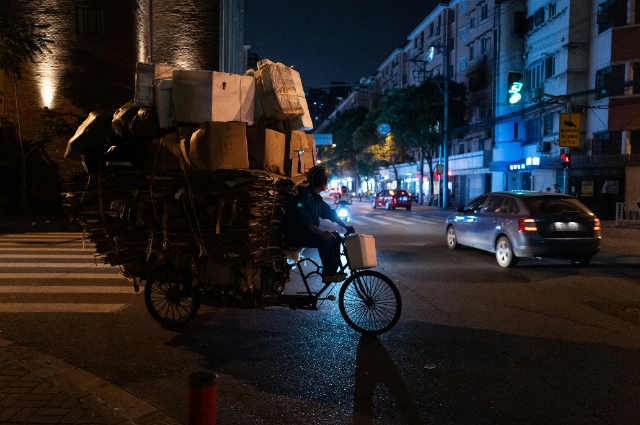
In Sweden, people drive 5km to deposit cans for recycling credits. In San Francisco, tech workers compost their coffee grounds. In India, a man on a bicycle shouts “kabadiwalas” at 11 am, and your mother appears with 3 months of newspapers, 2kg of plastic bottles, and a broken pressure cooker. No app. No carbon credit. No Instagram post. Just ₹200 back and an empty balcony.
You grew up calling it radii. The world now calls it the circular economy. And India’s version is worth $18 billion- run almost entirely by people with no salary slips, no LinkedIn, and no recognition.
The 4 million people who keep India from drowning in plastic:
Let’s start with numbers that should embarrass every developed nation.
It’s 4 million informal waste workers- kabadiwalas, ragpickers, scrap dealers forming a supply chain so efficient that Harvard Business School and the World Bank study it. They collect, sort, aggregate, and sell material through a multi-tier network that reaches from your doorstep to foundries in Punjab and plastic plants in Gujarat.
A 2018 study by Delhi-based Chintan Environmental Research found that Delhi’s informal recyclers save the city “₹7.2 crore per day” in waste management costs. That’s “₹2,600 and more than a crore a year”. Unpaid, uncounted, uncelebrated.
Think about that. The same system dismissed as “unorganised” is doing the job of municipal corporations at 1/10th the cost, with 4x the recovery rate of the US.
Why It Works:
India’s ‘waste’ is someone else’s asset
In most countries, recycling is a cost. You pay to have it collected. In India, recycling is income. You get paid to give away waste.
This flips the entire psychology-
Household level: That corner in the kitchen with old newspapers isn’t clutter. It’s a fixed deposit. Middle-class families know exactly what rates are this month. “₹12/kg for newspaper, ₹15/kg for cardboard, ₹60/kg for iron”. The kabadiwalas are your local commodity trader.
Design level: For decades, Indian products were built to be repaired. A steel dabba lasts 30 years. A Godrej almirah can outlive its owner. Your darzi turns old sarees into cushion covers. This is “design for disassembly” before IKEA wrote a sustainability report.
Cultural level: Jugaad and frugality aren’t trends. They’re survival. “Waste not, want not” wasn’t a slogan — it was economics. Why throw away a glass bottle when the doodhwala reuses it tomorrow?
The result: India generates 26,000 tonnes of plastic waste daily, but recovers most PET bottles because they have resale value. In the US, bottles are litter. In India, bottles are currency.
The Other Invisible Genius:
Dabbawalas and Six Sigma With No App
While we’re talking about invisible systems, look at Mumbai’s Dabbawalas.
200,000 lunch boxes. 6 days a week. 0.000004% error rate. That’s Six Sigma performance- the gold standard for companies like Motorola and GE.
Harvard Business School did a case study on them. FedEx sends executives to learn from them. Prince Charles met them. Richard Branson rode with them.
Their tech stack: bicycles, local trains, colour codes, and 5,000 men who are mostly semi-literate. No barcodes. No GPS. No customer support chatbot.
How? The same principle as kabadiwalas: hyper-local knowledge + human networks beat technology. Each dabbawala knows his 35 customers personally. Each kabadiwala knows which galli gives the best scrap. This is last-mile logistics perfected over 130 years.
Together, kabadiwalas + Dabbawalas are India’s answer to Amazon and Uber. Decentralised, low-carbon, employment-generating, and profitable without VC money.
The Billions Nobody Counts:
So how big is this economy?
Waste recycling: Estimated at $15-18 billion annually and growing at 25% YoY. That’s bigger than India’s music industry. Employment: 4 million direct jobs + 10 million indirectly dependent. That’s more than IT, more than textiles. Material recovery: India recycles 90% of PET bottles, versus 29% in the US. We recover 70% of paper vs 68% in Europe, but with no formal system.
Yet in GDP calculations, this is the “informal sector”. In ESG reports, it doesn’t exist. In Smart City plans, we replace kabadiwalas with “waste-to-energy plants” that burn the very material they recover.
We’re importing Western sustainability models to fix a problem we already solved.
The Problem: Formalising May Break It: The government wants to “formalise” waste management. Swachh Bharat built centralised plants. EPR rules make brands responsible for plastic. Sounds good.
But here’s the risk: You cannot spreadsheet what runs on trust.
The kabadiwalas give your house help a loan. He buys scrap on credit. He knows your Bhabhi wants only Mondays. No app can replicate that. When Bengaluru tried replacing informal collectors with a private firm in 2012, recycling rates dropped. The firm wanted mixed waste for incineration. Kabadiwalas want segregated waste for resale.
The future isn’t replacing them. It’s recognising and upgrading them — giving them ID cards, safety gear, access to credit, and direct links to recyclers. Hasiru Dala in Bengaluru and Swachh in Pune already do this. Income up 3x. Dignity restored. Recovery rates intact.
The World Needs to Study India, Not Teach It: The UN says the world must move to a “circular economy” by 2050. India was already circular in 1950.
Before “upcycling” was a Pinterest trend, your naani made godhadis from old sarees. Before “zero waste” was a lifestyle, Indian weddings fed 500 people on banana leaves that became compost by morning. Before “carbon footprint” entered dictionaries, the kabadiwalas did 20kg of recycling on a bicycle.
India built sustainability without the vocabulary. Now we’re importing the vocabulary and forgetting the practice.
Next time the kabadiwala calls, don’t just sell him radii. Thank him. He’s the reason India isn’t buried in trash. He’s the reason your plastic bottle has a 60% chance of becoming a t-shirt instead of choking a river.
He’s not the informal sector. He’s the infrastructure.
And the world’s most advanced recycling economy might just be the one that still runs on a bicycle and a weighing scale.
India’s informal waste sector, driven by 4 million kabadiwalas, manages an $18 billion recycling economy that boasts higher recovery rates than many developed nations, according to Chintan Environmental Research. Organisations like Hasiru Dala and Swachh (featured in GAIA reports) are successfully integrating these workers to upgrade, rather than replace, this efficient, trust-based system.
Reference: