
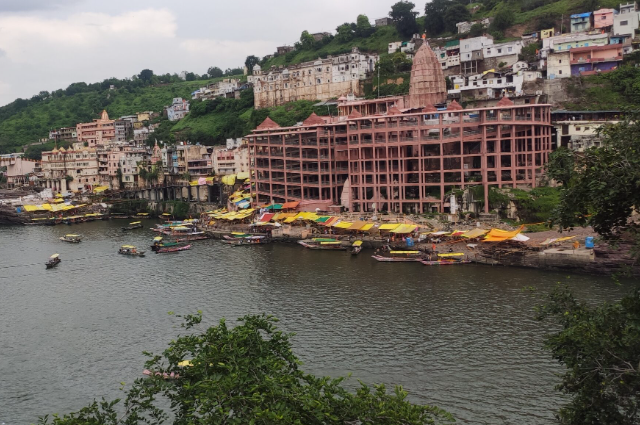
For years, the phrase “VIP darshan” at Indian temples meant one thing: pay more, wait less. Special queues, paid passes, and donor cards turned faith into a tiered system where time and money decided who got to see the deity first. Omkareshwar Jyotirlinga Temple in Madhya Pradesh just flipped that model. Since early 2024, the temple has replaced cash-for-access with blood-for-access. Donate a unit of blood at the camp set up near the temple complex, show your donation slip, and skip the 3-4 hour general line for direct VIP entry. No fee, no agent, no “donation” to a trust. Just 350 millilitres of blood.
The scheme was launched by the Khandwa district administration in partnership with the Omkareshwar Temple Trust and the district health department. The logic was blunt and practical. Omkareshwar sees 15,000 to 20,000 pilgrims on regular days and over 1 lakh on Mondays, Mahashivratri, and Shravan. The summer heat, long queues, and crowd pressure often cause fainting and medical emergencies. At the same time, Khandwa Medical College and nearby hospitals routinely face blood shortages, especially for O-positive, B-positive, and AB-negative groups. Thalassemia patients, accident victims, and pregnant women were being referred to Indore, 70 km away, because local banks ran dry. The administration asked: what if devotion could solve both problems at once?
So they set up a permanent blood donation camp at the Atal Ghats parking area, 200 meters from the temple entrance. It runs daily from 8 am to 6 pm, staffed by technicians from the Khandwa Blood Bank. Each donor gets a medical check-up, haemoglobin test, and post-donation refreshments. After donation, they receive a stamped certificate with a QR code. That certificate is scanned at the VIP entry gate near the Mamleshwar Temple side, and the devotee is allowed directly into the garbhagriha queue. The whole process takes about 45 minutes, including rest time. No one can “buy” the slip. You have to donate. Aadhaar is checked to prevent repeat donors within 90 days.
The numbers are telling. Between January and August 2024, the camp collected 487 units of blood, according to Khandwa CMHO Dr Sharad Harne. On Mahashivratri alone, 112 units were collected in a single day. That blood went directly to Khandwa District Hospital and helped cover 60% of the emergency requirement for the festival period. Before the scheme, the hospital averaged 40-50 units per month from voluntary camps. Now it’s touching 80-90. The most common beneficiaries have been accident cases from the Khandwa-Indore highway and anaemia patients from tribal blocks like Pandhana and Khalwa. The hospital also built up reserves of rare groups that previously had to be called in from Bhopal.
Pilgrims have responded better than officials expected. Rameshwar Patil, a farmer from Jalgaon, who donated in July, said he came for darshan and saw the camp. “I would have waited 4 hours anyway. Here I rested 30 minutes, gave blood, and had darshan in 10 minutes. My body did seva, and I got darshan--better than paying ₹500 for a pass.” The temple trust says the general queue has shortened by 20-30 minutes on peak days because 100-150 people opt for donation daily. There’s no resentment from non-donors, partly because the scheme is voluntary and partly because everyone sees the ambulance parked next to the camp.
Not everyone can donate. The camp follows National Blood Transfusion Council rules: age 18-65, weight above 45 kg, haemoglobin above 12.5 g/dL, no recent illness or tattoo. That excludes children, the elderly, and many devotees with chronic conditions. The temple kept the regular free queue intact and added a separate line for senior citizens and persons with disabilities. So the blood-for-VIP route is an additional option, not a replacement. It also doesn’t apply during the “bhasma aarti” or special restricted rituals where only priests enter.
The ethical debate was predictable. Is this “trading” darshan for blood? The collector of Khandwa, Anoop Kumar Singh, addressed it directly: “We are not selling darshan. We are honouring daan. In our culture, rakt-daan is jeevan-daan. If someone gives life to another, the temple gives them priority. It’s no different from letting a physically challenged person go first.” The Mahamandleshwar of the temple, Swami Teerthanand, backed it, citing the Shiva Purana: “Shiva accepts anything given with Shraddha — even blood, if it saves his creation.”
The model is now being studied for rollout. The MP Religious Trusts and Endowments Department confirmed in June 2024 that Ujjain Mahakal, Maihar Sharda, and Maheshwar temples are considering similar camps. The idea is not to force donation, but to connect high-footfall faith sites with public health needs. India faces a shortfall of 1.9 million units annually as per WHO data. Festivals and yatras cause massive gatherings but also medical strain. If 100 major temples ran one camp each, the deficit could drop significantly.
There are limits and safeguards needed. Medical ethics experts warn that linking any incentive to blood donation risks coercion, even if subtle. The camp must ensure no one with low haemoglobin is pressured, and that minors are not brought by families to “earn” a faster darshan. Khandwa’s team says they’ve rejected 1 in 5 potential donors for health reasons and that counsellors explain deferral without stigma. The QR system and Aadhaar check prevent touts from faking slips. Still, scaling will need strict SOPs so “VIP for blood” doesn’t become “VIP for paid donor.”
For now, Omkareshwar has done something rare: it made virtue the VIP pass. In a country where money often buys access, here blood does. It hasn’t ended queues or solved all shortages. But it proved a point — faith can fill blood banks if you ask it to. The next time someone says darshan is commercialised, Khandwa has a counter. At Omkareshwar, the currency of devotion is literally life. And 487 units later, the temple’s fastest line isn’t the one you buy. It’s the one you give.
References:
The Times of India https://share.google