
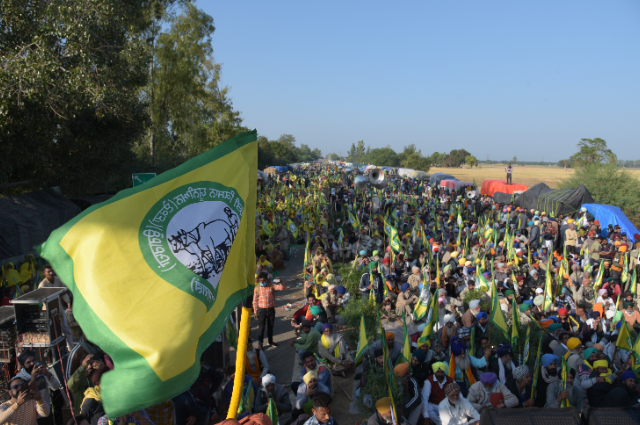
On Tuesday, July 21, 2026, Delhi once again turned into the centre of agrarian unrest as hundreds of farmers from Punjab, Haryana and other states descended on the capital under the banner of “Desh Bachao Morcha”. Their demand was singular and sharp: cancel the proposed India-US bilateral trade agreement. The farmers fear that opening Indian markets to cheap American imports will wipe out small landholders, dairy producers and farm labourers who already struggle with rising costs and debt.
The protest added to a week of disruption in Delhi, coming just a day after the Cockroach Janta Party’s “Sansad Chalo” march over NEET irregularities led to clashes with police. With two major agitations back-to-back, traffic snarls, barricades and heightened security became the new normal across central Delhi.
The March to Kisan Ghat - The “Desh Bachao Morcha” mobilization was planned weeks in advance. Nearly 80 farm unions initially formed the platform, and by the day of the protest, organisers claimed around 250 unions from Punjab, Haryana, Rajasthan, Himachal Pradesh, Uttar Pradesh, Madhya Pradesh, Maharashtra and Odisha had joined.
Farmers began gathering at Gurudwara Sri Fatehgarh Sahib on Monday night before moving toward the “Shambhu border” on the Punjab-Haryana highway. Visuals from the border showed buses, jeeps, tractors and private vehicles lined up, with Haryana Police installing concrete barricades and cement blocks on the bridge over the Ghaggar river.
The stated plan was a peaceful, four-hour sit-in at “Kisan Ghat” in Delhi. Delhi Traffic Police issued an advisory from 8:30 am onwards, warning of diversions around Rajghat, IP Flyover, Guru Nanak Chowk and Satyagrah Marg.
Why The India-US Trade Deal Alarms Farmers- The core issue is agriculture. Farmer leaders argue the proposed India-US Bilateral Trade Agreement, being negotiated under the “Mission 500” initiative to reach $500 billion in bilateral trade by 2030, could flood India with subsidized US farm products.
“We are not against trade. We are against a trade policy that leaves farmers behind,” said Harjit Singh, a protester from Punjab. Leaders say Indian farmers operating small holdings cannot compete with American produce backed by large-scale mechanization and government support.
The concerns go beyond just crops. Sarwan Singh Pandher, coordinator of Desh Bachao Morcha, warned the pact could cover dairy, industry, digital trade, e-commerce, government procurement and intellectual property. For farmers, this means cheaper milk powder, corn, soy and wheat could undercut domestic prices, while new rules on IP and procurement could affect seeds and subsidies.
The government, meanwhile, says it is in continuous consultation with farmers and industry. Minister of State Jitin Prasada told Rajya Sabha that inputs from state governments were being considered to safeguard trade interests.
Detentions, Barricades And A Standoff- The march did not reach Delhi easily. Haryana Police detained BKU-Charuni president Gurnam Singh Charuni on the 152-D Expressway near Pehowa as a preventive measure. In response, farmers blocked toll plazas at Shambhu and Milk Majra for hours.
At the Shambhu border, a several-hour standoff followed. Police stopped the Punjab convoy while two companies of RAF and Haryana Police were deployed at Panipat toll plaza to stop Haryana farmers marching from Karnal.
The protest was eventually suspended after talks with Haryana Agriculture Minister Shyam Singh Rana. He assured leaders of the release of detained farmers and a meeting with Union Agriculture Minister Shivraj Singh Chauhan.
250 Unions, One Platform- Desh Bachao Morcha is not just about this one trade deal. The six-member coordination committee including Gurnam Singh Chaduni, Sarwan Singh Pandher and VM Singh has listed broader demands: “legal guarantee of MSP for all crops, farm loan waivers, and a national water policy.”
Organisers say the morcha was formed specifically to oppose what they call an agreement that “could harm farmers, labourers and small traders while compromising India’s economic sovereignty”. The July 21 Kisan Mahapanchayat at Kisan Ghat was the first big show of strength.
Delhi’s Week Of Unrest- The farmer’s protest came on the heels of another flashpoint. On Monday, the “Cockroach Janta Party’s protest” over alleged NEET irregularities turned violent, with both sides reporting injuries. The overlap meant Delhi commuters faced restrictions two days in a row, with police asking people to avoid routes to the airport and railway stations.
For the government, managing these parallel protests while continuing trade talks with Washington is a tightrope. For farmers, the message was clear: any deal that threatens livelihoods will be met at the borders of the capital.
The Desh Bachao Morcha protest shows that agriculture remains the most sensitive fault line in India-US trade negotiations. Farmers are not rejecting trade outright, but they are demanding protections against a sudden influx of imports they cannot match in scale or subsidy.
With negotiations ongoing and an interim framework announced in February 2026, the coming months will decide whether the government can balance global trade ambitions with domestic farm concerns. Until then, Kisan Ghat and Shambhu border are likely to remain symbols of that standoff.
References:
- Farmers depart from Fatehgarh Sahib, demand cancellation of deal – ANI/Lokmat Times: ANI News https://share.google