
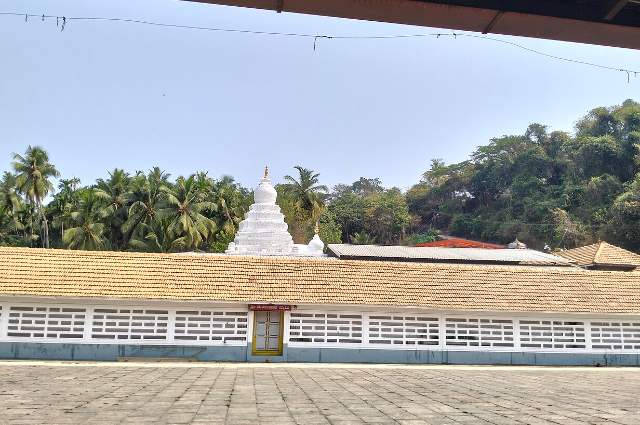
Picture a forest along a riverbank in coastal Karnataka, cordoned off with police tape, men in white coveralls on their knees digging with hand trowels because the ground beneath them might be a grave. Now picture that same patch of earth, a year later, back to being just a forest, because the bones they went looking for were never there. Both of those images are real. Both happened in Dharmasthala. And a year on, nobody, not the police, not the courts, not the temple, not the man who started all of it, can agree on which one is the truth. That should make you furious. Not sad. Furious. Because somewhere in the gap between those two images, an entire country got played, and we still don't know by whom.
Start where it started, in July 2025. A 48-year-old man who had worked as a sanitation worker for the Dharmasthala gram panchayat until 2014 walked into a police station and said he wanted to talk about the bodies. He said that between 1995 and 2014, under threat of death, he had been made to bury more than a hundred women and minor girls, many bearing signs of sexual assault, strangulation, and acid burns. Some, he said, were burned instead, with diesel, so nothing would be left to find. He recorded a statement before a magistrate, masked, because he said he feared for his life. He handed over what he said were human remains. He pointed investigators toward thirteen sites along the Netravathi river and told them to dig.
Sit with what that claim was asking us to believe: that a temple town, one that pulls in millions of pilgrims and untold crores every year, had been quietly disappearing women and girls for two decades, and that the only person willing to say it out loud was the man they had once handed a shovel and ordered to keep his mouth shut. That is the oldest, ugliest shape of injustice there is. Power harms. Powerlessness gets left holding the evidence, and the blame, and eventually the noose, while everyone above him watches from a safe distance to see which way it breaks. He belonged to a marginalised Dalit community. Of course he did. Who else would a system this comfortable with silence have picked to carry its worst-kept secret?
So a Special Investigation Team was formed. Forensic teams and revenue officials tore up riverbank after riverbank looking for what he said was there. And while children's remains were, allegedly, still unaccounted for, a civil court found the time to grant the temple's side an order scrubbing almost nine thousand links, videos and articles off the internet. Nine thousand. Not because a court had decided the allegations were false, but because a defamation suit asked it to, and it said yes. When the Supreme Court finally got a look at that gag order, the bench itself couldn't understand how it had been granted in the first place. Ask yourself what kind of country moves that fast to erase a conversation about missing women, and that slowly to actually find out what happened to them.
Then it started coming apart. A skull, presented before a magistrate as belonging to a young sexual assault victim, one of the most damning pieces of evidence in the entire complaint, turned out under forensic testing to belong to a thirty-two-year-old man. On 23 August 2025, the SIT arrested its own star witness for perjury. Eleven of thirteen sites yielded nothing at all. By September, the man who had once stood before a magistrate describing bodies by the dozen was, according to investigators, admitting he had lied. And by November, the chargesheet ran to nearly four thousand pages, naming six people, not temple administrators, but the whistleblower himself and four of the activists who had spent months screaming for the temple's leadership to be jailed. Somebody built a mass grave out of nothing, and then made a nation grieve over it for months.
If you think that's infuriating, wait. In June 2026, the same man walked back into court and said the confession itself had never been his to begin with. In a writ petition, he alleged the very activists now charged beside him had recruited him, driven him to safe houses in Kerala and Tamil Nadu, paid him a few thousand rupees at a time, handed him a skull and told him to smile for the camera, and dangled fifty lakh rupees out of what he called a two-hundred-crore campaign to see the temple's administrator jailed. He named an actor in the filing, claiming he'd been put on a call with him at a resort. He says he's telling the truth now because he was finally too afraid not to. The High Court has ordered the state and the SIT to respond, and as of the last hearing, nobody has proven or disproven a single word of it.
So which is it? Was a temple town covering up mass murder and rape for twenty years, or did a network of activists manufacture a genocide out of a stolen skull and a desperate man's silence, just to bring down a family they'd already decided was guilty? I don't know. You don't know. The SIT doesn't seem entirely sure either, and that is exactly the crime nobody is naming here. Somewhere between a real horror and a manufactured one, an entire year went by where the only thing that was never actually established- whether anyone died, and how- got buried under two competing performances of certainty, both loud enough to trend, neither honest enough to be trusted.
And this is not new territory for this town. In 2012, a seventeen-year-old named Sowjanya was raped and murdered near this exact temple, a case that dragged through the local police, Karnataka's Criminal Investigation Department, and finally the CBI, whose special court acquitted the only person ever charged, in 2023. Her family asked for it to be reopened. The Karnataka High Court said no. Dharmasthala did not even have its own police station until 2016. Sit with that. A pilgrimage town that has been quietly accused, for decades, of disappearing people, went sixty years without the basic machinery to investigate a crime inside its own limits. That is not an accident. That is what happens when a place gets powerful enough that nobody in a position to ask questions ever really has to.
Underneath the skull and the chargesheet and the writ petition, that is the actual story, and it should make you angrier than either version of the burial claim does. A system where truth has become something you can manufacture at scale, in whichever direction serves you, and where the only person who ends up permanently ruined by it is the one with the least power to begin with. If the SIT is right, a Dalit sanitation worker was used as a disposable prop by activists who had already decided a powerful man was guilty and needed a body count to prove it. If his newest petition is right, that same man is being used again, this time to protect the very people he first accused. Either way. Either way, somebody with money and reach picked up a broken man and pointed him like a weapon, and when he'd served his purpose, let the country tear him apart on camera. Nobody with actual power in this story has lost a single night's sleep over it.
Meanwhile, a mother named Ananya has been waiting since 2003 to find out what happened to her daughter on a college trip that never ended. A family named Sowjanya's still has no answer a court will accept. Nobody is holding a press conference for them. No chargesheet runs four thousand pages in their name. If there is a reckoning coming to Dharmasthala, it has not arrived for the people who actually deserve one. What has arrived instead is a courtroom calendar, a status report due whenever a judge feels like reading it, and a country asked, again, to decide whether it trusts an institution to tell the truth about itself before somebody forces its hand. Ask yourself honestly: how many more skulls, real or staged, will it take before anyone answers for any of it?
References:
- https://en.wikipedia.org
- https://www.scmp.com
- https://aphilomathsjournal.com
- https://www.pgurus.com/
- https://thefederal.com
- https://www.oneindia.com
- https://english.publictv.in
- https://www.thehansindia.com
- https://www.freepressjournal.in
- https://telanganatoday.com
- https://sundayguardianlive.com
- https://theleaflet.in/press-freedom
- https://www.deccanherald.com