
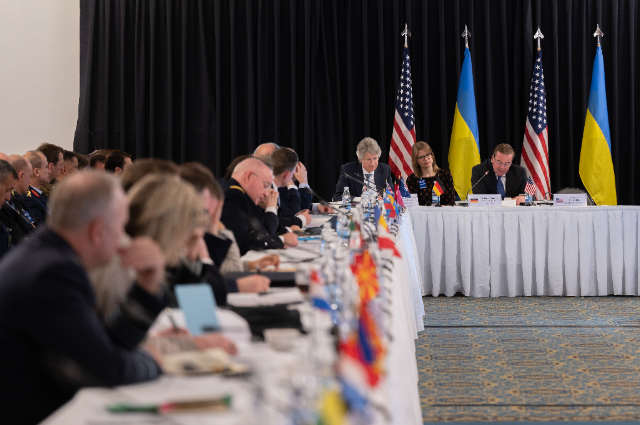
Every year, somewhere with good security and better catering, the most powerful people in the world sit down to fix it.
They talk. They agree on a communiqué. They shake hands in front of flags. They leave. And the world continues more or less as it was — except now there's a document, signed by everyone, that nobody is legally required to follow.
This is global governance. And we have built two separate clubs to do it.
The G7 came first. It was born out of the 1973 oil crisis, when the US, UK, France, Germany, Italy, Japan, and Canada decided they needed a room where the major economies could coordinate. No charter. No secretariat. No binding votes. Just an informal agreement that the world's wealthiest democracies would talk regularly, and that talking would be enough.
For a while, it was. These seven countries controlled enough of global GDP, enough of global trade, enough of the world's military and financial infrastructure, that their coordination was the order. Russia joined the G8 in 1998 but was suspended in 2014 following Crimea and has never rejoined. China was never invited at all. The European Union sits in as an observer — present, but not quite a member.
That's the G7. A room with no rules, where the people inside already run things, and the point is the room itself.
Then came the G20. Created in 1999, after the Asian financial crisis exposed something the G7 couldn't ignore: the world's economy didn't actually stop at the borders of seven wealthy democracies. Indonesia mattered. Brazil mattered. South Korea mattered. When their markets collapsed, it sent shockwaves through the very countries sitting in the G7's well-catered room. So the room got bigger.
Currently, the G20 comprises 19 member states plus the European Union, representing about 85% of the global GDP, 75% of international business, and two-thirds of the global population. By any measure, it looks more like the world actually is.
Except.
This year's G7 is hosted by France. Macron has invited India, Brazil, Egypt, Kenya, and South Korea as guests. They will attend sessions. They will speak. They will be photographed alongside the leaders who actually set the agenda. And then they will go home with no vote, no seat, and no formal standing — guests at a dinner where the menu was decided before they arrived.
India is the world's most populous country. It is the fifth-largest economy. It is a founding G20 member. And at the G7 table, it is a guest.
Sit with that.
The standard defence of the G7's continued existence goes something like this: the G20 is too large and too divided to move quickly. When you need rapid coordination — on sanctions, on financial regulation, on responding to a global shock — you need a smaller group of like-minded countries who share basic values and can act without waiting for consensus from 20 different governments. The G7 is the steering committee. The G20 is the general assembly.
That is a reasonable argument. It is also a convenient one, because it lets the same seven countries that have run global institutions since 1944 continue to set the agenda while giving the appearance of a broader table.
Here is what actually happens at these summits: the real work doesn't happen in the plenary sessions. It happens in the bilaterals — the one-on-one meetings scheduled in the margins, the quiet conversations over coffee between finance ministers, the agreements that get announced on the sidelines and then ratified in the communiqué as if everyone decided together. The summit is a stage. The negotiations happened before anyone boarded a plane.
Which means the question of who is in the room matters less than who gets a phone call three weeks before the summit when the agenda is being written.
India is learning this. Brazil is learning this. South Africa learned it years ago. Formal membership in the G20 guarantees a seat. It does not guarantee influence. Influence comes from the bilateral relationships, the historical alliances, the quiet lobbying that happens between summits — and in that game, the G7 countries, with decades of institutional relationships and coordination infrastructure, hold a structural advantage that a new member cannot close simply by showing up.
So why do both clubs still exist?
Because dismantling the G7 would require the countries inside it to give up something they have never voluntarily given up: the right to coordinate among themselves before consulting everyone else. And because the G20, for all its representational legitimacy, has never produced a binding agreement on anything — its communiqués are statements of intent, routinely undermined within months by the domestic politics of the countries that signed them.
We have the G7 because power consolidates. We have the G20 because the world noticed. We have both because nobody has figured out how to replace either with something that is simultaneously legitimate, representative, and actually capable of making decisions that stick.
The real question is not G7 versus G20. The real question is what global governance is actually for.
If it is for coordination among the powerful, the G7 works. If it is for solving problems that require the cooperation of the entire world — climate finance, debt relief, pandemic preparedness, AI governance — then a room where two-thirds of the world's population has no formal vote is not a feature. It is the problem.
India hosts summits. India gets invited to others. India gives speeches about multipolarity and a reformed global order. And then India sits in the guest chair at the G7 and waits to be told what was decided.
That is not a permanent arrangement. It is a transitional one — and the transition is already underway, in the form of new coalitions, new development banks, new bilateral agreements that route around the old institutions entirely.
The G7 and the G20 are not in competition. They are two stages of the same slow renegotiation of who gets to run the world, and on whose terms.
The communiqués will keep coming. The handshakes in front of flags will continue.
But the room is changing. And the people who built it know it.
References:
- Wikipedia — "52nd G7 summit" https://en.wikipedia.org
- Wikipedia — "G20" https://en.wikipedia.org
- Council on Foreign Relations — "What Does the G20 Do?" https://www.cfr.org
- World Economic Forum — "What is the G20 and why does it matter?" https://www.weforum.org
- Al Jazeera — "G7 meeting in France: What's on agenda, who is attending?" https://www.aljazeera.com
- France Diplomatie — "G7: Priorities for the Évian Summit" https://us.diplomatie.gouv.fr
- France Diplomatie — "The outcomes of the G7 Summit in Évian" https://us.diplomatie.gouv.fr
- People Daily — "Kenya at G7 Summit: What the group is and why Ruto is attending in 2026" https://peopledaily.digital
- G20 Global Land Initiative — "About G20" https://g20land.org
- Wikipedia — "G7" — https://en.wikipedia.org
- World Atlas — "G7 Countries" — https://www.worldatlas.com
- TIME — "The History, and Significance, of the 50th G7 Summit" — https://time.com
- Ministero degli Affari Esteri (Italy) — "G7" — https://www.esteri.it
- U.S. Department of State Archive — "Fact Sheet: G-7/Summit of The Eight: History and Purpose" — https://1997-2001.state.gov