
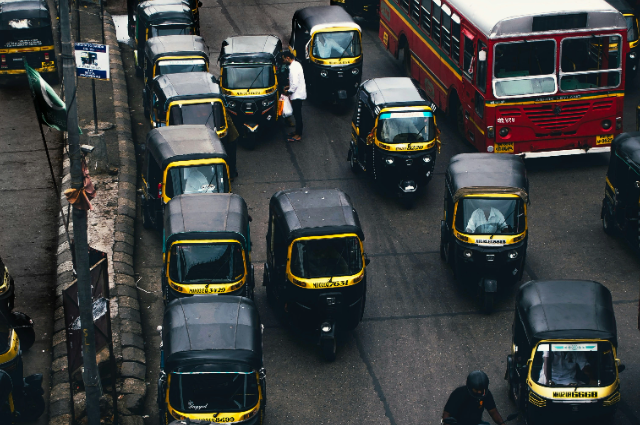
We have gotten used to a certain kind of story out of this country. The one where a small mistake a wrong turn, a raised voice, a rupee too many ends in a hospital bed, a viral video, a court case. We brace for it every time we open our phones. So when a story comes along where the mistake is met with nothing but honesty, we almost don't know what to do with it.
On a rushed Mumbai morning this June, Shubham Gune, founder and CEO of Hinglish, was racing to a 7 AM meeting with an international client who was in the city for only a day. Outside the building, he opened Google Pay to settle his auto-rickshaw fare of ₹156. In his hurry, he typed ₹15,682 instead, hit send, and walked in without checking the screen.
The meeting, he would later write, felt like a collapse. It did not go the way he needed it to go.
He walked out disappointed, carrying the weight of a client he thought he had lost, only to find the auto driver, a man named Altaf, still parked outside. Waiting.
Altaf could have said nothing. The money was already sitting in his account, sent by a stranger too rushed to notice, in a city of millions where nobody would have blamed him for simply driving off. Instead, he told Gune about the error and sent back every single rupee. When Gune insisted he at least keep the ₹156 he was rightfully owed for the ride, Altaf refused that too. “It’s the start of the day for both of us, sir,” he reportedly said.
Not a rupee more. Not even the fare he had earned.
Then, seven days later, the story got its second act. The same international client who had walked away from that disappointing meeting reached out again and this time, decided to move forward. Gune said his mind went straight back to that footpath the moment the good news landed. He found Altaf and sent him ₹500: the ₹156 he was owed, plus a little more, accepted this time.
It is, in some ways, a small story. Fifteen thousand-odd rupees, a ride, a few hundred rupees sent back later as thanks. Nobody was hurt. No one raised a hand. No FIR, no hospital bed, no political party racing to be photographed with the man at the centre of it. And yet it has moved thousands of people online in a way that stories about fractures and viral assaults rarely manage without also leaving us furious.
Maybe that is the real headline here. Somewhere between doubting every stranger who touches our money and being reminded, once in a while, that we still don't have to.
There's an easy irony sitting inside the timing of it all, too. The morning that felt like a professional collapse to Gune was also the morning he happened to witness the kind of decency most of us only hear about secondhand. And a week later, when the client he thought he had lost came back on his own terms, Gune's first instinct wasn't relief about the business. It was to go find the man on the footpath. That says something about which part of the week actually stayed with him.
Think about how easily this could have gone the other way. UPI mistakes like this one happen every day in India now: a wrong digit, a rushed thumb, a fare that becomes a fortune. Most of us have heard of someone who lost money this way and never saw it again, or spent weeks filing complaints with a bank that could not promise a refund. There was no camera on that footpath at 7 AM. No one would have known if Altaf had simply pocketed the difference and driven off to his next fare. He chose to wait instead, on a morning that was costing him other customers, for a passenger who did not even know yet that anything was wrong.
We rarely tell these stories about the men who drive our cabs and autos. When they make the news, it is too often for the worst five minutes of their lives: a fare dispute, a scuffle, a complaint gone viral, not moments like this one, quietly earning nothing but a stranger's trust in humanity back. It says something about which stories we have decided are newsworthy, and which ones we treat as a pleasant surprise instead of the norm we should expect.
Thousands of people commented on Gune's post and called it a reminder that honesty still exists. Not that it should exist. That it still does, as if we had all quietly agreed, at some point, to expect less from the people we share our cities with.
There is also a quieter economic detail buried in this story. ₹15,682 is not spare change for a driver working fares of ₹150 at a time; it could have covered fuel, rent, a month of groceries. Altaf had every practical reason to keep it, since the man who made the mistake would likely never have found him again in a city of over twenty million people. He returned it anyway, and then refused the fare on top of it, twice, until Gune found a way to make him accept something small in return.
So I ask you the question this story keeps circling back to: if ₹15,682 of your money had landed in a stranger's account on a morning when he had every reason to pocket it and disappear into the city, would you ever have expected it to come back?
And if you were the one holding someone else's mistake a fortune that was never yours, on a day when keeping quiet would have cost you nothing, would you have waited on that footpath the way Altaf did?
Mumbai exhaled. Maybe, once in a while, that is enough of a headline.
References:
- Free Press Journal — "Mumbai Entrepreneur Accidentally Pays ₹15,682 For ₹156 Auto Fare; Here's What The Driver Did Next" https://www.freepressjournal.in
- Bombay Samachar (English) — "Mumbai Man Accidentally Pays Auto Driver ₹15,682: What Happened Next Restores Faith In Honesty" https://english.bombaysamachar.com
- Asianet Newsable — "Mumbai Founder Accidentally Pays Auto Driver Rs 15,682, His Honesty Changed The Day; See Viral Post" https://newsable.asianetnews.com
- NewsX — "Mumbai-Based CEO Accidentally Pays Rs 15,000 To Auto Driver In Hurry; Rickshaw Driver's Response Wins Hearts" https://www.newsx.com
- Psychologs — "Mumbai Auto Driver Returns ₹15,682 Mistakenly Transferred by CEO" https://www.psychologs.com
. . .