
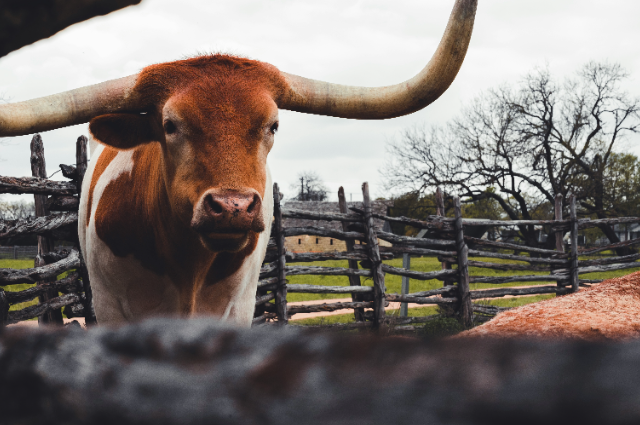
There’s a rancher out there in South Texas touching a freshly branded calf’s hide, and he’s looking for any sign of movement underneath the crust. Not edema. Movement. Movement means he’s too late. The damage was done before he even found out about it. Screwworm larvae feed for days before you can spot them. Screwworm is a type of maggot, and most maggots eat dead animals. Screwworm eats live animals.
Now, this is bad. But I need to be very clear about this. Screwworm is a known, understood problem. We have a solution. It’s just one that we let slip away.
Screwworm was eradicated from the United States in 1966. This wasn’t easy or cheap. The country spent decades and billions of dollars. And what happened? Well, the screwworm fly only mates once. So, we bred millions of screwworm flies, killed off their reproductive ability with X-rays, and then set them loose. A fly that mated with one of our X-rayed flies produced no offspring, and that cycle continued, year after year, until the screwworm was gone, first in Florida, then in Texas, and eventually until a screwworm-free zone in Panama was formed, which prevented screwworms from entering North America for nearly 50 years.
That barrier stopped holding in 2023. Since then, screwworm has marched north through Central America and Mexico, and the cost has not been abstract: more than 189,000 animal cases and, more disturbingly, over 2,290 human cases, people infected with a parasite eating them from the inside. A travel-linked human case turned up in Maryland in August 2025. Then on June 3, 2026, it stopped being someone else’s problem: USDA confirmed the first domestic animal case in decades, in a three-week-old calf in La Pryor, Texas. Within weeks, cases had climbed past three dozen across Texas and into New Mexico.
So how did a threat this well understood, with a fifty-year track record of working, slip past every safeguard we supposedly had?
Ask the people who used to run this program. In 2025, as part of the federal cuts carried out under Elon Musk’s DOGE initiative, the government eliminated roughly fifteen million dollars in funding for a program monitoring screwworm’s spread from Panama and paused a sterile-fly facility in Mexico tied to a $165 million emergency package. Kevin Shea, who ran the agency responsible for animal disease prevention until early 2025, said the incoming administration was “so skeptical of the career people, they didn’t really want to listen,” and that the money most likely got frozen along with everything tagged as foreign aid.
Read that again. Fifteen million dollars were cut from the exact program built to catch this before it reached American soil. The government is now asking for a billion dollars to fix what that fifteen million was supposed to prevent. Representative Pramila Jayapal put it bluntly: DOGE “saved fifteen million dollars” by cutting that program, and now “there’s an outbreak infecting our beef and the administration is spending a billion dollars.” The new Texas facility, budgeted at roughly $750 million to produce 300 million sterile flies a week, won’t be operational until 2027 at the earliest, years after the fly already crossed the border it was meant to guard.
Officials keep calling this minor. The Agriculture Secretary described it as a “little pest” with no threat to public health, narrowly true since properly inspected, cooked beef cannot give you screwworm. But that rests on something uncomfortable: a homeless man sleeping outside with an open wound has little access to hygiene or medical care, and a fly doesn’t check anyone’s insurance before laying eggs. Over two thousand human cases in Central America is a warning filed away because they hadn’t reached people who mattered to the people making these calls.
Then we have the topic that involves every person with a grocery cart in the country. The amount of cattle in America has reduced considerably and is at its lowest since 1951. Retail beef prices reached an all-time high of $9.64 per pound in April 2026 while ground beef prices have gone up from $3.95 in December 2020 to about $7 today. Ranchers in the Texas Panhandle, which accounts for about six billion dollars in revenue, feel the need to change their usual practices like branding. All this happened without a single case appearing in your state; the simple fear of the outbreak can cause inflation on its own.
Underneath it sits a quieter culprit: a warming climate. Screwworm cannot survive hard winters, and researchers studying the original eradication found cold weather did real work alongside the sterile-fly program, work the climate used to do for free. That free tool is disappearing. Panama’s barrier didn’t fail only because of decisions in Washington; it failed as warming patterns made the geography that once contained this fly less reliable. Restore every dollar DOGE cut tomorrow, and the climate math underneath this outbreak still doesn’t reset.
So sit with this instead of scrolling past it as one more overseas parasite story. We already know how to beat this fly. We proved it decades ago, through funding nobody wanted to keep paying once the threat looked handled. We are now relearning that lesson at sixty-five times the cost of the program we cut, on a timeline that leaves the border exposed until 2027, while a warming planet quietly makes the fix harder every year we argue about blame.
Ask yourself honestly: how many more solved problems are we one budget line away from unsolving? And when the next photo surfaces, whether it’s a rancher’s calf, a man in a hospital bed, or just a beef price tag none of us can afford, will it finally be enough to make prevention look cheaper than the crisis, before the crisis, not after?
References:
- Al Jazeera. (2026, June 4). First US screwworm case in 60 years: Should America be worried? https://www.aljazeera.com
- ASM.org. (2025, September 5, updated 2026, June 16). New World Screwworm: Rise, Fall and Resurgence. https://asm.org
- CDC. New World Screwworm Outbreak: Situation Summary. https://www.cdc.gov
- CNBC. (2026, June 10). How screwworm in Texas cattle herds could re-inflate record beef prices this summer. https://www.cnbc.com
- CNN Business. (2026, June 9). What screwworm means for your beef prices? https://www.cnn.com
- Common Dreams. (2026, June 17). 'Elon Musk Should Have to Pay For This': Trump Admin Says It Needs $1 Billion to Combat Screwworm. https://www.commondreams.org
- Democracy Now! (2026, June 17). Texas Faces Screwworm Outbreak a Year After DOGE Cut Funding for Key Program. https://www.democracynow.org
- Forbes. (2026, June 4). Screwworm Is Rising In Texas—How It Could Impact America’s Beef. https://www.forbes.com
- Forbes. (2026, June 16). Screwworm Cases Up To 12: 'This Should Set Off Alarm Bells'. https://www.forbes.com
- Hailu, K. T., Kasagga, A., & Haddad, R. R. (2025, October 7). The New World Screwworm in the United States: A Narrative Review Anchored to the 2025 Travel-Associated Human Case. Cureus. https://pmc.ncbi.nlm.nih.gov
- Gutierrez, A. P., Ponti, L., & Arias, P. A. (2019, February 13). Deconstructing the eradication of the New World screwworm in North America: retrospective analysis and climate warming effects. Medical and Veterinary Entomology. https://pubmed.ncbi.nlm.nih.gov
- Phys.org. (2026, July). Colorado prepares for screwworms, as the pest that was eradicated in 1966 returns to the US. https://phys.org
- Reason. (2026, July 23). Flesh-eating screwworms are back. Gene drives could stop them for good. https://reason.com
- Tasting Table. (2026, June 12). The Unsettling Reason Beef Prices Could Continue To Skyrocket In 2026. https://www.tastingtable.com
- Texas Tribune. (2026, June 16). No fat to trim: Texas’ beef industry struggle to turn a profit. https://www.texastribune.org
- Texas Tribune. (2026, June 25). How history is guiding a U.S. attempt to beat the screwworm again. https://www.texastribune.org
- The Invading Sea. (2026, April 16). A flesh-eating fly is advancing toward the US border – can it be stopped? https://www.theinvadingsea.com
- Techdirt. (2026, June 8). DOGE Cut Screwworm Fly Monitoring Program From USAID Last Year. Now They’re Back In The U.S. https://www.techdirt.com
- Dallas Fed. (2026, May 20). Ranchers herd it all as fewer cattle pressure beef prices; screwworm lurks. https://www.dallasfed.org
- FinancialContent Market Minute. The Great Beef Siege: USDA Halts Mexican Imports as Screwworm Crisis Hits the Texas Border. https://markets.financialcontent.com