
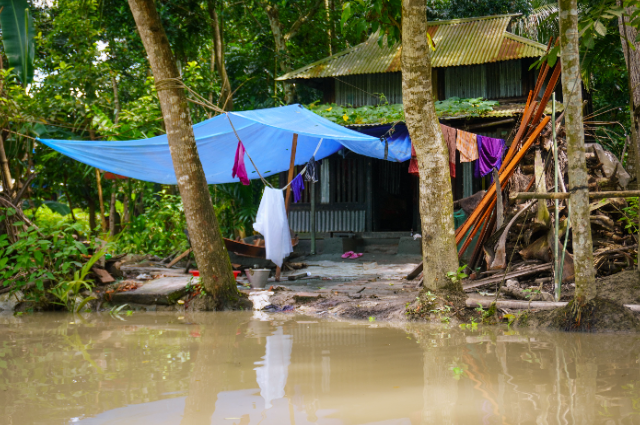
There are villages in Charaideo, Jorhat and parts of Golaghat where the oldest residents used to say one sentence with something close to pride: floodwater has never entered our homes. This year, that sentence stopped being true. Decades of certainty went under in a matter of hours, and the people who had spent an entire lifetime believing their ground was safe are now the ones being pulled onto boats.
The death toll in Assam from floods in 2026 crossed the mark of 101 in Assam as of Monday, when more than 1.26 lakh people were still affected in ten districts and more than 3 lakh people had taken shelter in relief camps organised by the Government since the time of the tragedy. Over 450 villages were still flooded. It was the rivers, not everyone in Assam would even think could cause trouble, such as the Dikhow, the Disang, the Dhansiri and the Janj, rather than the Brahmaputra,ra that caused the havoc this time around. The Parliamentary Affairs Minister of Assam, Pijush Hazarika, stated that this was the most serious flooding Assam has faced in six decades, since it affected the districts that had never experienced the need for preparedness for this type of flood in their lives.
This is the heartlessness hidden behind the 2026 floods of Assam. Assam has been flooded every single year without exception. People from the districts of Lakhimpur and Dhemaji have come to know, ow out of sheer necessity, how to cope with floods – from knowing how high to place important documents on the shelf, to how to build a bamboo chang after your house.
This is the cruelty lurking beneath this year’s catastrophe. Every year, the state of Assam experiences floods. People in Lakhimpur and Dhemaji districts have, by necessity, figured out how to live with the water: the shelf on which to store documents, the construction of bamboo chang next to the destroyed house, how many days until one gets used to the stench of decaying livestock. But this year, the water reached places not remembered even in memory, reaching them most quickly among those who are least able to flee.
Consider the kind of thing that evacuation requires from a person. It demands that one leave within minutes, navigate through water in which it is impossible to know what lies below, squeeze oneself into an overcrowded boat, all with nothing but what one can carry. Now think about doing that at seventy. At eighty, with a hip that does not bend the way it used to, medication you cannot risk leaving behind, memory that keeps insisting you go back for one more thing. Relief workers across Upper Assam have repeatedly described young volunteers physically carrying elderly residents out of flooded homes, because there was no other way to get them out in time. That is not a detail on the margins of this story. For a lot of families, it was the entire story.
And merely surviving the water is only half the challenge. In the relief camps where doctors have to treat the victims of floods in the district of Dhemaji, it has been found that the time immediately following a flood can be the most perilous one because infections such as skin diseases, diarrhoea, and malaria flourish among crowded people who have little access to clean water. A fever that a twenty-year-old shakes off in days can undo someone twice that age for weeks, in a camp with no privacy, no routine, and no certainty about when, or whether, there is a home left to go back to.
Because the truth this year is that home may not be there. Nearly twelve thousand hectares of cropland have gone under. Tens of thousands of cattle and poultry have been lost. This is only half the story, however. Physicians dealing with flood survivors in Dhemaji have stated that the period immediately following a flood can be one of the most perilous times due to the prevalence of skin infections, diarrhoea, and malaria in relief camps where access to water is minimal, and people are crowded together. Elderly patients are affected by this even more. Losing that once is a wound. Losing it on a loop, flood after flood, year after year, is something closer to a life sentence.
Almost forty per cent of the Brahmaputra valley falls under the flood-prone areas, an area of vulnerability that can be traced to an earthquake on the Assam-Tibet border in 1950, which caused the deposition of about 45 billion cubic meters of sediments in the river, causing an increase in the riverbed and decreasing the capacity of the river to take water. The deforestation in the hills of Nagaland, Arunachal Pradesh and Meghalaya for mining and other development work also contributed towards the increased flooding in the area. While floods used to occur in Assam at intervals of ten years before 1950, the frequency has become yearly since then and embankments that were damaged previously continue to be repaired but never reconstructed in anticipation of the next monsoon.
India Meteorological Department has predicted rainfall inthe Assam and Meghalaya region through the coming days, with some of the rivers like Dhansiri and Kushiyara remaining above the danger level. It means somewhere tonight, an elderly resident who has already lost a home once this year, or six times over a lifetime, is watching the water outside their door and doing the only thing left to do: waiting, and hoping this is not the flood that finally takes what all the others left behind.
So ask yourself what "relief" is actually supposed to mean here. Is it enough to hand out rice, dal and mustard oil in a camp and call the job done, when the people inside that camp are being asked to rebuild a life at seventy that they already rebuilt five times before? Is a nation's disaster response actually complete once the water recedes, or does it end the moment the cameras stop finding Assam interesting? And when the elderly of Upper Assam say floodwater never used to reach them, and then watch it arrive anyway, what exactly are we as a country still asking them to be resilient for?
References:
- The Statesman. "Assam floods 2026: Death toll hits 80, over 2.12 lakh people affected in eight districts." https://www.thestatesman.com
- NPR / Houston Public Media. "Flood death toll in India's Assam reaches 100 as thousands lose their homes." https://www.houstonpublicmedia.org
- Sentinel Assam. "Assam Floods Claim 101 Lives, Over 1.26 Lakh People Still Affected." https://www.sentinelassam.com
- The Week. "Assam flood crisis deepens as toll reaches 100; relief ops underway as IMD predicts more rain." https://www.theweek.in
- Mahabahu.com. "Assam Floods 2026: Why the State Keeps Drowning Despite Years of Promises." https://mahabahu.com
- The Federal. "In Assam, recurring floods bring psychological trauma of displacement, rehabilitation fatigue." https://thefederal.com
- Down To Earth. "Assam Floods 2026: Why does the state flood every year?" https://www.downtoearth.org.in
- IDR. "Assam's worst flood in years needs new relief methods." https://idronline.org
- Coverfox. "Assam Floods 2026: Death Toll, Damage, Causes and Latest Updates." https://www.coverfox.com