
The failure that facilitated the crime had occurred before one male individual entered the room of the hotel and before the rickshaw driver ever set his eyes on a 13-year-old girl making her way back home. It did not occur on June 18. It took place over the years when inspectors were not doing their rounds, licenses were not being monitored, and people who had the opportunity to spot an unregistered and fire clearance-free hotel did not do anything about it. The crime lasted five days. The negligence that facilitated the crime took place over a much longer period of time, and nobody has been held responsible. The crime lasted five days. The negligence that enabled it spanned a much longer period, and no one has been held responsible for that yet.
More than 150 unlicensed hotels were operating in Sri Ganganagar district alone. They had no registration and no oversight, with no checks in place for however long it took them to reach that number. This was known only after an incident of kidnapping and raping of a child by over 30 people in four of these hotels took place. Think about the question which nobody from the local administration is prepared to ask: how is it possible that there are 150 unauthorised hotels in this district without any inspection or audit? What were those responsible for knowing this waiting for?
On June 18, she left home to meet a friend. She got herself an e-rickshaw as her vehicle for the ride home. As stated in the FIR filed with the Rajasthan Police, her driver never took her home but rather took her to Hotel Joy Inn, where she was kept inside and sold her to the hotel's owner. For the next five days, she was shifted from Joy Inn, Hotel Saffire, Hotel Khungar, and other places as stated in the FIR and was raped by more than 30 people. It was revealed by her that every time she cried out in pain, she was made to drink liquor.
Here is what should anger you most about that timeline. Every law needed to have stopped this already existed. POCSO existed. Anti-trafficking law existed. Hotel licensing regulations existed. Nobody had to draft new legislation or invent a new offence after the fact, the way this country so often does once a tragedy is bad enough to force Parliament's hand. The tools were sitting there, unused, for however many years those 150 hotels operated unchecked. This was not a gap in the law. It was a gap in whether anyone with the power to enforce the law bothered to.
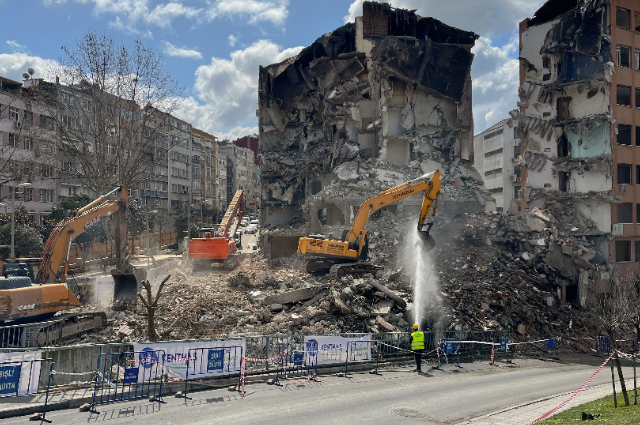
On June 30 and July 1, authorities demolished four hotels connected to the case, citing violations of building bylaws, on the direct order of Chief Minister Bhajan Lal Sharma. Sri Ganganagar's Superintendent of Police said the structures had never been legally sanctioned in the first place, and that no one found guilty would be spared. It made for a satisfying photograph — bulldozers, more than fifty police and administrative officials, a fortress of security around the rubble. But sit with the timing of it. These buildings were illegal on June 17. They were illegal a year before that. The bylaw violation the state used to justify tearing them down was true the entire time they were operating. Nobody needed a child to be raped inside them to know they shouldn't have existed. What then is the reason for the demolition squad being the initial and sole act of enforcing law in this region?
By the second week of July, twenty-one people had been arrested, increasing gradually from eight to fourteen to eighteen. That climb should not read as progress. It should read as an admission that nobody, not the police station covering that neighbourhood, not the district administration that licenses hotels, had any real picture of what was operating in their own city until a five-day crime forced them to go looking.
Congress leaders in Rajasthan, including Karanpur MLA Rupinder Singh Kunnar, have taken to the streets over exactly this, accusing the local police station of failing to notice a child held captive inside commercial properties in its own jurisdiction for five straight days. Kunnar has called for capital punishment for those convicted and demanded the suspension of the officers posted at that station. Whether or not you agree with the demand for a death sentence, sit with the accusation underneath it: a police station that exists specifically to know what's happening on its own streets did not know a child was being trafficked through hotels a few kilometres from where its officers report for duty every day. That is not a five-day failure. That is a standing failure that finally had consequences severe enough to be noticed.
It took the National Commission for Women convening an emergency hearing in New Delhi on July 8 — summoning Sri Ganganagar's own District Magistrate to explain himself in person — for someone to ask the obvious question out loud: why did local patrolling and intelligence networks fail to detect any of this? Why does a district need a national commission to fly its own officials to Delhi before it identifies and seals its unregistered hotels, instead of that being baseline administrative duty, done quietly, every year, without anyone having to ask?
The Commission gave the state government fifteen days to produce a full Action Taken Report and ordered every unregistered hotel and guest house in the district identified and sealed, not just the four that made headlines. It also ordered an internal review of the police station itself. Fifteen days. A number chosen because someone in Delhi has learned, correctly, that without an externally imposed deadline, nothing in this story moves on its own. That itself should embarrass every layer of local government between here and Jaipur: it took an outside body threatening a deadline to get a district to do the job it was already funded and mandated to do.
This case did not arrive in isolation. It broke into the news cycle weeks after a separate case in Delhi, where a ten-year-old girl sleeping on a pavement was allegedly abducted, raped, and murdered by a cab driver — a crime that dragged the country straight back to 2012, to a bus in Munirka and a name the whole country still remembers. That case produced four executions in 2020 and a complete rewrite of India's anti-rape laws in 2013, specifically so that nothing like it would happen again.
So why does it keep happening? Not because the law is too soft on paper. Because we have built a national habit of treating catastrophe as the trigger for enforcement, instead of treating enforcement as the thing that prevents catastrophe. Nobody audits hotel licences until a child is found in one. Nobody reviews a police station's patrolling until a national commission forces the question. Nobody asks how many unregistered guest houses exist in a district until the number becomes a headline. We do not lack laws in this country. POCSO exists. Anti-trafficking statutes exist. Building and licensing bylaws exist. What we consistently lack is the will to enforce any of it before it becomes unavoidable, and then we act like the demolition of four buildings and twenty-one arrests is accountability, instead of the bare minimum that should have already been in place.
Here is the part that should terrify you more than the crime itself: thirty separate men, on thirty separate occasions across five days, made an individual choice to walk into that room. None of them was forced. Every one of them calculated, correctly, that he could do this and very likely face nothing close to a real consequence. That calculation isn't paranoia on their part. It's arithmetic, and our own justice system supplied the numbers.
India's conviction rate for rape cases has hovered around 27 to 28 pper centfor years, according to National Crime Records Bureau data, meaning roughly seven out of ten men formally accused walk free even after the case reaches court. In the country, out of all the rape cases that have been filed for trial, more than 1.2 lakh are yet to be settled, and the average time taken to complete a rape case trial in the country is more than two years, with almost one-fifth of them taking more than five years. A man in Sri Ganganagar deciding whether to walk into that hotel room was not deciding against a system that reliably punishes him. He was deciding against a system that, for roughly seventy per cent of men in his position historically, does nothing at all.
This is not an argument that our laws are too lenient on the books. Nirbhaya's killers were sentenced to death within a year of the crime, in 2013, and it still took until 2020, seven more years of appeals and delay, before that sentence was actually carried out. If the country's most watched criminal case in a generation took eight years from crime to execution, what chance does a case in Sri Ganganagar have of moving any faster, once the cameras leave and the news cycle finds its next headline? We have not built a system that makes men afraid of what happens if they do this. We have built one that makes them confident that even if they're caught, the consequence is years away, uncertain, and frequently avoidable on bail long before a verdict ever arrives. That confidence is not a personality defect unique to thirty men in one Rajasthan town. It is a rational response to what this country has actually shown its rapistshappens to them.
While all of this was unfolding, a second, faster crisis spread alongside it, online. A video claiming to show the accused hanged from a crane went viral — it was religious effigies from an unrelated procession. Footage claiming to show the men being paraded and caned through the streets went viral — it was old footage from an unconnected police action in Gujarat, from March. A claim that the survivor had died in hospital went viral — Rajasthan Police had to publicly confirm she is alive and safe with her family just to kill the rumour. Fact-checkers at The Quint, Factly, and NewsMeter had to spend real hours tracing each of these back to their true origins, while Sri Ganganagar Police found themselves running two jobs at once: investigating an actual crime, and pleading with the public to stop inventing new ones. Even the misinformation is a symptom of the same problem — a public that has learned, correctly, that outrage is the only currency that moves an institution, so people manufacture more of it, on top of a story that was already horrifying enough on its own.
The trial hasn't started. The chargesheet is still being built. Nobody yet knows how many of Sri Ganganagar's 150-plus unlicensed hotels were used this way before this particular case forced anyone to look, or how many similar hotels exist in the district next door, waiting for their own headline. What we do know is that a girl is safe with her family, that a police station is finally under a review it should have invited on itself years ago, and that a fifteen-day deadline from Delhi is the only reason anyone is moving faster than a news cycle.
So I'll ask you the same thing I keep asking myself. Why does this country only ever check a licence, audit a police station, or take unregistered hotels seriously after a child has already paid the price for our not doing it sooner? What would it actually take for that oversight to happen on a Tuesday in March, quietly, before anyone is forced to demolish the evidence of having missed it?
References:
- Three hotels in Sri Ganganagar face bulldozer action over gangrape of 13-year-old girl — The Print
- Three Hotels Demolished In Sri Ganganagar For Aiding In Minor's Gang Rape — ETV Bharat
- Rajasthan: 13-year-old girl sexually exploited by over 30 men, hotels in Sri Ganganagar face bulldozer action — The Statesman
- 13-year-old girl raped by 30 men over 5 days in illegal hotels — MSN News
- Sri Ganganagar gang rape case: 13-Year-Old Girl Sold, Raped by 30 Men Over 5 Days in Rajasthan — StackUmbrella
- श्रीगंगानगर नाबालिग सामूहिक दुष्कर्म मामला, अब तक 21 आरोपी गिरफ्तार — ETV Bharat Hindi
- श्रीगंगानगर गैंगरेप केस में पुलिस का बड़ा एक्शन, कुल 18 गिरफ्तार — JBT News
- Five Days, Thirty Men, One Child: What Sri Ganganagar Says About Us — Real, She Power
- NCW Seeks Action Taken Report on Rajasthan Minor Rape Case — Akashvani News (All India Radio)
- Rajasthan Minor Rape: NCW Issues 15-Day Ultimatum — GrowJust India
- FACT CHECK: Viral Videos of Public Hangings and Beatings Falsely Linked to Sri Ganganagar Rape Case — The Chenab Times
- Has the Sri Ganganagar Rape Victim Died? Rajasthan Police Clarify Viral Rumours — LatestLY
- Fact-Check: Videos From Hardoi Falsely Shared as Ones of Minor In Sri Ganganagar Gang Rape Case — The Quint (WebQoof)
- Unrelated video from Gujarat shared as Rajasthan Police parading Sri Ganganagar rape case accused — Factly
- Fact Check: Sri Ganganagar rape case accused punished by cops in public? No, video is from Gujarat — NewsMeter
- 2012 Delhi gang rape and murder — Wikipedia
- India hangs four men over 2012 Delhi bus gang rape and murder — Al Jazeera
- Delhi Horror: Cab Driver Accused of 10-Year-Old Girl's Rape and Murder Allegedly Cleaned Vehicle, Took Another Ride After Crime — English Bombay Samachar
- India Rape Statistics | 2026 Verified Data — Gitnux (NCRB-sourced)
- India Rape Statistics | 2026 Sourced Report — World Metrics (NCRB/PRIA-sourced)
- 10 years of Nirbhaya: conviction rate in crimes against women just 26.5% in India — Deccan Herald