
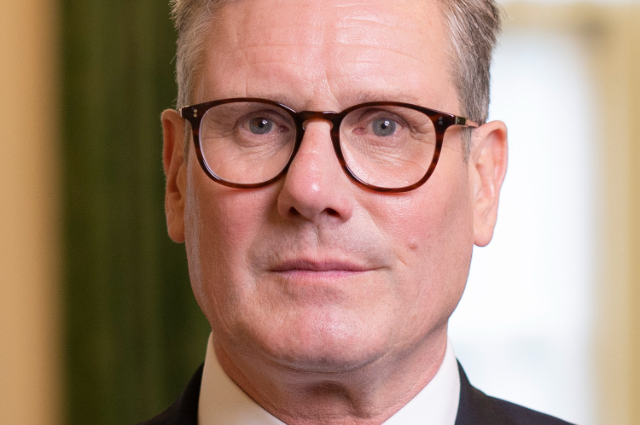
He won by a landslide. Exactly 718 days later, he was gone. On July 5, 2024, Keir Starmer walked through the door of 10 Downing Street as the most electorally dominant Labour leader since Tony Blair. He had inherited a party that, just four years earlier, had suffered its worst general election defeat since 1935. He had rebuilt it. Disciplined it. Made it electable again. Britain handed hima majorityof 174seats. The country exhaled after fourteen years of Conservative government. In the photographs from that July morning, Starmer looked like a man who had earned something hard. On June 22, 2026, he stood outside the same door and announced he was leaving.
What the Local Elections Actually Said
The numbers from May 2026 were not just bad.
They were the kind of bad that ends careers. Labour lost 1,498 councillors in a single night. It lost control of 38 councils. In London, its heartland, its safest ground, it lost Lambeth and Lewisham to the Greens. In Wales, a Labour stronghold for a century, Plaid Cymru won the most seats inthe Seneddfor the first time in history. In northern England, the working-class communities that Labour had represented for generations turned to Reform UK instead.
Reform UK, the hard-right party led by Nigel Farage, gained over 1,400seatsinasingle night. Farage called it a "historic shift in British politics." But only 5%of 2024Labour voters had switched to Reform. The bigger haemorrhage was to the Greens and Liberal Democrats; 32% of lost Labour voters had gone left or centrist, not right. This was not a simple story of a working-class revolt to Farage. It was a collapse in every direction at once. Labour had managed to simultaneously lose its progressive base and its traditional heartlands.
Starmer told reporters: "Let me be clear, these are really tough results. I'm not going to sugarcoat it." He also said he wasn't going to walk away. He meant it. For a few more weeks.
The Dominoes
Resignation is rarely a single moment. It is a sequence. And after May 2026, the sequence moved fast. On May 14, Health Secretary Wes Streeting quit the cabinet, saying he had lost confidence in Starmer's leadership. The same day, Labour MP Josh Simons resigned his parliamentary seat, not for scandal, not for principle, but to create a vacancy. A vacancy so that Andy Burnham, the Mayor of Greater Manchester and Labour's most popular politician outside Westminster, could stand in the by-electionandenterParliament with a mandate to challenge for the leadership.
That manoeuvre, a sitting MP resigning his own seat to make way for a challenger, had not been seen in British politics since 1965. It was constitutional, technically. It was also a declaration of war dressed as a favour.
Then, in June, Defence Secretary John Healey and Armed Forces Minister Al-Carson resigned over defence spending. The cabinet was hollowing out. By mid-June, 103Labour MPs had publicly called for Starmer to resign. Another 143 had stayed silent. Only 158 were still publicly supportive. In a parliamentary party of 412, the arithmetic of loyalty had collapsed.
The By-Election That Made It Final
On June 18, Andy Burnham won Makerfield with nearly 25,000 votes and a majority of over 9,200, considerably larger than polls had predicted. Reform underperformed. Burnham overperformed. The message wasn't subtle.
He had spent years as Greater Manchester's Mayor actually doing the work fighting for the homeless, building free bus networks, becoming the kind of politician who was recognisable on the street rather than in a briefing room. He had entered the race not as an opportunist but as someone the party had been quietly waiting to need. Four days after Burnham's victory, Keir Starmer walked outside Downing Street and said the words he had been resisting for weeks.
"The question my party is asking now is whether I am best placed to lead us into the next general election. I have heard the answer of my parliamentary party to that question, and I accept that answer with good grace.
What He Was, and What He Wasn't
The honest account of Starmer's premiership is more complicated thaneither hissupporters or critics want to admit. He inherited, by his own description, a Labour party that was "politically, financially and morally bankrupt." He fixed it. He got it elected. He ended fourteen years of Conservative government. He also made real mistakes. The appointment of PeterMandelson as US ambassador, a figure whose connections to Jeffrey Epstein became public in September 2025, forcing a humiliating dismissal, cost himmoral authoritywhen he could least afford to lose it. His attempts to match ReformUK's rhetoric on immigration did not stop Reform's rise but did alienate his progressive base. His Chief of Staff resigned in February 2026.
He governed during genuine difficulty, refusing Trump's request to use British bases in the Iran war while authorising limited defensive strikes, a position that satisfied nobody. A defence spending row that cost him two more cabinet ministers. A UK political landscape in which national polls now showed a near-five-way split, each party competing for roughly 20% of the electorate.
But the specific failure that ended him was simpler than any of this. He never found a way to make ordinary people feel that Labour's victory in 2024 was their victory too. The landslide had been real. The connection to the voters behind it had not been.
What Comes Next
Nominations open July 9. A new leader is expected before Parliament returns in September. Andy Burnham is the clear frontrunner. He will be the UK's sixth Prime Minister in seven years.
Britain has not had sustained political stability since before the 2016 Brexit referendum. Each new arrival at Downing Street inherits not just the policy problems of the last one but the accumulated exhaustion of a public that has watched too manycertainties dissolvee.
Burnham will arrive with genuine warmth, genuine popularity, and a mandate from a party desperate to believe the next leader will be the one who finally holds. But he will need more than that. He will need to find the thing that Starmer, for all hisdiscipline andd forensic intelligence, never quite found: the human connection between what a government does and how ordinary people feel it landing in their lives. A landslide in 2024. 1,498 seats lost in 2026. One more departure fromthat blackdooron Downing Street. The British public is not done being disappointed. They are simply ready to try someone else.
References:
- Wikipedia. 2026 Labour Party leadership crisis. https://en.wikipedia.org
- Wikipedia. 2026 United Kingdom local elections. https://en.wikipedia.org
- Wikipedia. Premiership of Keir Starmer. https://en.wikipedia.org
- CNN (June 22, 2026). Keir Starmer resignation — UK to get sixth PMin sevenyears. https://www.cnn.com
- NPR (May 10, 2026). Keir Starmer's party lost big in U.K. local elections. https://www.npr.org