
Watch closely the next time a player walks to the baseline at Wimbledon. Not the racket. Not the shoes. Watch what they pick up between points, press to their face, drape across their shoulders in the thirty seconds before the next game begins.
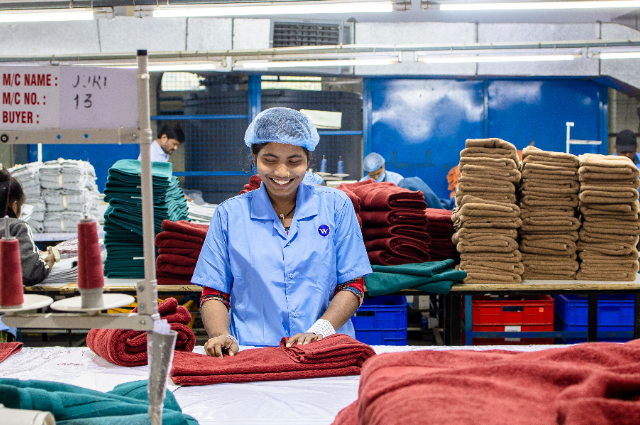
That towel — green and purple, soft enough to be worth arguing over, famous enough that an estimated 500 of them disappeared from the 2025 Championships every single day — was not made in England. It was not woven in Manchester, where the Christy brand was born in 1850. It was made in Vapi, Gujarat. By workers who will never see Centre Court. In a factory that produces some of the world's most in-demand luxury textiles and has done so quietly, without ceremony, for over fifteen years.
Almost nobody watching knows this. Almost nobody watching ever asks.
How a Manchester Mill Became a GujaraṄt Factory
The story begins, as so many textile stories do, with cotton and Britain andthe19thcentury. Christy was founded in Manchester in 1850, and its first significant achievement was reportedly crafting a towel for the Queen of England. For more than35years, Christy made the official Wimbledon towels in the UK. They became, quietly, one of the most coveted objects in sport. Players started taking them home after matches. Novak Djokovic joked that he packs extra luggage specifically for Wimbledon towels. IgaŚwiątek has admitted gifting them to friends. During the 2025 Championships, the towels were vanishing at a rate of roughly 500 per day, disappearing into bags and under arms and into the kind of pockets that insist they have no idea how a towel got inside them.
In 2006, Welspun India — a Gujarat-based textile conglomerate valued at approximately $2.7 billion, one of the largest home textile manufacturers in the world—acquired Christy. Not just the idea of Christy. The whole thing: the brand, the heritage, the royal first towel, the Wimbledon contract, and the name that had stood in Manchester since before the invention of the telephone.
By 2010, production had moved. Not just some of it, but all of it. The looms that weave the most recognisable sports towels on earth are now in Vapi, in Valsad district, Gujarat. The planning for each year's Wimbledon collection begins eighteen months before the Championships. The design process accounts for how the colours will appear on television — because those greens and purples and golds need to look exactly right in the light that falls on Centre Court, broadcast to hundreds of millions of people around the world. Each towel takes approximately seven days to make.
What Seven Days in Vapi Produces
The process is more intricate than a towel has any right to be. Wimbledon's towels are woven using a yarn-dyed jacquard technique — meaning the colours are set into the yarn before weaving rather than printed on afterwards, which gives the design its durability and depth. The fabric uses Christy's proprietary HygroCotton technology, which produces a cotton that is simultaneously softer and more absorbent than conventional terry.
The towels carry Oeko-Tex MADE IN GREEN certification — independently verified as containing no harmful substances and manufactured under ecological and social standards. The cotton is sourced through the Better Cotton Initiative. Welspun has eliminated all plastic packaging from the Wimbledon line, replacing it withFSC-certified card. Its Anjar facility runs entirely without freshwater, operating through an advanced sewage treatment plant that recycles all the water it uses. In a single year, the company recycled approximately 1,455 metric tonnes of plastic waste from its manufacturing operations.
These are not the details that Wimbledon's television coverage discusses. But they are the conditions under which the towel around Carlos Alcaraz's shoulders was made. The sweatshop-over sustainability certifications, the workers running the jacquard looms at hours that don't correspond to the English summer afternoon unfolding onscreen, the supply chain that stretches from a Gujarati cotton field to a London grass court in a journey that involves more countries, more hands, and more unglamorous industrial care than any viewer in the stands would think to imagine.
The Heritage That Moved and the Name That Stayed
There is something worth sitting with in the specific way this story is told —or rather, the way it isn't. The Christy brand remains resolutely British in its presentation. The
176-year history is invoked. The royal associations are mentioned. The Wimbledon website does not advertise that the physical object players handle and fight over and smuggle home in extra luggage was woven in Gujarat.
This is not dishonesty, exactly. The design heritage is genuinely British. The brand identity is genuinely old. The craftsmanship standard is genuinely demanding, and Welspun meets it. But there is a more generous version of this story —the version in which the real achievement is not that an Indian company managed to maintain a British standard, but that an Indian textile industry — centuries old, technically sophisticated, now producing for the most demanding luxury markets on earth—never needed that framing in the first place.
Welspun is a $2.7 billion company. Its Vapi workers are not approximating excellence. They are producing it.
The towel that Novak Djokovic presses to his face before a Wimbledon serve was made by someone in Gujarat who will never be acknowledged in the broadcast. That worker got the colour right. They got the softness right. They got it done in seven days, to specifications developed eighteen months in advance, for a tournament that has been using their factory's output since before most of its current champions were old enough to hold a racket.
The heritage is British. The towel is Indian. And the person who deserves credit forwhat's in Djokovic's hand on Centre Court is in Vapi, Gujarat, and probably never watched the match.
References
- Robb Report India (July 2026). Wimbledon Towels Made in Gujarat: The Christy–Welspun Partnership. https://www.robbreportindia.com
- News Daily 24 (July 2026). Wimbledon Towels Made In India: How A Gujarat Factory Crafts The Championship's Most Iconic Souvenir. https://newsdaily24.in
- Friday Wall (July 2026). The Story Behind Wimbledon's Iconic Towels: Made in Gujarat Since 2009. https://www.fridaywall.com
- Welspun Living (official). Luxury Towels with a Legacy: Welspun & Wimbledon. https://www.welspunliving.com