
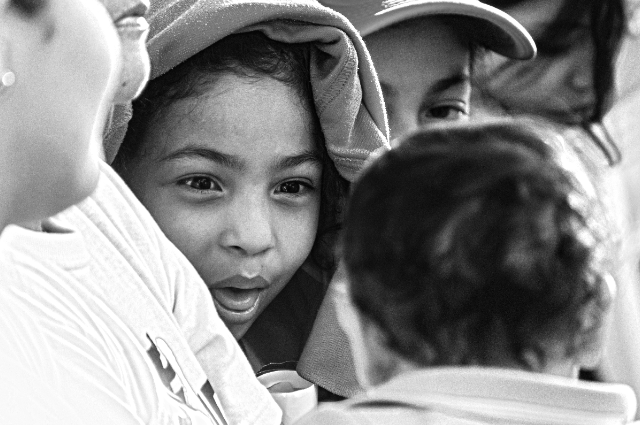
There is a photograph that exists in thousands of versions. The setting changes —a school in Delhi, a classroom in Dublin, a kindergarten in São Paulo —but it stays the same. A child with Down syndrome sits slightly apart fr. Not excluded exactly. Just separate. Near enough to count as present. Far enough to feel alone. The teacher is attending to someone else. The other children are working in pairs. And the child in the corner is watching, which is what children do when they have been placed in a room and not actually let into it.
That photograph is the gap between policy and practice. Between the word "inclusive" and the thing itself.
What a Chromosome Actually Does
Down syndrome is not a disease. This matters enormously, and it is still, in2026, not universally understood. It is a chromosomal variation — a third copy of chromosome21, present in every cell of the body since conception. It is called Trisomy 21. It affects roughly 1 in 700 births globally, making it the most common chromosomal condition in humans. It causes some degree of intellectual disability, typically mild to moderate. It can be associated with heart conditions, hearing loss, and thyroid issues. It does not cause suffering in the way a disease causes suffering. People with Down syndrome live, on average, into their 60s. They go to school. They hold jobs. They fall in love and maintain friendships and have opinions about music and food and whether it's going to rain.
And in survey after survey — the most cited of which found that 99%of peoplewithDown syndrome reported being happy with their lives — they describe their own exi in terms that the world around them consistently fails to believe.
The barrier was never the chromosome. It was always the assumption.
What the Classroom Actually Does
Here is what twenty years of research says about inclusive education for children with Down syndrome, plainly stated: it works. Children with Down syndrome who are alongside typically developing peers make measurably better progress in language, reading, mathematics, and social skills than those placed in separate special education settings. This is not a contested finding. It has been replicated across countries, across decades, across different measures of outcome.
One landmark study compared teenagers of similar ability and family background in special schools versus mainstream settings with 25 to 30 hours of additional learning support. The teenagers in mainstream education showed gains of more than two years in spoken language skills and three years in reading and writing ability—progress that would take six years to achieve in a special school environment. American research from the National Down Syndrome Society confirmed that time in general education classrooms improves outcomes in both reading and mathematics.
The mechanism is not mysterious. When a child with Down syndrome is included in classroom discussions, asked questions, and invited to contribute, their language develops because language develops through use. When they sit beside peers who model age-appropriate communication and behaviour, they acquire skills that isolation cannot provide. When they are seen as members of the class rather than visitors to it, their confidence grows — and self-confidence, it turns out, is itself a predictor of academic progress.
The social benefits compound over time. Research shows that children included in classroom learning are more likely to be included by peers outside the classroom—at lunch, at break, in the ordinary social life of childhood. That social inclusion is not a luxury. For children with Down syndrome, who often struggle with isolation in adolescence and adulthood, the social habits built in an inclusive c most durable outcomes of their education.
And the benefits run in both directions. Teachers in inclusive classrooms report high professional fulfilment. Typically developing classmates show measurably greater empathy, tolerance for difference, and cooperative learning skills. Inclusion is not a concession made to one group of children at the expense of another. It is a different and better model of education for everyone.
The World That Is Still Getting This Wrong If the evidence is this clear, why does the child still sit in the corner?
In Iceland, the answer is that fewer children with Down syndrome are being born. Since prenatal screening was introduced in the early 2000s, close to 100%of womenwho received a positive prenatal test for Down syndrome have terminated their pregnancies. The country has not eradicated Down syndrome as a condition. It has eliminated, almost completely, the people who would have had it. The global picture is not much gentler: in the United States, the termination rate following a prenatal DS diagnosis sits at approximately 67%. In Denmark, it has been reported at 98%.
The word "eradication" keeps appearing in this conversation, and it deserves to sit uncomfortably. Because what is being eradicated is not suffering. The people living with Down syndrome — the ones asked in surveys whether their lives are happy —say, overwhelmingly, that they are. What is being eradicated is difference. What is being treated as a problem to be prevented is a life that, by the account of the people living it, is worth living.
In India, the failure is different but no less stark. The Rights of Persons with Disabilities Act was passed in 2016 and mandated inclusive education. India's Supreme Court itself, in a 2021 judgment, acknowledged "the lack of trained special educators and appropriate infrastructure" as a serious impediment to the fundamental right to education for children with disabilities. Nearly a decade after the law passed, only62.9%of disabled people aged 3 to 35 in India have ever attended a regular school. Just 9%ofdisabled children complete secondary education. Approximately 45%of disabledpeoplein India are illiterate.
The law exists. The classrooms do not follow. The child in the corner is not just a failure of architecture or resource allocation. It is a failure of imagination —a cost to see what inclusion actually produces when it's done properly, and an unwillingness to invest in finding out.
What Happens When It Works
Lemon Tree Hotels in India employs people with Down syndrome and other intellectual disabilities in client-facing roles — cited by the UNDP as evidence that the assumption of unemployability is exactly that: an assumption, not a fact. A fifteen-year inclusive employment programme at a New England hospital found that with iterative, tailored
support, young adults with Down syndrome developed foundational job skills and contributed meaningfully to clinical environments.
Pablo Pineda, a Spanish actor with Down syndrome, became the first person with the condition in Europe to earn a university degree. John Franklin Stephens, a Special Olympics athlete, wrote the essay that went quietly viral — addressed to someone who had used the word "retard" as an insult — that remains one of the most devastating pieces of advocacy ever written: "Come join us someday at Special Olympics. Seeif youcan walk away with your heart unchanged."
These are not inspiration stories. They are evidence. Evidence that the problem was never the chromosome. It was always the room we built around it, and who we decided to let in.
What the Research Asks Us to Do
The research consensus is not ambiguous. Inclusive education, with adequate support, produces better outcomes for children with Down syndrome than segregated special education. The specific elements that make it work are well-documented: individualised education plans, additional learning support that supplements rather than replaces peer interaction, teacher training in Universal Design for Learning, classroom practices that invite participation rather than just presence.
The gap is not knowledge. It is will.
It is the school that doesn't hire the support assistant because the budget is tight. The teacher who was never trained and is now expected to manage alone. The parent told, gently but firmly, that their child would "be happier with their own kind." The administrator who put the child near the classroom door so they could be extracted easily when the curriculum moved faster than expected.
The child in the corner is watching. Not because they can't keep up. Because no one has yet pulled up a chair and asked them to come closer.
References
- 1. Journal of Education and Learning, Vol. 14, No. 3 (2025). Inclusion of children with Down syndrome in mainstream settings. https://files.eric.ed.gov
- International Mosaic Down Syndrome Association. Inclusivity Research. https://www.imdsa.org
- Down-Syndrome.org (2006). Inclusive education for individuals with Down syndrome. https://www.down-syndrome.org
- Van Herwegen et al. (2025). Raising educational outcomes for individuals with Down syndrome. Journal of Research in Special Educational Needs. https://discovery.ucl.ac.uk
- CBS News (2017). Why Down syndrome in Iceland has almost disappeared. https://www.cbsnews.com
- Insights on India (June 2025). Inclusive Education for Disabled Children in India. https://www.insightsonindia.com
- JKPI. Inclusive Education for Children with Disabilities in India: A comprehensive overview. https://www.jkpi.org
- UNDP India. Bridging the Gap: Enabling Disability Inclusion in India's Private Sector. https://www.undp.org
- PMC (2024). 15 Years of Inclusive Employment in a Down Syndrome Clinic. https://www.ncbi.nlm.nih.gov
- Disability Rights India (2025). Disability Rights Through Courts. https://www.disabilityrightsindia.com
- Lancet Southeast Asia (2025). Inclusivity for people living with disability: the gap between understanding and implementing. https://www.ncbi.nlm.nih.gov
- National Down Syndrome Society. Implementing Inclusion. https://dsagsl.org