
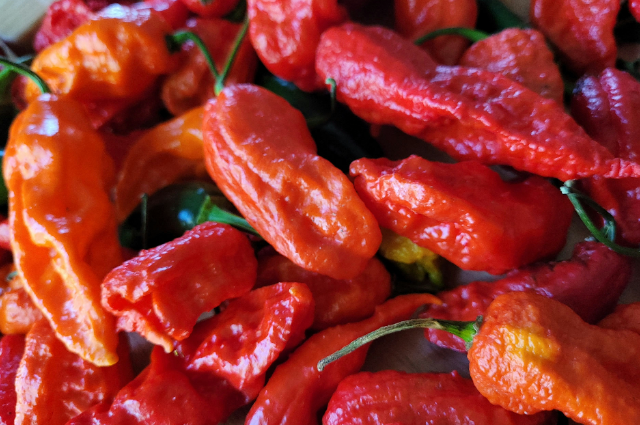
You reach for the hot sauce again. The burn hits your eyes, water, forehead sweats, lips tingle, and yet, somehow, it feels good. You want more. If that experience sounds less like eating and more like chasing a high, that's because neurologically speaking, it is. The science of spice tolerance is not merely a culinary curiosity. It is a window into the same neurological machinery that governs drug tolerance, addiction, and the brain's fundamental reward circuits.
Spicy food is not a taste; it's a pain signal.
Most people assume spiciness is a flavour, processed by the same taste receptors that detect sweetness or bitterness. It is not. Capsaicin, the active compound in chilli peppers, does not interact with taste receptors at all. Instead, it hijacks the body's pain and heat detection system.
The key player is TRPV1 (Transient Receptor Potential Vanilloid 1), an ion channel found on sensory neurons throughout the mouth, throat, and gut. TRPV1 is the body's primary alarm system for dangerously high temperatures; it activates at around 43°C (109°F) to warn the brain of potential tissue damage. Capsaicin chemically mimics this heat signal. When it binds to TRPV1, the channel opens, allowing calcium ions to flood into the nerve cell, triggering the same electrical signal that a burning-hot surface would produce.
The brain receives this signal and responds accordingly: it believes the mouth is genuinely on fire. This is not a metaphor or an exaggeration. The neurological experience of eating a ghost pepper and touching a hot stove originates from the same receptor, using the same molecular pathway. The difference is that capsaicin causes no actual tissue damage; it is a pharmacological illusion of injury.
The accidental pleasure loop
Here is where things get interesting. When the brain registers an injury, real or perceived, it activates a counter-response: the release of endorphins. These are the body's natural opioids, neurotransmitters designed to blunt pain and promote survival. Endorphins bind to the same receptors targeted by morphine and heroin, triggering feelings of euphoria and well-being.
When you eat spicy food, your brain does not know there is no real fire. It floods the system with endorphins to protect you from the perceived injury. But because no injury exists, those pain-killing chemicals have nowhere to go except upward into a wave of pleasure. Dopamine, the neurotransmitter associated with reward and motivation, is also released, reinforcing the behaviour and making you want to repeat it.
This is not incidental. Research has described the result as a pleasure-seeking feedback loop: pain fires, endorphins release, dopamine follows, and the brain files the experience under 'rewarding behaviour to repeat.' The burn, in essence, is the price of admission to a neurochemical reward that the body did not intend to give.
The spice treadmill: tolerance by desensitisation
Eat spicy food regularly, and something predictable happens: it stops feeling as hot. A sauce that once made your eyes water now barely registers. Many people interpret this as a sign of strength or character. In reality, it is receptor pharmacology, and it is structurally identical to what happens in drug tolerance.
Repeated exposure to capsaicin causes TRPV1 receptors to desensitise. At the cellular level, this begins within seconds of initial activation, as calcium influx depletes a membrane phospholipid called PIP2, which is required for the channel to remain responsive. With prolonged or repeated exposure over days and weeks, a more persistent desensitisation develops: the same dose of capsaicin produces a weaker pain signal over time.
But here is the catch. As TRPV1 receptors desensitise, the endorphin response weakens too. Researchers have found that a certain level of receptor desensitisation leads to a decreased release of endorphins and, consequently, a diminished pleasure response [9]. The high that drew you in requires a higher dose to achieve. More heat, more capsaicin, more burn for the same neurochemical payoff. Spice enthusiasts have coined a term for this phenomenon: the 'spice treadmill.
This is the structural hallmark of tolerance in pharmacology. Whether the substance is morphine, alcohol, or capsaicin, the underlying mechanism is the same: repeated receptor activation leads to receptor downregulation, requiring escalating doses to produce the original effect. The body adapts; the baseline shifts; the previous dose becomes insufficient.
How drug tolerance works and why the comparison holds
Opioid drugs work by binding to mu-opioid receptors (MOR) in the brain and nervous system, triggering pain relief and euphoria. With repeated use, these receptors desensitise and internalise; they are literally withdrawn from the cell surface, reducing the number of available binding sites. The brain also compensates by increasing excitatory signalling to counteract the drug's inhibitory effect. The net result: the same dose produces less effect, and the user needs more to feel normal.
The parallel with capsaicin tolerance is not superficial. Both involve:
- a chemical binding to a receptor and triggering a pain/pleasure response;
- repeated binding leading to receptor desensitisation;
- a progressively weakened response to the same dose;
- escalation of intake to restore the original effect; and
- rapid resensitization when the substance is removed. Research confirms that spice tolerance reverses within weeks of stopping consumption; TRPV1 receptors resensitize, and the same hot sauce that felt mild suddenly hits hard again.
The key distinction is severity. Drug tolerance carries risks of physical dependence, withdrawal syndromes, and overdose, none of which apply to capsaicin. There is no capsaicin withdrawal, no dangerous dose escalation, and no organ toxicity from habitual spicy food consumption in healthy adults. The neurological architecture is analogous; the stakes are not.
Individual variation: Why doesn't everyone love the burn
If spice produces a reward, why do some people hate it? The answer lies in genetics, early exposure, and personality. Genetic variations affect both the number and sensitivity of TRPV1 receptors, meaning some individuals experience a dramatically stronger pain signal from the same amount of capsaicin. For these people, the pain overwhelms the pleasure before the endorphin release becomes rewarding.
Cultural exposure also matters enormously. In regions where spicy food is a dietary staple, including India, Thailand, Mexico, and Sichuan, China, children are introduced to mild chillies early in life. This early desensitisation creates a baseline tolerance that shapes lifelong preference. People raised without spicy food lack this early adaptation and often find the pain unrewarding.
Personality also plays a documented role. Research into sensation-seeking, a trait defined by the desire for novel, intense, and varied experience, consistently correlates with greater enjoyment of spicy food. People who enjoy other forms of controlled risk-taking, such as extreme sports or horror films, are more likely to find the pain-pleasure loop of capsaicin rewarding.
A neurological loop on repeat
Spice is not a flavour. It is a pharmacological event, a false fire alarm that the brain rewards with its own pain-killing chemicals, creating a loop of pain, endorphin release, pleasure, and craving. Over time, repeated exposure desensitises the very receptors that make the experience rewarding, demanding escalating heat to achieve the same effect. This is tolerance, operating by the same principles that govern how the brain adapts to opioids, alcohol, and other substances that engage its reward pathways.
The difference between the chilli enthusiast and the drug-dependent is one of consequence, not mechanism. The biology is strikingly similar. The next time you find yourself reaching for a hotter sauce than last month's, you are not becoming tougher. You are experiencing receptor pharmacology: a nervous system that has adapted, shifted its baseline, and is now demanding more to feel the same way. The burn was never just about the food.
References:
- Holzer, P. (2004). TRPV1 and the gut: from a tasty receptor for a painful vanilloid to a key player in hyperalgesia. Neuropharmacology, 47(S1), 267–277. https://doi.org
- Chalfie, M. et al. (2020). A single TRPV1 amino acid controls species sensitivity to capsaicin. Scientific Reports, 10, 8267. https://www.nature.com
- Abdel-Salam, O.M.E. & Mózsik, G. (2023). Capsaicin, The Vanilloid Receptor TRPV1 Agonist in Neuroprotection. Neurochemical Research. https://www.ncbi.nlm.nih.gov
- Darcq, E. & Kieffer, B.L. (2025). Molecular and cellular basis of mu-opioid receptor signalling. Frontiers in Neuroscience. https://www.frontiersin.org
- ScienceInsights (2026). Why Do I Like Spicy Food So Much? What Science Says. https://scienceinsights.org
- Rolling Out (2025). What spicy food says about your pain tolerance. https://rollingout.com
- Alibaba Product Insights (2026). Why Is Spicy Food Addictive: The Science of Capsaicin and Endorphins. https://www.alibaba.com
- Alibaba Product Insights (2026). Why Do Some People Love Spicy Food: Endorphins and Tolerance Explained. https://www.alibaba.com
- Morales-Lázaro, S.L. et al. (2020). An adaptive network model for pain and pleasure through spicy food and its desensitisation. Cognitive Systems Research, 63, 83–95. https://www.sciencedirect.com
- Benyamin, R. et al. (2008). Opioid Tolerance Development: A Pharmacokinetic/Pharmacodynamic Perspective. Pain Physician, 11(2S), S145–S166. https://pmc.ncbi.nlm.nih.gov
- Maximiano, T.K.E. et al. (2024). TRPV1: Receptor structure, activation, modulation and role in neuro-immune interactions and pain. Cellular Signalling. https://www.sciencedirect.com
- FODMAP Everyday (2025). Can You Handle the Heat? Why Do Some People Love Spicy Food While Others Can't Stand It? https://www.fodmapeveryday.com
- SunCake Mom. The Psychology of Spicy Food Addiction. https://www.suncakemom.com
. . .