
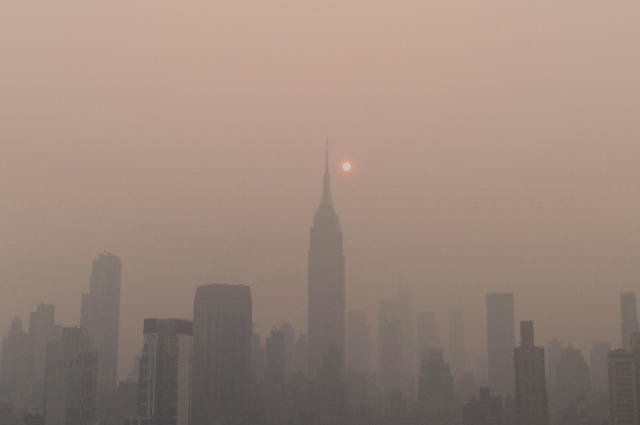
We have all learned in school how important it is to use Earth's resources sustainably. Understanding sustainable development is one of the most important topics that was taught to us. Yet, in the current scenario, it is evident how we have ignored all these lessons, as the Earth is degrading day by day. The increase in pollution, greenhouse effect, and heat waves during summers are all consequences of our negligence. Due to all these consequences, many species from all over the world are endangered; some are extinct as well. Thus, learning about theoretical data based on sustainable development can no longer persuade human beings to be sustainable. They must understand the consequences of their actions and bring a positive change in their livelihoods for a better future, better health and a better environment. Along with that, the government of a country must implement certain projects regularly for the betterment of the environment. These projects must be inspected at the grassroots level of a society, ensuring the effectiveness of sustainable development projects.
What is Environmental Performance Index (EPI)?
Environmental Performance Index (EPI) is developed by researchers at Yale University and Columbia University. As it has become a necessity in today’s world to attain a sustainable livelihood, the index evaluates how effectively countries protect the environment and promote sustainability. The index measures factors such as air quality, climate policy, biodiversity conservation, waste management, water resources, and greenhouse gas emissions. All these factors are required to be observed periodically and managed so that they can be prevented from causing any further harm to the environment.
The Environmental Performance Index (EPI) was first generated and launched in 2002 by the World Economic Forum in partnership with the Yale Centre for Environmental Law & Policy and Columbia University's Centre for International Earth Science Information Network, originally starting as the Environmental Sustainability Index. It is published twice every year, observing and regulating the changes in the environment to find the cause and to prevent pollution or degradation of the environment.
India’s Current Situation
According to the 2026 report, India ranked 176th out of 177 countries, with a score of 22.46 out of 100, making it the second-lowest ranked country, ahead of only Laos. In contrast, Estonia topped the rankings with a score of 74.79, highlighting the significant gap between India's environmental performance and that of the leading nations.
Many Indian cities regularly record hazardous levels of air pollution, while rivers and groundwater are increasingly polluted by industrial waste, untreated sewage, and agricultural runoff. At the same time, rising temperatures, erratic rainfall, heatwaves, floods, droughts, and cyclones have become more frequent due to climate change. Air pollution, water contamination, deforestation, biodiversity loss, improper waste management, and climate change are among the country's most pressing environmental concerns.
Why Did India Rank So Low?
India ranked 176th out of 177 countries in the 2026 Environmental Performance Index (EPI) primarily due to its poor performance across several key environmental indicators. The country continues to face severe air pollution due to hazardous levels of particulate matter in the atmosphere caused by vehicle emissions, industrial activities, and construction dust, especially in urban areas. The scenario in rural areas is slightly different. Most of India’s population earns their livelihood through farming and other agricultural practices. These practices require extensive care. Farmers and other businessmen often use pesticides and fertilisers that contain urea. An increase in the levels of urea in soil results in soil pollution, which eventually causes the degradation of land. Today, it has been reported that due to extensive use of urea-containing compounds in the soil, the fertile lands are turning barren, promoting little to no cultivation of crops. Thus, the degradation of soil has a direct impact on the livelihoods of farmers, as well as a greater impact on the country’s economic value.
Another major cause of environmental degradation is rapid urbanisation. Frequent deforestation in order to build factories and promote industrial practices has been evidently degrading the quality of soil. The trees are being cut, resulting in lower oxygen levels in the atmosphere and habitat loss for various species of birds and other wild animals. Thus, due to deforestation, the major ecosystems are getting demolished, resulting in loss of biodiversity as well as extinction of various species.
Water pollution from untreated sewage, industrial effluents, and agricultural runoff has also affected the quality of rivers and groundwater. Although India has made notable progress in expanding renewable energy and strengthening its climate commitments, these improvements have not been sufficient to offset the widespread environmental challenges. As a result, India's overall environmental health and ecosystem vitality remain among the weakest globally, leading to its low ranking in the 2026 EPI.
Why is Sustainable Development Important?
Environmental changes have profoundly affected the lives of millions of people in India, making them one of the country's most pressing challenges. Rapid urbanisation, industrialisation, deforestation, and climate change have led to worsening air and water pollution, rising temperatures, and an increasing frequency of extreme weather events such as floods, droughts, cyclones, and heatwaves.
Millions of people have been suffering from respiratory illnesses and cardiovascular diseases due to air pollution. There have been frequent premature deaths every year, particularly affecting children, the elderly and individuals with pre-existing health conditions.
Contaminated water is the major cause of many waterborne diseases such as cholera, typhoid and diarrhoea, while water scarcity threatens access to safe drinking water and sanitation. Water contamination also results in poor aquatic life, due to which aquatic organisms are facing severe consequences. People whose livelihoods are dependent upon fish culture have been facing major setbacks financially.
All these factors combined degrade the overall quality of the environment and further result in a decrease in the economic value of the country. As environmental degradation continues to intensify, it poses a significant threat to public health, livelihoods, economic stability, and the overall quality of life of India's citizens, making sustainable environmental management an urgent national priority.
References: