
Every year, millions of students prepare for and appear for competitive exams. Each competitive exam decides the future for all those students who work hard their entire lives. An examination is far more than just a test; it is the destination of years of sacrifice. A single piece of paper, in fact, decides their whole future. Students skip meals, avoid spending time with family and friends, just to prepare for a test. It begins in childhood, with a hope of a better future. Students work hard, sacrificing their whole childhood with early mornings, sleepless nights, endless notebooks and their quiet hope that one day all their hard work would bring greater returns in the future.
With every student preparing for any competitive exam, millions of parents put their trust in them. Parents work overtime to provide all the necessities that their child might have. They take loans for expensive coaching classes, postpone medical treatments, or give up personal comfort so their children can study and prepare without having to worry about financial conditions. Situations are somewhat different for those unfortunate students who don’t receive any support from the family and have to carry all the burdens on their own shoulders. Amidst all the hardships, they have their aims straight, only with the hope of a better future and to possibly break the cycle of poverty.
Then, in a single moment, everything can be shattered.
When an examination paper is leaked before the test, it is not just a breach of security; it is a betrayal of trust. It turns years of honest preparation into uncertainty and raises painful questions about fairness. Students who earned every mark through determination suddenly find themselves competing against those who had access to unfair advantages. The value of discipline is diminished, and the confidence of an entire generation is shaken.
The emotional cost is immense. Dreams are delayed, careers are put on hold, and families who invested everything are forced to endure yet another period of anxiety. Many students struggle with stress, self-doubt, and frustration, wondering whether merit still matters in a system where integrity has been compromised.
Paper Leaks – The Repetitive Cycle
Every year, millions of students appear for competitive exams. Each exam not only tests the knowledge of these students but also their patience and sacrifices. Students reappear for a single exam year after year, improving their knowledge, giving mock tests, and spending endless nights; they put a hold on their entire life as well as their career with endless nights. When a question paper leaks, it shatters not only the confidence of these students but also their will to try and live. They become hopeless, putting constant pressure and blame on themselves that if they tried harder, they would have gotten a better chance at life. It is very important to acknowledge that these students are not adults; they are children and teenagers between the ages of 16 and 19. They compete not only against other fellow students, but also against the whole system of education. They compete against an education system that lacks accountability, security and fair conduct of examinations.
A paper leak is more than an administrative failure. It is an injustice that robs deserving students of a level playing field and leaves countless families questioning whether merit still matters. Years of preparation, sleepless nights, and financial sacrifices can be rendered meaningless by the actions of a few individuals who exploit a corrupt system. The consequences extend far beyond cancelled examinations or postponed results; they leave behind anxiety, frustration, and a generation that begins to lose confidence in the institutions meant to protect its future.
Calling For Accountability
It is against this backdrop that the Cockroach Janta Party (CJP) movement emerged, transforming the anger and disappointment of students into a nationwide demand for accountability.
The Cockroach Janta Party (CJP) did not begin as a conventional political party. It began with a mere joke, a moment of humour. In May 2026, a controversial remark was made by the Chief Justice of India, Surya Kant. It was widely interpreted that he referred to all the unemployed young people of India as “cockroaches”. This statement made by the Chief Justice triggered anger among the young people of India. Although the judge later clarified that his remarks had been misconstrued, the word cockroach had already caught the imagination of the youth of India. Amidst all this, Abhijeet Dipke, a political communications strategist based in the United States, created the Cockroach Janta Party (CJP) as an online joke. People from all over the country found it amusing and started a trend. Within hours, people in India began signing up and proudly calling themselves cockroaches, which had formerly appeared to be an insult. The movement grew and attracted tens of thousands of followers within a few days.
In the protest against the repetitive paper leaks over the years and the unfair conduct of examinations by the education system, CJP played a major role in uniting the youth, Gen Zs, to fight against the injustice. CJP acts as a pressure group against the government, asking for accountability and for the reform of the whole education system, so that justice is served to all those students who committed suicide because of unfair conduct of examinations, as well as their parents who were tired of roaming around the courts asking for justice.
What began as outrage over repeated examination irregularities evolved into a larger movement calling for transparency, justice, and systemic reform. Supported by education reform advocate Sonam Wangchuk and thousands of students across the country, the movement sought to ensure that no young person would have to see years of honest effort destroyed by corruption.
How The Protest Began
The movement did not begin on the streets; it began with a feeling shared by millions of young Indians: that despite years of relentless hard work, the system had failed them. For years, students preparing for competitive examinations had watched paper leak scandals emerge one after another. Each new controversy meant cancelled examinations, delayed admissions, repeated tests, and shattered dreams. Frustration had been building quietly, waiting for a moment that would unite scattered voices into a single movement.
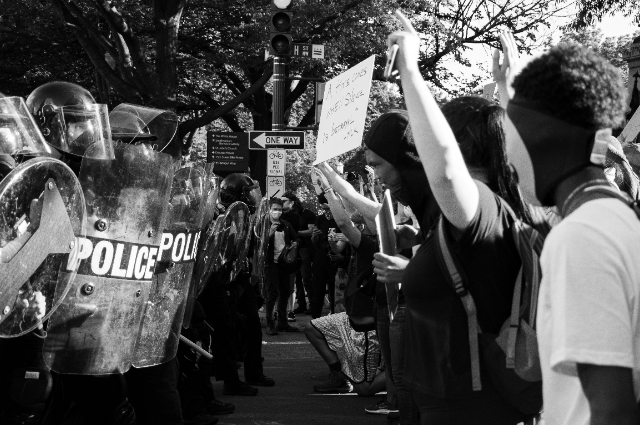
The movement soon entered the streets. Students, parents, teachers, and supporters gathered in New Delhi and other cities, demanding reforms to the examination system, accountability for those responsible for paper leaks, and the resignation of Education Minister Dharmendra Pradhan. The participation of education reform advocate Sonam Wangchuk, whose hunger strike brought national attention to the issue, further strengthened the movement and turned it into one of the largest youth-led protests in recent years.
What began as six words on social media became a nationwide movement driven by a simple belief: every student deserves a fair chance, and years of hard work should never be defeated by corruption.
Tensions escalated when demonstrators attempted to march through Delhi. Police used barricades, detained some protest leaders, and employed force, including lathi charges and tear gas, to disperse sections of the crowd. Authorities said their actions were necessary to maintain law and order, while many protesters and witnesses alleged that excessive force had been used against peaceful demonstrators. The handling of the protests further intensified public debate and drew criticism from civil society groups and opposition leaders.
Despite the confrontations, the movement did not fade. Students continued to insist that their protest was not driven by politics but by a simple belief: that every young person who studies honestly deserves a fair examination, and that a nation cannot ask its youth to trust a system that fails to protect the integrity of their hard work. Government representatives later opened talks with protest leaders and announced proposed anti-paper-leak measures, but many protesters maintained that meaningful accountability and long-term reforms were still needed.
A Protest Born Out of Silence
For almost two months, students from all over the country joined and protested against the education system and the judicial system, asking for accountability and the resignation of Dharmendra Pradhan, former education minister of India. They united at Jantar Mantar, Delhi, where they rallied, put up posters and banners asking for justice and protested in silence with resilience. It was because of the support of many influential people like Sonam Wangchuk and other celebrities that people from all over the country united in this protest, which eventually became a mass movement against the government. The protest stood as a ray of hope for all the students appearing for competitive exams. After almost 2 months of continuous protests, rallies and hunger strikes, the government was bound to reform. The former education minister, Dharmendra Pradhan, had resigned. And thus, it was proved that unity among people, especially among the youth of the nation, can bring about impossible changes. Unity is strength, and it can defeat even the most powerful among all.
References: