
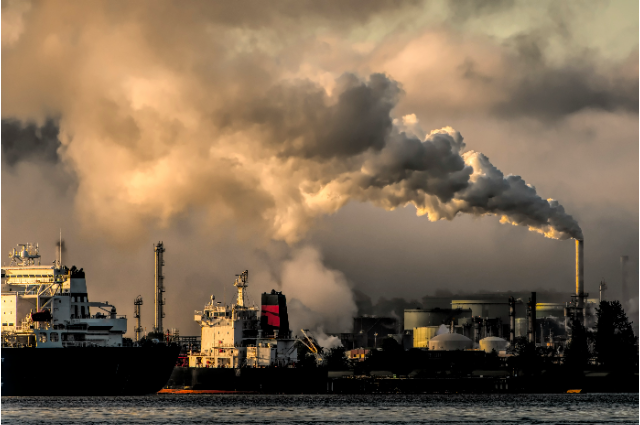
As we are all familiar with the fact that an increase in greenhouse gases in the atmosphere can have severe effects on the environment, causing environmental degradation, extinction of many endangered species, as well as various airborne diseases such as tuberculosis. Due to the increase in greenhouse gases in the atmosphere, it also affects water quality, which leads to other waterborne diseases such as cholera, typhoid, hepatitis, etc. Thus, the emission of greenhouse gases and other forms of pollution in the biosphere can not only degrade the environment but also severely affect the health and economic condition of any country.
What is Environmental Performance Index?
The growing pollution in the environment in recent years or decades has been a concern to most parts of the world. Environmental degradation can be caused by many factors, which mainly include urbanisation, emissions of harmful gases from factories and vehicles, an increase in greenhouse gases such as carbon monoxide and carbon dioxide, deforestation, growing population, etc. All these factors have become a threat to the environment, which makes it a matter of urgency for all governments of the world.
As a result, an Environmental Performance Index (EPI) was prepared by the Yale Centre for Environmental Law & Policy and partner institutions like Columbia University. It is a global report that ranks countries on a scale from 0 to 100 based on their sustainability, environmental health and ecosystem vitality. It is published biennially and uses a dozen performance indicators to highlight environmental leaders and laggards. It evaluates 177 countries of the world, using 47 different indicators across 12 environmental categories, grouped under environmental health, ecosystem vitality and climate change.
Thus, the Environmental Performance Index (EPI) has become an effective way to determine the causes of environmental degradation of the environment, which eventually leads to proper management of projects based on sustainability and prevention of pollution to the biosphere.
India’s Extremely Low Environmental Performance Index (EPI) Ranking
According to the recent 2026 global report prepared by the Yale Centre for Environmental Law & Policy, India scored 22.46 out of 100 in the Environmental Performance Index (EPI). According to the score, India ranked 176th out of 177 countries, making it the lowest–ranked country in the whole of South Asia. The country below India is Turkiye, while other neighbouring countries like Bangladesh ranked 175th, Maldives ranked 171st, Pakistan ranked 157th, Nepal ranked 128th, Sri Lanka ranked 94th, and Bhutan ranked 52nd. Although India’s performance in the global EPI ranking in the last 10 years shows an improvement of 7.47 points, which indicates that the country has made some progress despite a very low overall position, it is not sufficient to improve the environmental quality of India when measured against environmental targets and compared with other countries.
India’s position in the 2026 Environmental Performance Index (EPI) presents a striking contradiction. On one hand, India is one of the world’s largest economies and a major contributor to global greenhouse gas emissions. On the other hand, its environmental condition has remained among the weakest in the world for the past ten years.
Why does India Rank so Low?
Despite the considerable improvements in environmental quality in the last decade by a score of 7.47, India still ranks lower than that of its neighbouring countries such as Sri Lanka, Bangladesh, Pakistan, Nepal, Bhutan and Maldives. There are several factors contributing to such a low score for India in the EPI. One of the main reasons is the increase in emissions of greenhouse gases. According to the recent census and data, India is the third-largest greenhouse gas emitter in the whole world, largely because of its huge population, rapidly growing economy and high energy demand. The increase in the percentage of greenhouse gases in the atmosphere substantially over the past decade has severely affected the environment, along with a decline in air quality and an increase in global warming, which leads to unbearable heat waves in summers and unpredictable climatic change. Despite the increase in the levels of greenhouse gases in the atmosphere, there has been little to no reform in managing the sustainable usage of electricity. The prolonged use of coal for generating electricity and growing industrial activities remain among the major contributors to emissions of greenhouse gases.
Along with the increase in the emission of greenhouse gases, there are several other interconnected factors which contribute to the low ranking of India in EPI. Rapid population growth and urbanisation have increased pressure on land and water resources, transportation and waste management systems. Due to the increase in population and urbanisation, major environmental resources such as land, water, and coal are being used up. Due to the growing demands of people and overconsumption of resources, these natural resources are not replenished, which eventually leads to resource depletion and environmental degradation, resulting in loss of biodiversity, ecosystem imbalance, water scarcity, soil degradation and increased environmental pollution.
The Larger Contradiction
The larger contradiction lies in the fact that India is simultaneously a major contributor to global greenhouse-gas emissions and a country with relatively low per-capita emissions. Its large population, rapid economic growth, industrialisation, and dependence on coal have increased overall emissions, while the average individual’s contribution remains comparatively low. At the same time, India’s extremely low EPI ranking reflects serious domestic environmental challenges such as poor air quality, rising emissions and weak ecosystem protection. Thus, India faces the difficult task of pursuing economic development while reducing environmental damage and protecting its natural resources.
References: