
After the recent mass movement organised by the Cockroach Janta Party (CJP) against the unfair conduct of examinations and corruption surrounding national-level examinations, the Jharkhand protest emerged as another mass movement against the irregularities in recruitment examinations conducted by the Jharkhand Public Service Commission (JPSC) and Jharkhand Staff Selection Commission (JSSC), particularly the 14th JPSC Combined Civil Services Preliminary Examination that was held in April. Hundreds of aspirants gathered at Jaipal Singh Munda Stadium and began an indefinite protest, demanding greater transparency and an independent investigation.
In Ranchi, students have spent days protesting and undertaking hunger strikes, demanding answers over the JPSC and JSSC examination processes. But amid the slogans, demonstrations and political controversy, the movement has produced an unexpected image of solidarity: food-delivery riders arriving at the protest site with meals ordered by strangers from across the country. What sounds like an unusual side story is, in fact, a reflection of how modern protests are being reshaped by digital platforms—and how a fight over government jobs has grown into a much bigger question of trust in the system.
How The Protest Began?
The protest began after aspirants raised serious allegations of irregularities in the 14th JPSC Combined Civil Services Examination, conducted in April. As concerns over the examination process and results grew, hundreds of students gathered in Ranchi, demanding clarity and accountability from the authorities. What initially started as an agitation over a single examination soon grew into a broader movement against alleged irregularities in the state’s recruitment system. The aspirants demanded a transparent and impartial investigation into the allegations, cancellation or review of the disputed examination, and an independent probe, including a CBI investigation, along with strict action against anyone found responsible. They also called for greater transparency in the functioning of JPSC and JSSC and safeguards to ensure that future examinations are conducted fairly. For these aspirants, the issue goes far beyond one exam or one result—it concerns the credibility of the entire recruitment process and the future of thousands of young people who invest years of preparation in the hope of securing government employment.
Food Deliveries Became Part of The Protest
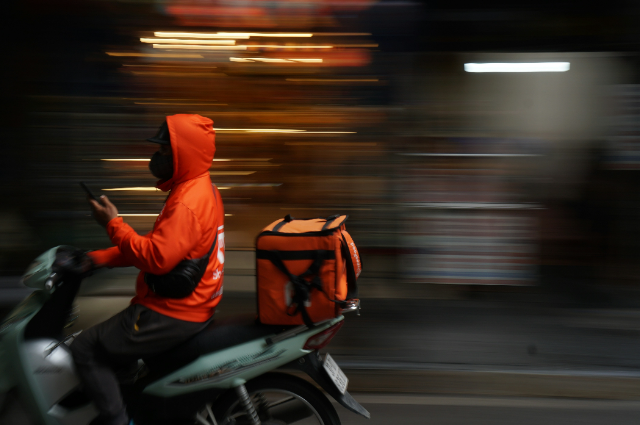
As the protest continued for days, food gradually became an unexpected but important part of the movement. With hundreds of aspirants camping at the protest site, arranging regular meals became a practical challenge. Supporters from outside Ranchi began using food-delivery platforms to send meals directly to the protesting students, sometimes placing orders simply for “any student protesting at the site.” What started as individual acts of support soon became a visible expression of solidarity, with delivery riders regularly arriving at the protest venue carrying food for students they had never met. These deliveries did more than provide nourishment during a prolonged agitation—they helped protesters sustain their sit-in and hunger-strike campaign while also showing that the movement had begun to attract support beyond the streets of Ranchi. Unusually, food-delivery apps became a bridge between people sitting miles away and students fighting for their demands on the ground, turning an ordinary digital service into an unexpected tool of protest solidarity.
The protest continued and gained attention; supporters from different parts of the country began ordering food for the protesting aspirants through delivery apps. While the gesture was meant to support the students, the large and uncoordinated number of orders created difficulties at the protest venue. Delivery workers repeatedly arrived looking for recipients, while protesters had to manage orders placed by people they did not know. With several orders arriving throughout the day, handling the deliveries became an unexpected responsibility for those already occupied with the agitation. What began as a heartwarming display of solidarity therefore turned into an unusual logistical challenge for the protest organisers and local authorities—making food deliveries an unlikely “problem” in the middle of the Ranchi movement.
The Jharkhand student protest is ultimately more than a dispute over an examination—it is a struggle for fairness, transparency and trust in the recruitment system. What began with aspirants demanding answers over alleged irregularities grew into a sustained movement that brought together students, supporters and people from outside Ranchi. Even the unexpected wave of food deliveries became part of the story, showing both the widespread solidarity the protesters received and the logistical challenges that accompanied it. At its heart, the movement reflects the frustration of a generation that has invested years of hard work in the hope of a fair opportunity. Whether through protests, hunger strikes or support from strangers miles away, the message from the aspirants remains clear: when a young person's future depends on an examination, fairness cannot be treated as a privilege—it must be a guarantee.
References: