
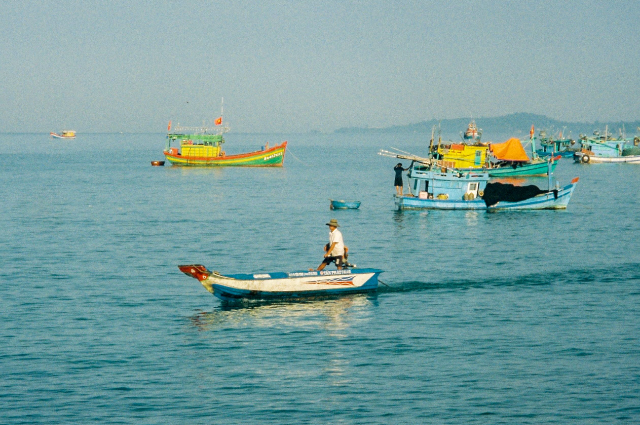
Ashish Kumar was standing on the shore of Hon May Rut Ngoai island when the first of his group's three boats went down. He had just stepped off it. His group, a mix of employees, distributors, and retail partners of Indian smartphone maker Lava International, had divided into three vessels for the short crossing back to An Thoi port on Phu Quoc island. Kumar's boat had already made the trip. The second was still at the dock. The third, carrying 32 passengers and four Vietnamese crew members, had not even cleared half a kilometre of water when it flipped.
Kumar said later that he and the others on shore began screaming for help immediately. The boat was that close. The water took fifteen of them anyway.
On the afternoon of Saturday, July 11, 2026, speedboat KG-23239 capsized roughly 400 metres off the coast of Hon May Rut Ngoai island, a popular tourist stop about ten kilometres south of Phu Quoc in the Gulf of Thailand. Of the 36 people on board, 21 survived. All 15 who died were Indian nationals: 10 from Tamil Nadu, three from Andhra Pradesh, and two from Kerala. They were not backpackers or adventure tourists. They were colleagues on a company reward trip, the kind that employees photograph and post about before the journey home. Nobody expected to be carried out of the water.
What Happened on the Water
The boat had departed Hon May Rut Ngoai after midday and encountered rough seas almost immediately. Survivor Nirmal Kumar, speaking from hospital to Tamil newspaper Dinamani, described the moment plainly. A huge wave hit the boat, he said. It capsized quickly. Around 20 people were thrown into the sea. The rest were inside.
The inside is where it got worse. Those at the front of the vessel managed to escape through the exit and windows as the boat overturned. The 15 people at the back were not able to. They were trapped inside the hull as it went under. Nirmal Kumar said he did not know what happened to them in those final minutes. He knew only that the rescue team arrived quickly, but there were no medical staff waiting on shore when the living were brought back.
A passing boat captain, who spotted more than a dozen people clinging to the overturned hull while others struggled in the water without life jackets fastened, threw lifebuoys attached to ropes and pulled four people aboard within ten minutes. He recorded a short video and sent alerts to other operators in the area. Jet skis, fishing boats, and eventually the coastguard arrived. Tourists and Lava International staff on shore took turns performing CPR on those pulled from the water while they waited for paramedics. Two emergency doctors and a nurse were eventually dispatched. The 17 injured were taken to Phu Quoc Sun Hospital. The 15 were not.
The Life Jacket Question
A video circulated widely on social media in the hours after the accident. Shot before the capsizing, it appeared to show passengers on the boat holding their life jackets in their hands rather than wearing them. Survivors told local outlet VN Express that the captain had asked everyone to put on life jackets before departure. Many had not fastened them. When the boat went over, the unfastened jackets were next to useless for passengers thrown suddenly into rough water with no warning.
The question of who carries responsibility for this is not simple, and it would be wrong to place it entirely on the passengers. A life jacket instruction given casually at the start of a short crossing, on a calm afternoon departure, in a language many of the tourists may not have fully understood, is not the same as an enforced safety procedure. On an excursion boat operating within 400 metres of shore on what should have been a routine trip, the gap between instruction and enforcement is exactly the kind of gap that investigators now need to account for. The captain, 57-year-old Nguyen Hong Hai, was detained the following day on suspicion of violating inland waterway transport safety regulations. The criminal investigation is ongoing.
A Company Trip, Not an Adventure
One detail about this tragedy that has not received enough attention is who these people were and why they were there. Lava International is an Indian consumer electronics company. The trip to Vietnam was a reward, organised for staff, dealers, and retail partners as recognition for their work. It was the kind of trip that companies arrange when they want their people to feel appreciated. The 32 passengers on that speedboat were not there because they sought out risk. They were there because their employer sent them somewhere beautiful to celebrate a good year.
Lava International released a statement expressing deep sadness and confirming they were in constant contact with the Indian Embassy in Vietnam and local authorities. The Indian Embassy in Hanoi set up a control room for victims' families, worked to verify the condition of every passenger, assisted in victim identification, and coordinated the repatriation of remains. By Monday, July 13, the bodies of all 15 were being flown back to India from Ho Chi Minh City.
Phu Quoc and the Speed of Growth
Phu Quoc is not a place that is unfamiliar with tourism. The island received more than 1.8 million foreign visitors in 2025 alone, and India has become one of Vietnam's fastest-growing source markets, with 750,000 Indian tourists arriving in 2025, a jump of nearly 50 percent from the year before. The growth has been fuelled by expanding direct flight routes between Indian and Vietnamese cities and Vietnam's accessible e-visa policy. Phu Quoc in particular has benefited from its reputation as a beach destination that offers the tropical experience at a more accessible price point than the Maldives or Thailand.
That growth has been largely good for Vietnam economically. What the events of July 11 exposed is that the regulatory infrastructure governing excursion boats in these high-traffic coastal zones has not expanded at the same pace as the arrivals chart. Boating accidents are, as CBS News noted in its coverage, a regular occurrence in Vietnam, driven historically by a combination of extreme weather, inadequate maintenance culture, and regulatory enforcement gaps. After the capsizing, several tourism companies in Phu Quoc voluntarily suspended their speedboat services between the islets. Vietnam's Prime Minister ordered a review of waterway safety standards in the area. These are responses to a death toll, not precautions against one.
The Ha Long Bay disaster of July 2025, in which the cruise boat Wonder Sea capsized during a thunderstorm and killed 39 people, was the country's deadliest sea accident in recent memory. The Phu Quoc incident is a different kind of accident, on a much smaller vessel, in far calmer conditions in terms of weather. That is partly what makes it so difficult to set aside. It was not a storm that took fifteen people. It was 400 metres of open water on a Saturday afternoon in good visibility, less than half a kilometre from shore.
The Distance That Should Have Been Safe
There is a specific cruelty in the geography of what happened here. The boat went down so close to shore that the people on land could see it happen and scream for help. Ashish Kumar, standing on the island where they had all spent the afternoon, watched the vessel his colleagues were on flip over in the water while he was still close enough to shout to them. In a disaster of this scale, 400 metres is a distance that implies survival. It implies that help can get there. For fifteen people, it did not get there fast enough, or in the right form, or in time to matter.
The investigation will determine what Captain Nguyen Hong Hai did or did not do, whether the boat was properly maintained, whether the life jacket instructions were adequate, whether the weather conditions were within the vessel's certified operating parameters. Those answers matter, and they will come. What is already clear is the shape of what failed: a tourism system that has been adding passengers faster than it has been adding safeguards, a stretch of water close enough to shore to feel safe, and fifteen people who went on a trip to celebrate and did not come home.
References:
- ABC News, 15 Indian tourists killed after speedboat capsizes in southern Vietnam: https://abcnews.com
- ABC News, Bodies of 15 Indian tourists killed in Vietnam boat capsizing are being flown home: https://abcnews.com
- CBS News, Speedboat capsizes off Vietnam, killing 15 tourists; police detain captain: https://www.cbsnews.com
- Al Jazeera, Speedboat accident in southern Vietnam kills 15 Indian tourists: https://www.aljazeera.com
- Free Press Journal, Phu Quoc Boat Tragedy: Video Shows Passengers Holding Life Jackets Instead of Wearing Them: https://www.freepressjournal.in
- The Week, Tamil Nadu survivor of Vietnam boat accident describes how vessel capsized near Phu Quoc island: https://www.theweek.in
- The Standard, Captain arrested after Phu Quoc boat capsizing kills 15 Indian tourists: https://www.thestandard.com.hk
- Education Post, Vietnam boat crash: Captain held as survivors allege rescue, medical lapses: https://educationpost.in
- Daily Pioneer, Vietnam Boat Capsize: A Preventable Tragedy That Demands Stronger Safety Measures: https://dailypioneer.com
- Indoneo, Vietnam's tourism boom left its safety rules at the pier: https://www.indoneo.com