
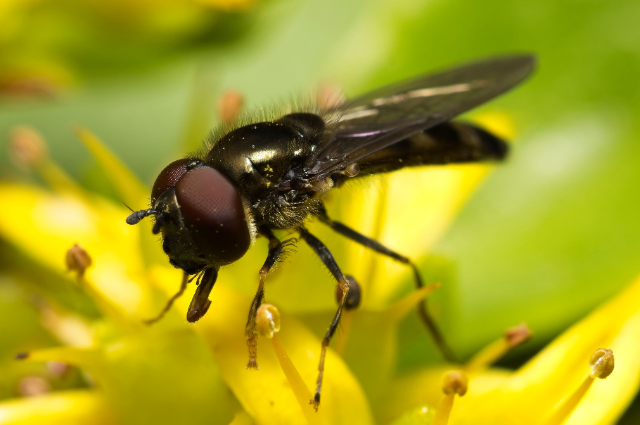
The name alone earns a double-take. The New World Screwworm, Cochliomyia hominivorax, which translates from Latin, with appropriate bluntness, as 'man-eater', is a parasitic fly whose larvae burrow into the living flesh of warm-blooded animals and eat inward, not outward, growing as they feed and attracting more flies with each passing day. A French naval surgeon who first documented the species in the 19th century wrote, with evident helplessness, that 'science unfortunately finds itself nearly powerless to halt these terrible ravages.' That was in the 1850s. For most of the 20th century, science found a way. Now, in 2026, it is trying to find it again.
On June 3, 2026, the United States Department of Agriculture confirmed the detection of a New World Screwworm in a three-week-old calf in Zavala County, Texas. It was the first confirmed animal case on American soil in decades. It was not, in any meaningful sense, a surprise. Scientists had been predicting a US crossing for over a year. What the confirmation did was make it official: a parasite that was once eradicated from North America through one of the most impressive international biosecurity programmes ever attempted is back, and the question of how far it goes is now a food supply question as much as an animal health one.
What the Screwworm Actually Does
Most parasites target dead or decaying tissue. The New World Screwworm does not. Its larvae feed exclusively on living flesh, which is what makes it uniquely dangerous and uniquely horrifying. An adult female fly, roughly the size of a common housefly with a metallic blue-green body and reddish-orange eyes, lays her eggs at the site of any open wound on a warm-blooded animal. Any wound will do: a cut from barbed wire, the navel of a newborn calf, a tick bite, a scratch. Within twelve to twenty-four hours, the eggs hatch into larvae that begin burrowing into the tissue, feeding and growing. As they feed, the wound enlarges and deepens, attracting more female flies, who lay more eggs. An untreated infestation can kill a large animal within days. Screwworm cases can cause spontaneous abortion in cattle, reduce milk production, lower body weight, impair future fertility, and degrade leather quality in surviving animals, compounding the economic damage well beyond the immediate death toll.
That last detail matters more than it might seem. In livestock production, every stage of an animal's life has economic value that a screwworm infestation systematically destroys, even in animals that survive. The USDA has estimated that its investment in the Panama-based sterile fly programme, the barrier that kept screwworms out of the US for decades, has saved the American cattle industry approximately $2.3 billion annually. That figure gives a rough sense of what an unchecked infestation would cost.
How It Was Beaten Before — and Why It Came Back
The story of the screwworm's first defeat is one of the most creative episodes in the history of applied science. In the 1950s, two USDA researchers named Edward Knipling and Raymond Bushland developed what they called the Sterile Insect Technique (SIT). The principle is elegant: breed millions of male screwworm flies in a controlled facility, expose them to ionising radiation to render them sterile, then release them into the wild in vast numbers. Sterile males compete with wild males for females. Since female screwworms mate only once, a mating with a sterile male produces no offspring. Flood an area with enough sterile males and, over successive generations, the wild population collapses.
Beginning in the early 1960s, the United States deployed this technique across the American South and Southwest, eventually working its way through Mexico and all of Central America in a decades-long collaborative programme with regional governments. By the early 2000s, the screwworm had been eradicated from North America and most of Central America. A joint US-Panama facility, known as COPEG, was established in Panama as a permanent biological firewall, producing and releasing sterile flies to prevent any re-entry from South America. The American cattle industry rested easy.
Then, in 2023, something shifted. Screwworm detections in Panama, which had previously averaged around 25 cases per year, jumped to more than 6,500 in a single year. From Panama, the outbreak moved north, into Costa Rica, then Belize, El Salvador, Guatemala, Honduras, Nicaragua, and Mexico. By November 2024, cases had been confirmed in southern Mexico. By September 2025, the northernmost detection was in Sabinas Hidalgo, Nuevo León, less than 70 miles from the US-Mexico border. By June 2026, a calf in Texas confirmed what models had been predicting all along.
The Border, the Trade War, and the Food Chain
The screwworm's spread did not happen in a political vacuum. When the US suspended live animal imports from Mexico in late 2024, cattle imports, which had topped 116,000 head in October 2024, dropped to fewer than 4,700 head by July 2025, just before the suspension became total. That collapse in trade volume is not merely an agricultural statistic. It is a grocery store number. The United States cattle herd is currently at its lowest level since the 1950s, driven in part by multi-year drought conditions that have reduced available grazing land across the South and Southwest. American ranchers depend significantly on Mexican feeder cattle to supplement domestic supply. Remove that supply suddenly, and prices rise, and they rise for everyone, including families who are already stretching budgets at the supermarket checkout.
The American Society for Microbiology noted explicitly in its analysis that for families already facing food insecurity, rising beef and dairy costs driven by screwworm-related supply disruptions increase the risk of downstream health effects, including chronic disease and childhood developmental problems. This is the link the brief's framing pointed at precisely: livestock diseases do not stay on farms. They travel through supply chains and arrive at kitchen tables.
The diplomatic dimension added further complexity. In April 2025, US Agriculture Secretary Brooke Rollins wrote to her Mexican counterpart citing evidence that Mexico's aviation authorities were restricting USDA aircraft used to disperse sterile flies, and that customs officials were imposing import duties on sterile fly shipments, despite those operations being funded entirely by the United States. By August 2025, at a press conference in Texas, Secretary Rollins described NWS as 'not only a threat to our ranching community, but a threat to our food supply and our national security,' and announced a five-pronged response plan that included, for the first time in over forty years, the construction of a domestic sterile fly production facility on American soil.
The Human Cases Nobody Is Focusing On
In August 2025, a person who had returned to the United States after travelling to El Salvador was confirmed to have a New World Screwworm infestation, the first travel-linked human case confirmed in the US in nearly a decade. Human infestations are rare, but they are not impossible, and they are not gentle. The same larval feeding process that destroys cattle wounds applies to human tissue. In documented cases, historically concentrated among people with open wounds, the elderly, or individuals in settings with limited medical access, infestations have caused severe disfigurement, with maggots feeding in nasal passages, ear canals, and open sores.
The CDC has been careful to note that the risk to the general American public remains very low, and that screwworm does not infest food products; meat from affected animals does not carry the parasite into the food supply. But the travel-linked human case, combined with the June 2026 Texas animal confirmation, means the screwworm is no longer a story about something happening in countries to the south. It is a story about something that has arrived.
Eradication Was Never Permanent
There is a lesson embedded in the screwworm's return that applies far beyond this particular parasite. Disease eradication is not a permanent state. It is a maintained state, a daily, funded, internationally cooperative effort that requires money, political will, and the absence of the conditions that allowed the disease to flourish in the first place. Remove any one of those elements, and the disease does not wait politely.
The USDA has committed $109.8 million in emergency funding in 2023 and $165 million in 2024 to screwworm response activities. A $21 million investment is converting a fruit fly rearing facility in Mexico to produce up to 100 million sterile flies per week. A domestic facility is now being built in South Texas for the first time since 1982. These are serious responses to a serious problem.
But the screwworm did not come back because science failed. It came back because the biological firewall, the Panama programme, was overwhelmed, possibly by the movement of animals through the Darien Gap, possibly by ecological changes that extended the parasite's viable range, possibly by the compounding effects of stray dogs and wildlife carrying the fly northward in ways that cattle import controls alone cannot stop. It came back because eradication, without eternal vigilance, is only ever temporary. What is at stake now is not just a Texas calf. It is the price of beef in Mumbai, the cost of a school lunch, and the question of how many of the diseases we believe we have defeated are, in fact, merely waiting.
References:
- CDC – New World Screwworm Situation Summary: https://www.cdc.gov
- USDA APHIS – USDA Confirms Presence of New World Screwworm in the United States (June 2026): https://www.aphis.usda.gov
- Screwworm.gov – Current Status of New World Screwworm: https://www.aphis.usda.gov
- USDA Press Release – USDA Announces Sweeping Plans to Protect the United States from New World Screwworm (August 2025): https://www.usda.gov
- USDA Press Release – Mexico Confirms Case of New World Screwworm in Nuevo León (September 2025): https://www.usda.gov
- CNN – Flesh-Eating Screwworm Has Reached the US: A Comeback Driven by Organised Crime: https://www.cnn.com
- American Society for Microbiology – New World Screwworm: Rise, Fall and Resurgence: https://asm.org
- AgDaily – How New World Screwworm Turned a Biosecurity Crisis into a Trade Policy Challenge: https://www.agdaily.com
- Congressional Research Service – New World Screwworm: Current Issues: https://www.congress.gov