
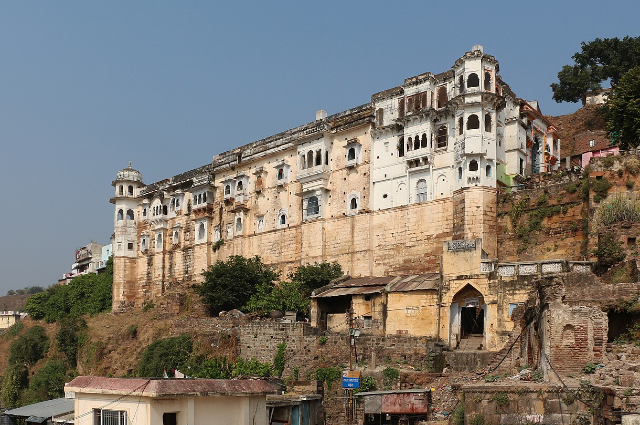
Every year, millions of devotees travel to Omkareshwar Jyotirlinga in Madhya Pradesh, one of the 12 holiest Shiva temples in India, ready to wait for hours just to spend a few sacred minutes before the deity. But in 2026, something changed at this ancient shrine. The currency of entry is no longer money. It is blood.
What Is Omkareshwar's Blood Donation for VIP Darshan Scheme?
Omkareshwar Temple in Madhya Pradesh allows eligible devotees to donate blood and receive VIP darshan passes, helping reduce regional blood shortages while rewarding voluntary donors. The initiative, launched by the Khandwa district administration, has transformed an act of public service into a meaningful part of the pilgrimage experience.
A bold initiative by the Khandwa district administration now allows pilgrims who voluntarily donate blood to skip the standard 34-hour queue and receive direct VIP darshan. The cost? Twenty minutes and one pint of blood that could save three lives.
The Temple That Stands on an Island Shaped Like 'Om'
Omkareshwar Jyotirlinga sits on Mandhata Island in the Narmada River, about 77 km from Indore. What makes it remarkable even before you enter is its geography: the island is naturally shaped like the sacred symbol ॐ (Om) when viewed from above. No human hand designed it. It simply is.
It is the fourth among the 12 Jyotirlingas of Lord Shiva sites, so sacred that a pilgrimage here is believed to carry the spiritual merit of visiting all the Panch Kedars combined. According to the Shiva Purana, Shiva manifested here as an infinite pillar of light after defeating the Asuras in a cosmic battle. Legend also holds that Shiva visits this temple every night to rest,t which is why the nightly Shayan Aarti is one of Omkareshwar's most beloved rituals.
The temple structure dates to the 11th century, built by the Paramara kings of Malwa, and was later restored by the Maratha queen Ahilyabai Holkar in the 18th century. Adi Shankaracharya is said to have met his guru in a cave here. This is a place that carries centuries of weight. Which makes what happened in 2026 all the more striking.
The Problem: Waiting in Line for the Divine
At Omkareshwar, queues during festivals like Mahashivratri or the holy month of Shravan routinely stretch to 34 hours. For elderly pilgrims, families with children, or those who have travelled hundreds of kilometres, that wait is punishing. VIP darshan priority entry has traditionally solved this for those with resources or connections, which brings its own discomfort: access to God begins to look like access to everything else.
Simultaneously, blood banks in Khandwa and across rural India have faced a persistent shortage. Only about 60% of India's blood donations are voluntary; the rest come from replacement donors, a practice the WHO actively discourages for its unreliability and safety risks. Two very different problems. One elegant solution.
How the Scheme Works: 20 Minutes, One Certificate, No Queue
The initiative, launched under Khandwa District Collector Rishabh Gupta, is straightforward in design. A five-bed blood donation facility sits near the temple complex. Any healthy devotee aged 1860 who weighs at least 45 kilograms is eligible. The donation takes about 20 minutes.
In return, the donor receives:
- Refreshments immediately after donating
- Baba's Prasad and a photograph of Lord Omkareshwar
- A certificate that grants VIP entry for the donor and their entire family
The scheme was piloted on February 24, 2026. By the first two weeks of June alone,ne during the auspicious month of Adhik Maas, the camp had collected 497 units of blood. The Khandwa blood bank had previously averaged 1520 units per day; during the peak of this initiative, that figure reached 200 units per day. Dr Atul Mane, the blood bank in-charge, confirmed that donations in the first 14 days of June surpassed the usual monthly average entirely.
Why This Works: Faith and the Psychology of Giving
Research consistently shows that financial incentives for blood donation can backfire; they attract donors less likely to disclose health risks and reduce intrinsic motivation. What actually works is a sense of purpose, community, and identity.
At Omkareshwar, the conditions are almost perfectly aligned. Pilgrims arrive already in a mindset of sacrifice;e they may have fasted, made vows, or journeyed long distances. The concept of daan (charitable giving) is central to Hindu pilgrimage culture. Donating blood at a temple does not feel like visiting a clinic. It feels like an offering.
The timing of Adhik Maas, an extra month added to the Hindu calendar, considered especially auspicious for acts of charity,y was no accident. Donating blood during Adhik Maas, at one of the 12 Jyotirlingas, in exchange for prasad and divine darshan: that is a proposition no poster campaign could match.
India's Blood Gap and What This Changes
India's annual blood requirement stands at approximately 14.6 million units. In 202425, the country collected14,601,147 unitsi, ts a 15% rise, technically meeting national demand. But the distribution is deeply unequal. Research maps vast "blood deserts" across northern India. Only 26% of Indians live within 30 minutes of a blood bank, and over 80% of primary healthcare centres lack any blood storage facility at all.
State officials at Madhya Pradesh's National Health Mission have confirmed they are studying whether to expand this model to other major temples across the state. Authorities at Omkareshwar are preparing to set up a separate standalone blood bank at the local medical college to handle the growing stock.
When Faith Serves the Living
There is something quietly profound about what is happening at Omkareshwar. At a temple where devotees come seeking a god said to visit every night, where the ground itself is shaped like the sound of creation, people are now arriving and giving something that has nothing to do with ritual and everything to do with life.
One unit of blood can save up to three lives. The needle takes 20 minutes. The certificate gets you through the gate. But the real reward is the kind that doesn't come on paper: the knowledge that your act of devotion, this time, might have been someone else's miracle.
Perhaps that is what daan always meant.
References:
- India.com https://www.india.com
- Deccan Chronicle https://www.deccanchronicle.com
- Wikipedia Omkareshwar Temple https://en.wikipedia.org/wiki/Omkareshwar_Temple
- IndiaSpend https://www.indiaspend.com
- PMC/NCBI https://www.ncbi.nlm.nih.gov/pmc/articles/PMC11499795/