
*ding* “SHUBHAM GUNE paid you ₹15,682”
A notification pops up on your phone with an unexpected amount received in your account. What would you do?
By 7 am, Mumbai was already in full motion.
Within a city that never sleeps, by now tea stalls had served their first cup of tea, auto-mobiles weaving through the strings of traffic, and several commuters racing against the clock. In the middle of this familiar Mumbai rush, a hurried payment would set the stage for an unexpected story of honesty.
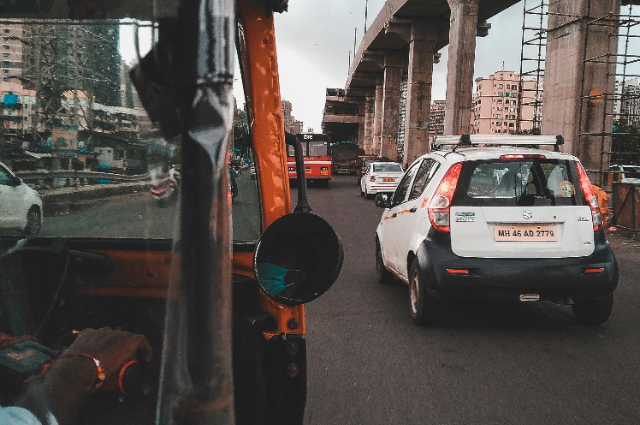
A typical hectic morning for Altaf as he joins the countless workers who keep Mumbai moving; the day had already begun for the auto rickshaw driver long before the office-goers as he navigates the crowded streets, picking up passengers from railway stations to residential neighbourhoods along the bustling commercial districts.
One such passenger who was caught in between his early meeting was the CEO of Hinglish, Shubham Gune, rushing to reach their destination on time. It was supposed to be a simple routine digital transaction that was made across the city every day. However, pressed for time, Gune completed the payment in haste and made a mistake of transferring ₹15,682 instead of the actual due auto fare, which was ₹156.
The mistake went unnoticed at first.
Stories of fraud and financial scams have surfaced almost every day; recovering digitally transferred money can be difficult. There is no guarantee that an unintended recipient will voluntarily return money, and it has made people increasingly cautious. Gune likely imagined the worst; after all, the money had already been sent.
On the other side stood Altaf.
There was no one monitoring him, none who stood over his shoulders.
The notifications had announced the arrival of the transferred amount in his account.
He had a choice to ignore the mistake.
As children, we’ve all learned that “Honesty is the best policy”, but for the humble auto driver, he proved it in reality.
Because not only did he return every rupee that was transferred, he went a step further and refused to charge the original fare for the ride.
Here, the significance was not in correcting the financial errors but in what it reveals about the character itself. As someone who earns a living one ride at a time, ₹15,682 was not an insignificant amount. Temptation would have consumed many other people and justified keeping the money for themselves.
Nonetheless, Altaf did not.
Modern life moves quickly. Transactions are increasingly digital. Human interactions are shorter than ever. Trust between strangers can sometimes feel fragile.
Yet, in one small act, Altaf reminded everyone that integrity does not depend on circumstances; it still exists in everyday life, often in places where people least expect to find it. His response was uncomplicated. The money was not his and therefore, it had to be returned.
What remains memorable is the act itself.
For Gune, the experience was more than the recovery of misplaced money. The clarity of character is what transforms an ordinary incident into a meaningful story.
A week later, another unexpected development followed.
A client who had previously been lost returned to Gune’s business. While the two incidents may have been unrelated, the coincidence added an almost poetic touch to the story. What began as a costly mistake ended with both the recovery of the misplaced money and the return of a client.
Much to Gune’s appreciation, he rewarded Altaf with ₹500.
One small act of honesty had caused a ripple of kindness.
In a metropolitan city like Mumbai, interactions are forgotten quickly, as strangers cross paths every second. The usual ritual of passengers entering an auto, reaching their destination, making a payment and then moving on with their day rarely does a brief encounter become a story worth retelling.
However, this one did.
Aside from the digital transaction error, there surfaced a story of an ordinary man making extraordinary choices.
Altaf was under no surveillance when he decided to return the money to its rightful owner. His decision was made quietly, without expecting recognition, reward or public appreciation; it was only guided by a principle that has become increasingly valuable in a fast-moving world.
Altaf may not view himself as a hero; he may see his decision as nothing more than doing what was right. Perhaps this is exactly what makes this story meaningful.
Societies often celebrate extraordinary achievements, yet ordinary acts of decency contribute to building societies just as much. The willingness to return what does not belong to us, the decision to act fairly when no one is watching, understanding that character is revealed not during moments of convenience, but during moments of temptation.
As Mumbai continued its relentless march through another busy day, one auto driver quietly demonstrated a truth that is easy to forget: trust is still alive, and integrity still has a place in our everyday life.
Sometimes, the most valuable thing a person can return is not money. It is restoring faith in humanity.
. . .
References:
- NDTV - Busy CEO Accidentally Pays Mumbai Auto Driver Rs 15,000. What Happened Next Won The Internet https://www.ndtv.com
- INSTAGRAM (@thebetterindia) - What would you do if ₹15,000 landed in your account by mistake? For one Mumbai auto driver, the answer was simple: return it.
- The Indian Express - Bengaluru Auto Driver Returns Passenger's Lost Bag Full of Cash. https://indianexpress.com
- The Economic Times - Honesty on Three Wheels: Mizoram Auto Driver Returns ₹17 Lakh Without Expecting Reward. https://economictimes.indiatimes.com