
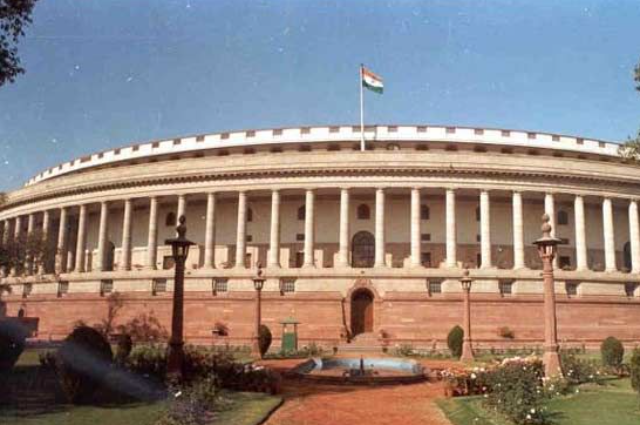
Every year, on the 13th of December, India remembers the attack on Parliament.
Television channels replay footage of the smoke-filled complex. News anchors recall the terrorists who stormed the nation’s most important democratic institution. Politicians pay tribute to the security personnel who defended it.
Yet. Somewhere between the headlines and the ceremonies, one name quietly slips away.
Kamlesh Kumari Yadav
The first woman ever to receive the Ashoka Chakra-India’s highest peacetime gallantry award.
If her story had unfolded anywhere else in the world, it would have become part of every school textbook and every lesson on courage. Instead, her sacrifice survives mostly in official records, fading newspaper archives and the memories of those who served alongside her.
Perhaps it is time we remember.
On the morning of 13th December 2001, Parliament was in session. Members of Parliament. Ministers and government officials were moving in and out of the complex. Security was tight, but routine. Among the personnel guarding the premises was CRPF Constable Kamlesh Kumari Yadav, stationed at the Iron Gate no. 1-the entrance frequently used by ministers and other dignitaries.
It seemed like any other day.
Then a white Ambassador car approached.
There was nothing absolutely alarming about it. It carried the familiar red beacon and official-looking Parliament and Home Ministry stickers- the kind normally associated with high-ranking government officials. To most people, it looked exactly like the vehicle that belonged there.
But Kamlesh Kumari Yadav noticed something wasn’t right.
It was a moment that lasted only seconds.
Instead of dismissing her instincts, she acted. She rushed back to her post, transmitted a warning over her walkie-talkie, and ordered the gate shut before the vehicle could move farther into the Parliament complex.
That single decision changed history.
Realising their cover had been blown, the terrorists stepped out and opened fire.
Kamlesh Kumari had no rifle in her hands. She carried no sophisticated weapon. Her only means of communication was a walkie-talkie.
ELEVEN BULLETS STRUCK HER
She became the first casualty of the Parliament attack.
But by then, it was already too late for the terrorists to execute their original plan.
The alarm she raised alerted nearby CRPF personnel within precious seconds. Those few moments proved decisive. Security forces quickly engaged the attackers before they could enter the main parliament building. Constable Sukhwinder Singh neutralised one terrorist wearing explosives, while Constable Santosh Kumar eliminated three others. Within minutes, all five terrorists were killed.
Security experts and official CRPF accounts have consistently recognised that Kamlesh Kumari’s vigilance disrupted the attackers’ strategy and prevented what could have become one of the darkest days in India’s democratic history.
The numbers alone fail to capture what was truly at stake.
Inside Parliament sat elected representatives from across the country. Cabinet ministers. National leaders. The possibility of a mass hostage situation or assassination could have plunged India into an unprecedented constitutional crisis.
Instead, a constable’s instinct and her willingness to sacrifice herself stood between democracy and disaster.
Her bravery did not go unnoticed.
On Republic Day in 2002, Kamlesh Kumari Yadav was posthumously awarded the Ashoka Chakra, India’s highest peacetime gallantry honour. She became the first woman to receive the decoration, a milestone that should have secured her place among the nation’s most celebrated heroes.
Prime Minister Atal Bihari Vajpayee paid tribute to her courage and the CRPF immortalised her sacrifice within its history of gallantry.
Yet outside military circles, her name rarely enters public conversation.
Ask most Indians about recipients of the Ashoka Chakra, and many can recall more recent names. Ask them about the Parliament attack, and they remember the date, the terrorists and the political consequences.
Ask them who first confronted the attackers.
Most cannot answer
This silence says as much about us as it does about history.
Nations are not remembered only through wars or victories. They are remembered through the people they choose to honour. Memories, textbooks, documentaries and public conversations shape collective memory. When extraordinary individuals disappear from those spaces, future generations inherit an incomplete history.
Kamlesh Kumari was not searching for recognition.
She was a wife.
A mother to two young daughters, Jyoti and Shweta.
A daughter of Uttar Pradesh.
A CRPF constable simply doing her duty.
She could have hesitated.
She could have assumed someone else would notice.
She could have ignored the uneasy feeling that something was wrong.
Instead, she trusted her instincts and acted, knowing full well that every second mattered. That decision cost her life. But it may have saved countless others. More than two decades later, her story still carries an uncomfortable lesson.
India rightly celebrates its soldiers, freedom fighters and decorated officers. Yet many heroes who stood at history’s turning points quietly disappear from public memory. Their courage remains preserved in official citations but rarely reaches classrooms, cinema screens or everyday conversations.
Perhaps remembrance itself is a form of service.
Not because Kamlesh Kumari needs recognition anymore, but because a nation owes its heroes more than annual wreaths and ceremonial speeches. It owes them memory. The next time the anniversary of the Parliament attack is observed, let us remember more than the date.
Let us remember the woman who stood at the gate.
The woman armed with nothing more than a walkie-talkie and extraordinary courage.
The woman who saw danger before anyone else did.
The woman who shut the gate.
And in doing so, opened one of the finest chapters in India’s history of selfless service.
Her name was KAMLESH KUMARI YADAV.
She did not live long enough to see the nation she protected thank her. The least we can do now is ensure that it never forgets her.
References:
- https://crpf.gov.in/About-Us
- https://crpf.gov.in
- https://thebetterindia.com
- https://www.jagran.com
- https://en.wikipedia.org/wiki/Kamlesh_Kumari_Yadav