
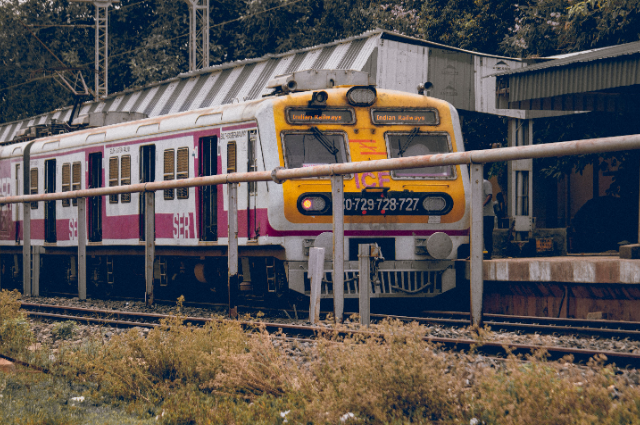
A young salesman finished another ordinary workday. His only mistake was asking someone to shut the train door to keep the rain out. Minutes later, he lay bleeding on the floor of Mumbai’s lifeline.
Every evening, millions of Mumbaikars board the city’s local trains with a single goal-to get home.
Some carry office bags, some carry groceries, others the exhaustion of another long workday. They squeeze into overcrowded compartments, negotiate for a few inches of standing space and silently accept the chaos that has become part of daily life. Arguments over seats, footboards and train doors are so common that they barely attract attention anymore.
But on one rain-soaked night, one such argument ended with a young man bleeding to death inside the very transport system known as Mumbai’s lifeline.
Twenty-two-year-old MAYANK LOHAR never imagined that asking a fellow passenger to close the train door because rain was pouring into the compartment would be the last conversation of his life.
The tragedy is horrifying not merely because a young life was lost, but because it exposes an unsettling question: “How has an ordinary commute become a place where a simple request can provoke deadly violence?”
Mayank, a resident of Virar, worked as a salesman for a private company in Andheri. Like countless young professionals, he boarded the 10:05 p.m. Churchgate- Nallasopara Fast Local after another ordinary day at work. He was travelling in the first-class compartment, hoping only to return home to his family.
Outside, the monsoon lashed Mumbai relentlessly. Rainwater blew into the coach through the open doorway. Wanting relief from the downpour, Mayak reportedly asked another commuter to close the train door.
It was a request that thousands of Mumbai commuters make every monsoon.
Instead of ending with the door shutting, it escalated into a heated argument.
Some passengers prefer the train door to remain open for ventilation, easier boarding or simply because that has become the norm on Mumbai’s suburban railway. Others want them shut to keep out the rain. During the monsoon, this conflict plays out almost every day across the city’s trains.
On that night, however, the disagreement crossed a terrifying line.
According to investigators, the accused allegedly pulled out a knife on the moving train between Andheri and Borivali. As panic spread through the compartment, the attacker escaped by jumping off the train at Borivali before it had come to a complete halt.
Within moments, an ordinary local train had become a crime scene.
For Mayank’s family, time stopped that night.
He had left home that morning expected to return after work, just as he always had. Instead, his family received news that no parent or sibling should ever have to hear: that their son had been murdered during his daily commute.
Among the most haunting reactions came from his grieving sister, who reportedly asked, “There were around 30 passengers in that compartment. What were they doing?”
It is a painful question.
Not because it blames those present-violent situations unfold in seconds and fear can paralyse anyone- but because it reflects the helplessness felt by families after such tragedies. It also raises broader questions about how safe commuters truly are inside one of the busiest suburban railway systems in the world.
The murder is shocking, but it is also symptomatic of deeper problems.
Mumbai’s local trains carry millions of passengers every day, often far beyond their intended capacity. During rush hours and the monsoon season, overcrowding, fatigue, delayed services, rising frustration and personal stress create an environment where even minor disagreements can escalate rapidly.
The open-door culture itself has become one of these recurring flashpoints.
Some commuters insist on keeping the doors open for fresh air and quick exits at crowded stations. Others demand they be closed during heavy rain or for safety. These disagreements have become so routine that most passengers barely notice them anymore.
Perhaps that is precisely the problem. What society begins to normalise eventually stops being questioned.
What society begins to normalise eventually stops being questioned. Mayank’s death is also significant because it is not an isolated incident. Reports indicate that this was the second fatal stabbing on Mumbai’s Western Railway suburban network in 2026, following the killing of a college lecturer earlier in the year after another altercation inside a local train.
Two fatal stabbings within months should not be dismissed as an unfortunate coincidence.
They should force uncomfortable conversations about passenger security, policing and violence in public spaces.
How did someone allegedly board a suburban train carrying a knife?
Are security checks adequate across Mumbai’s railway network?
Can Government Railway Police personnel realistically monitor trains carrying millions of passengers daily?
What preventive measures exist before a verbal argument turns into a violent assault?
These are not questions directed only at railway authorities. They concern urban planning, commuter behaviour, public policing and a society increasingly accustomed to aggression in everyday interactions.
To their credit, investigators moved quickly after the incident. Borivali Government Railway Police registered a murder case, examined CCTV footage from hundreds of cameras, recorded witness statements and arrested the accused. The investigation continues, and the legal process must now determine guilt based on evidence presented before the courts.
But even if justice is eventually delivered in a courtroom, it cannot undo what has already been lost.
No arrest can return a son to his parents.
No conviction can erase the trauma carried by the passengers who witnessed the attack.
No investigation can answer why an everyday disagreement became a fatal confrontation in the first place.
Mumbai’s suburban railway has long been celebrated as the city’s lifeline-a symbol of resilience, discipline and the relentless spirit of its commuters. Every day, millions trust that they will reach work, school or home safely.
The trust is fragile.
When passengers begin to fear not only overcrowding or accidents but also violence over something as ordinary as a train door, the system has failed in more ways than one.
Tomorrow morning, millions will once again step onto Mumbai’s local trains. They will argue over space, seats, luggage and perhaps even whether the doors should remain open or closed.
Most will return home safely.
But after Mayank Lohar’s death, one haunting question will travel with every commuter:
“How did asking someone to close a train door become an act that could cost a young man his life?”
Sources:
- The Indian Express- 22-year-old stabbed inside Mumbai local train after row over closing of door, accused held… https://indianexpress.com
- The Hindu- Mumbai train murder accused confesses to stabbing, remanded till June 29 https://www.thehindu.com
- The Times of India- Murder in Mumbai Local: 22-year-old stabbed to death after row over closing door. https://timesofindia.indiatimes.com
- Hindustan Times- Mumbai train stabbing knife recovered, sent for forensic testing. https://www.hindustantimes.com
Follow-up investigation:
- The Times of India- Accused Roshan Svarna came home drunk, cried after killing co-passenger. Provides background on the accused and developments after the murder. https://timesofindia.indiatimes.com
- The Times of India: Passenger recalls moment when 21-year-old was stabbed to death inside Mumbai local. https://timesofindia.indiatimes.com