
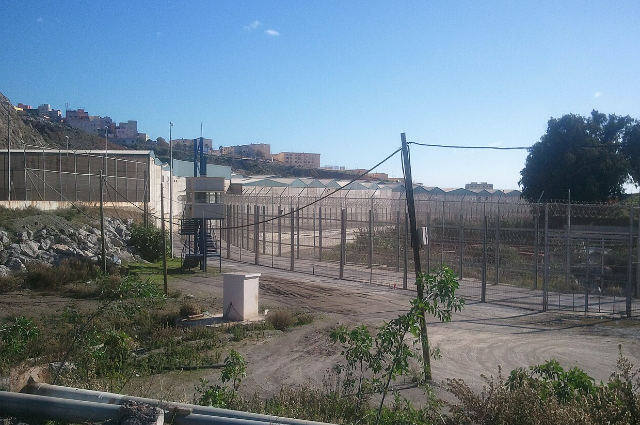
Europe’s most serious humanitarian emergency right now is the migration crisis in Ceuta. Migrants which are mostly from Morocco and other African countries, are thousands. Crossed into the Spanish enclave by swimming around breakwaters or entering through land crossings in search of safety and better economic opportunities. This overwhelming number of crossings put pressure on the infrastructure of Ceuta such that many migrants, even those unaccompanied children, found themselves homeless, hungry, and without any medical attention. This problem has been attracting international attention due to its relevance to the humanitarian issues related to the borders of Europe.
Ceuta is an autonomous city of Spain and is located on the northern coast of Africa. While it is surrounded by Morocco geographically, politically it belongs to Spain, and hence to the European Union. Along with Melilla, it is one of Europe’s only land borders with Africa.
Just because entering Ceuta means reaching EU territory, it has long been a destination for migrants hoping to eventually travel into mainland Spain and other European countries. Its strategic location makes Ceuta one of Europe’s most sensitive migration hot spots.
Why they Migrate from Morocco to Spain
Migration is driven by multiple interconnected factors rather than a single cause. Here’s the same. Several reasons make them migrate. One of the reasons is Economic. Many young Moroccans struggle to find stable employment. So the employment issue is one of the migrants' reasons. High youth unemployment. And even low wages. Rising living costs encourage migrants to seek opportunities in Europe. Their salaries and living standards are generally higher. Another reason is better education and healthcare. Some families hope to provide better education, healthcare, and more future opportunities for their children. Some of them reason is political and social issues. As we know that Morocco is relatively stable compared with some neighbouring countries, So migrant,m sub Saharan Africa also travel through Morocco to neighbouring Europe, fleeing conflict, persecution, or extreme poverty. And the main one is social media. Recently, misleading social media posts and viral videos falsely suggested that crossing into Ceuta had become easier or that migrants would automatically be allowed to remain in Spain. These rumours encouraged thousands to attempt this dangerous journey. Thus, the influence of Social Media, the misguiding lead many migrants to take this step.
What Triggered the Current Crisis
Unlike previous migration waves, the latest surge happened within a very short period. On social media platforms, false information is circulated rapidly. It states that Spain has either lowered its border control standards or modified immigration policies altogether. Some of these sites are Instagram, TikTok, WhatsApp, and Facebook. With the circulation of this fake news, thousands of people congregated around the Moroccan city of Fnideq before trying to cross into Ceuta via swimming or the border itself. An overwhelming number of immigrants were reported by Spanish officials, and many of them were deported back to Morocco by the Humanitarian Crisis.
This crisis is not just about migration. It is also about a humanitarian emergency. Almost a thousand migrants arrived with almost no belongings. A humanitarian centre quickly exceeded capacity, have no choice but to force many people to sleep outdoors in parks, streets, and temporary camps. Children are forced to be among the most vulnerable to exploitation, trauma and health risks. Even Aid organization can’t able to provide basic needs. No safe Shelter. No Clean drinking water. And even no food. Organisations can’t provide medical assistance, psychological support and even protection for children. Local authorities have described the situation. They described it as overwhelming for a city with so many limited resources.
This migration journey itself has proven deadly. Many of the migrants who attempted to swim around the border barriers despite strong sea currents. Others were injured during overcrowding near border fences. Fatalities from drowning and crowd crushes have highlighted the dangers of irregular migration and the desperation that drives people to risk their lives for a chance at a better future.
Spain’s Response
The Spanish government reacted quickly to this matter. They deployed additional police and military personnel, reinforcing border fencing and sea patrols, installing additional maritime barriers, and increasing emergency medical assistance and even returned many migrants to Morocco. Spanish Prime Minister Sánchez visited Ceuta to reassure residents that the government would restore order while addressing humanitarian needs.
Morocco also plays a crucial role because nearly all migrants attempting to reach Ceuta pass through Moroccan territory. The two nations have collaborated for border control purposes; however, conflicts may arise in terms of migration, diplomacy, and territorial conflicts concerning Ceuta and Melilla. Experts contend that effective migration management entails collaboration between Spain and Morocco since it entails dealing with human smuggling networks while respecting human rights. The crisis has impacted not just Spain but also the entire European Union.
Several European governments have voiced concerns regarding an increased possibility of pressure on the Schengen area, should the migrants go beyond Ceuta. Debates regarding the EU’s migration policy, external border security, responsibility sharing among member states, humanitarian obligations, and asylum procedures have been fueled by the crisis. Some nations have tightened their border controls while others are calling for increased cooperation to handle migration.
Some of the key problems facing the city include Overcrowding of reception centers, Insufficient accommodation, Strain on healthcare services, Need for increased centres, Protection of children without accompanying guardians, and Balance between humanitarian support and immigration management.
The following methods have been proposed by experts to prevent such crises from happening in the future: Foster cooperation between Spain, Morocco, and the European Union; Counter misinformation and human trafficking networks; Ensure legal pathways for migration; Promote economic growth and job creation in migrants’ countries of origin; Provide humanitarian assistance and child protection services; Formulate fair and effective asylum policies. There is no one-stop solution to the problem of migration.
The migration problem that Ceuta faces highlights the increasing difficulty of dealing with migration in the globalised world. It is a question of humanity, politics, and security. They expose themselves to danger simply because of their hope that Europe can offer them some kind of security and chances. While it is quite important for the states to secure themselves from any danger, this can never become an excuse for not fulfilling their humanitarian obligations. The case of Ceuta demonstrates the need for joint efforts in solving migration problems.
References:
- https://www.reuters.com
- https://www.reuters.com
- https://apnews.com
- https://www.theguardian.com
- https://elpais.com