
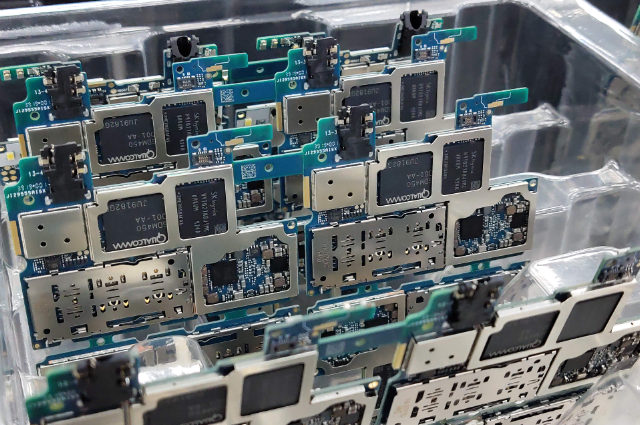
For many years, the smartphone industry has operated on a simple expectation. A new generation of mobiles would become more powerful than before while prices would remain competitive. Phones contain more RAM, more storage, better cameras and faster processors. These features gradually became standard features even in affordable devices. But now that technique is facing an unexpected challenge. It’s not because people suddenly stopped purchasing phones, but because this industry has found another customer willing to pay enormous amounts for the basic resource, which is Memory.
This problem has a name:e “RAMmageddon or RAMpocalypse”. Behind these dramatic names is a serious shift in the global semiconductor industry. The rapid expansion of artificial intelligence is creating extraordinary demand for memory used in AI servers, mostly high-bandwidth memory, or HBM. At the same time, manufacturers still need to supply DRAM and NAND memory used in mobiles, computers and other electronic devices. The result is a supply squeeze that is beginning to reach consumers. IDC right now forecasts global smartphone shipments to fall 13.9% in 2026. This would be the industry’s steepest annual decline on record.
It’s not the Same Chip Shortage like before
The world has experienced semiconductor shortages before. During the pandemic, many issues arrived. It was like factories were disrupted, transportation systems were strained, and demand for computers, mobiles and other electronics changed quickly. Automakers and technology companies struggled to obtain enough chips, producing a shortage that affected industries across the world.
This time, it has a different reason. In this crisis, a major part of the pressure comes from the extraordinary growth of AI infrastructure. Companies are building enormous data centres to train and operate increasingly sophisticated AI systems. These machines require not only powerful processors but also enormous quantities of high-performance memory. This has changed the economics of memory manufacturing. Instead of trying to produce more chips for everyone, manufacturers are increasingly deciding where their limited production capacity can generate the greatest return.
What makes AI use so much Memory
A smartphone’s RAM is its short-term working space. When a user opens several applications, switches between them or runs a demanding game, the phone relies on RAM to keep data readily accessible. The mobile’s long term shortage such as 128GB or 256GB, is based on NAND flash memory. But AI data centres use memory differently and on a larger scale. Modern AI need to move huge amounts of information extremely quickly. That is where high-bandwidth memory becomes important. HBM is designed to provide extremely high data transfer rates and is closely integrated with powerful computing hardware. As AI models become larger and are used by many people, demand for this specialised memory has surged. The world’s major memory manufacturers, including Samsung Electronics, SK hynix and Micron, are therefore investing heavily inAI-orientedd memory.
It leads to an uncommon scenario. Imagine a production plant with limited capacity. One client wants standard memory for millions of smartphones. The second client is ready to pay more and wants some specific memory for his huge AI data centre. Naturally, manufacturers are motivated to produce the more profitable products. According to IDC, this trend is not just a regular imbalance in supply and demand but is also related to a deliberate strategy of switching semiconductor production capacity to enterprise-class memory for AI infrastructures. As a result, fewer resources are allocated for the production of memory for consumer devices. It doesn't mean that there is no memory for smartphones anymore. What it actually means is that manufacturers find themselves struggling for a limited supply of parts.
Why your next Phone can cost More
Although memory is just one of the components of a smartphone, its price has a significant impact on the cost of manufacturing the entire device. As memory gets more expensive, there are many options for the smartphone manufacturer. They can either raise the price, work with reduced profit margins, lower specs, or manufacture less of the product. Luxury smartphone makers have more options since they get larger profit margins from their expensive gadgets. But budget smartphone makers face a much bigger challenge, as even slight increases in the cost of components will significantly affect profitability. It is already impacting the market. IDC suggests that higher memory costs are driving manufacturers to focus on high-end smartphones, and budget ones become less and less profitable. According to IDC, the sub-$100 smartphone market is especially susceptible. For customers, it means higher prices on memory with the same capacity, or that manufacturers will allocate memory upgrades only for expensive models.
It has already become apparent in shipment projections. According to IDC, global smartphone shipments will hit about 1.09 billion units in 2026, down by 13.9% from the previous year. IDC sees one more drop in 2027 and an eventual rebound in 2028 as memory supply gets better. The key issue here is that there is an indirect way in which a shortage can influence demand. On the one hand, manufacturers may start making fewer phones due to difficulties in obtaining components at reasonable prices. On the other hand, people may decide to delay upgrading their devices since phones get more expensive. The vicious cycle begins, as more expensive memory leads to more expensive devices, which means lower sales and, in turn, fewer shipments.
The situation might also affect the balance of power between smartphone manufacturers. Big firms have certain benefits that smaller firms lack. They can get better deals on procurement, commit themselves for longer periods, and cope with increased costs of components. According to IDC's analysis, firms with larger size, stronger negotiating powers, and the ability to offer competitive prices have better chances of survival amid the current situation; manufacturers concentrated in cheaper categories are under greater pressure. This means that there will be less choice for buyers in the cheapest range of smartphones.
It Is Not Just a Phone Problem. The shortage is not limited to just phones. Producers of PCs also use DRAM and NAND, and IDC predicts that worldwide shipments of PCs will decrease by 11.3% in 2026, and that the issue will persist until at least 2027. There are other industries that are also affected by the shortage of chips. Modern cars have complicated electronic equipment; gaming consoles, tablets, servers, and network devices all require memory. Thus, the issue is much broader than an interaction of phone producers and chip makers. It turns into an allocation of production capacity in the semiconductor industry on the global level.
The seemingly apparent answer is straightforward: just create more plants. Reality is quite different. Modern semiconductor plants require billions of dollars of investment and years to build, outfit, and qualify. Even when firms decide to invest large amounts, their increased capacity does not become evident right away. SK hynix has announced plans to invest in its facilities in South Korea at a total value of about $38.3 billion. The expansion of its plant in Yongin will begin construction of the cleanroom in 2029, while another plant in Cheongju is set to launch a cleanroom in 2028. Such planning explains the current shortage situation.
There is no one specific time when everything would come to an end. On the one hand, some industries predict a large supply increase towards the latter part of the decade. On the other hand, some predict that AI-driven demand would go on outstripping supplies over the next few years. The CEO of SK hynix predicts that the memory sector will face the greatest shortage in 2027 and even after 2030, supply may continue to lag behind demand. These estimates need not be taken for sure. Everything depends on the speed at which new plants would start operating and the extent of expansion by AI firms in their data centres
References:
- https://www.idc.com
- https://www.reuters.com
- https://www.reuters.com
- https://www.idc.com
- https://www.idc.com