
It has been reported that the Food and Drug Administration of the state of Maharashtra finds itself embroiled in something that goes way beyond just a couple of raids. Whether it is with regard to the adulteration of food products, problems of hygiene in milk dairies, contamination of medicines or even school lunch nutrition programmes, there is an increasing effort by the regulator to crack down on issues that can have a direct impact on public health. While these incidents do not form one big scandal, they do reveal various loopholes in the regulatory framework.
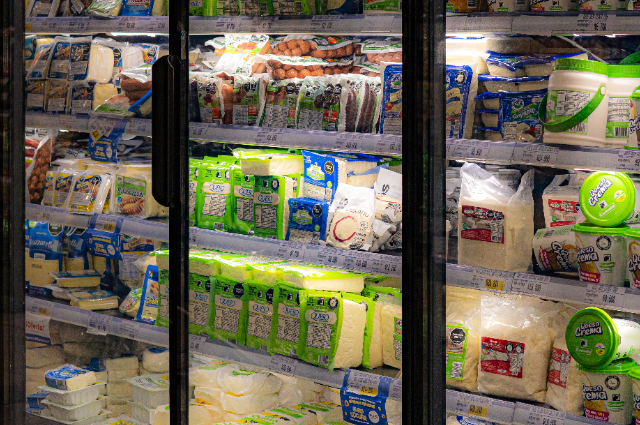
The most glaring of all instances has been the banning of non-dairy paneer in the state of Maharashtra. In July 2026, the government banned analogue paneer in the state for a period of one year following a long sampling process that indicated a surprisingly high level of non-compliance. Out of the 308 paneer and dairy analogue samples collected from April 2025 to March 2026, 35.4 per cent, or 109 samples, failed to adhere to the laid-down norms. Seventy-nine samples were considered substandard, while 30 were considered unsafe.
This was not just a question of the product being cheap or distinct from normal paneer. Tests done in laboratories showed that there were anomalies in the measurements used to measure the presence of milk fats in the product, indicating that vegetable fats had been added to replace the milk fat. This issue alarmed the FDA since hotels, restaurants, caterers, and cloud kitchens can use such products without warning their customers that they will not be getting dairy paneer.
This decision is significant since it indicates that the FDA did not rely on inspections alone to resolve this problem. In its order, the FDA noted that the percentage of non-conformant samples had been persistently high despite inspection, sampling, and awareness campaigns.
Simultaneously, there was yet another case that made it clear that food safety does not pertain only to adulteration. It may also involve issues of basic hygiene.
In the Maharashtra FDA, the food licence of the famous Parsi Dairy Farm of Mumbai was suspended on account of a number of hygiene and safety failures detected during inspections in July. Fungal growth on walls in areas of storage and production was observed; the presence of raw materials kept on the ground; unsatisfactory arrangements for collection of raw milk were among others mentioned. There were also reports of pest and rodent problems and non-compliance in relation to information of mandatory information.
The difference is crucial. It must be borne in mind that the suspension of licence at the Parsi Dairy Farm was not based on accusations of adulteration by the company. It involved food safety and hygiene-related violations. The difference is very significant because “unsafe food” may be the result of many factors in the process chain from the input of ingredients to manufacture, storage, labelling, and handling of food products.
FDA’s recent actions have also gone beyond labelling products; they also cover the medicines that people take.
Specific batches of two cough syrups named Respifresh TR and Relife have been prohibited from being sold in Maharashtra in October 2025 as they were reported to be contaminated with more than permissible amounts of diethylene glycol, also known as DEG. According to the prohibition order of Maharashtra, Respifresh TR belongs to Rednex Pharmaceuticals, and Relife belongs to Shape Pharma, two companies based in Gujarat.
DEG is far from being just an active ingredient in pharmaceutical products; this compound is rather poisonous and can lead to such conditions as acute kidney damage and even cause death. The gravity of the case was clearly seen through the whole 2025 cough syrup crisis in India, when the drug Coldrif was associated with the deaths of children in Madhya Pradesh. As per WHO’s October 2025 medical product alert, specific contaminated batches of Coldrif, Respifresh TR and ReLife have been identified.
However, this problem is not new.
WHO has been issuing warnings regarding medicines with ethylene glycol and diethylene glycol contamination from 2022 onwards. According to WHO reports in 2023, it issued several alerts regarding medicines that were contaminated with these chemicals. It further stated that by the end of 2023, it had issued six alerts globally since October 2022 and estimated that at least 300 children have died due to contamination of medicines.
India has witnessed such incidents earlier. A scientific study report on an outbreak in 1998, published in the World Health Organisation's Bulletin, described that 3 children had died in Gurgaon due to consuming a cough expectorant contaminated with 17.5% diethylene glycol. Recent scientific literature suggests that DEG poisoning cases have been reported in India due to adulteration in cough syrups since the 1980s.
The history makes it necessary to look at the current cases differently. These are no longer seen as manufacturing errors alone. Rather, they pose queries regarding raw material testing, quality assurance programs, manufacturing processes, and the effectiveness of testing authorities in identifying any hazardous contamination processes in such products before their distribution to patients.
The fact is that even India’s drug authority knows how difficult the task is. According to reports published by Reuters in February 2026, the inspection of cough syrup manufacturers had revealed several issues related to good manufacturing practices as well as inadequate testing of raw materials in some cases.
On the other hand, the Maharashtra FDA has been taking more preventive steps instead of leaving it until an injurious product creates trouble for the citizens. In July 2026, the state ordered the schools to enforce the existing food safety laws on the children. The food products rich in fats, sugars and salts were banned from being marketed, sold and advertised inside and within 50 meters of the school premises.
The reasoning is distinct from the paneer and cough syrup cases, where the regulator acted against products or practices that have already fallen short of safety standards. Near schools, the approach is preventative: try to minimise the children’s exposure to foods linked with unhealthful eating habits before the impact becomes a public health problem.
These cases collectively point to how extensive the FDA’s responsibilities have become. It is supposed to oversee the ingredients, manufacturing process, hygiene, labelling, medications, restaurants, school food, and increasingly complex food supply chains.
Recent enforcement figures highlight the enormity of this pressure. The FDA of Maharashtra conducted inspections of 2,902 drug manufacturing and sale facilities during June-August 2026 and issued warnings to 880 of these entities for violations of regulations, according to news reports about the latest enforcement drive conducted by the FDA. Reuters has also reported that the food safety commissioner of Maharashtra has conducted thousands of raids in a wider crackdown on food safety violations at the state and national level.
But enforcement alone cannot resolve the underlying problem.
A raid can confiscate adulterated food. A test can detect a contaminated syrup. A licence can be suspended. An order can instruct a school canteen to stop selling harmful products. But the real question is what will happen after that. Are manufacturers modifying their processes? Is inspection carried out frequently enough? Are laboratories well-equipped? Are sanctions stringent enough to act as a deterrent against repeated violations? And can regulators find problems before consumers suffer the consequences?
That is why the ongoing activities of Maharashtra’s FDA go beyond its individual cases. Analogue-paneer prohibition is proof that a well-known issue remains unchecked even after routine testing. The Parsi Dairy Farms case proves that even established firms can fall short on the most basic hygiene standards. Cough syrup contamination is an example of pharmaceutical adulteration that can lead to death and shows how such negligence has been a recurring problem for decades. School-food regulations are a step in the direction of regulation.
This means that what Maharashtra needs to do is not to increase raiding operations. The need here is to make sure that there is predictability, continuity and the ability to prevent harmful products from reaching consumers at all.
Food and medicine safety does not normally occur suddenly. Rather, it is normally the culmination of a series of small problems – such as the use of inferior quality ingredients, insufficient inspection, missing labels, contamination of materials, poor record-keeping or violations that go unnoticed.
The FDA’s intervention should therefore remind us that regulations come into their own before small issues snowball into crises of public health. This might mean that Maharashtra’s action is as much about dealing with a long-neglected problem as one crisis.
References:
- https://fda.maharashtra.gov.in
- https://cdnbbsr.s3waas.gov.in
- https://www.who.int
- https://www.who.int
- https://indianexpress.com
- https://indianexpress.com
- https://www.reuters.com
- https://www.reuters.com