
With each Indian’s rendering of “Jana Gana Mana,” a reference is being made to Punjab, Sindh, Gujarat, Maratha, Dravida, Utkala, and Banga. Nevertheless, there is a paradox, since there are numerous territories that have become part of tresent-day India but are not included in the partial areas.
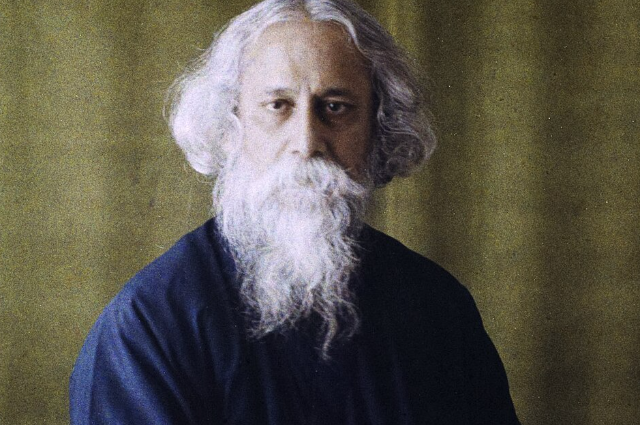
The point is quite obvious, but also quite interesting from a historical perspective: Rabindranath Tagore composed the song almost 30 years before India got independence and when its current states did not yet exist.
Jana Gana Mana was first publicly performed in December 1911 at the Indian National Congress session in Calcutta. Back then, India was a colony and its political map was entirely different from the current one – it included British provinces and many princely states that possessed various levels of autonomy.
Such is the historical context that provides an explanation for many of the geographical references in the anthem. By using the names Punjab, Sindh, Gujarat, Maratha, Dravida, Utkala, and Banga, Tagore was by no means trying to make a list of what the states of India would become in the future. These are the names of large geographical and cultural areas of the Indian subcontinent as known in the early 20th century.
One can provide the name Rajasthan as a good example in this case. At the time when Tagore wrote the song, there was no state of Rajasthan. A significant part of today’s Rajasthan was made up of various princely states and territories belonging to the area that was called Rajputana. The political unification that brought about Rajasthan occurred after India’s independence.
Thus, it would be unrealistic to expect “Rajasthan” from the song written in 1911.
The same historical issue is faced by other regions as well. In the case of India, various state reorganisations have taken place after independence, particularly the States Reorganisation Act of 1956. This included the creation of new states and territories, the redrawing of administrative boundaries, and the changing of names. As such, the India portrayed in the anthem's geography is not the modern Republic of India.
Yet, there is only one term in the national anthem of India that has caused a great controversy: “Sindh”.
Currently, Sindh is one of the provinces of Pakistan. However, the situation was different in 1947 when Sindh became a province of Pakistan. Thus, the question arises: why does the Indian national anthem refer to a part that belonged to another country?
This can be explained by the fact that the song had been written in 1911, and therefore, at that time, Sindh belonged to the territory of British India. Consequently, the Indian national anthem had been composed 36 years before Partition. The lyrics of the song have not undergone any changes when it has become the national anthem of India in 1950.
Since then, its meaning has sometimes been disputed. While some have contended that a region that is part of another nation should not be included in India's national anthem, others have suggested replacing “Sindh” with yet another geographical description. The issue has made its way into India’s political and legal arenas in recent years, but there have been no official amendments to date.
Besides, there is an interesting linguistic discussion regarding the word in question. Some have contended that the word “Sindh” actually comes from “Sindhu”, meaning “Indus River,” and has an association with geography and culture, rather than the modern Pakistani region of Sindh. This argument has been put forward to contend that the word doesn't necessarily contradict the current political boundaries of India.
Nevertheless, the more important fact is that Jana Gana Mana is full of historical names which do not match the contemporary state system anymore. For instance, Utkala is a broad region related to the cultural-historical state of Odisha. Banga relates to Bengal and Dravida to the southern region.
This means that the nation's anthem will be modified each time India's political map changes, and thus will not be a national symbol. This is why the Indian government has always retained the original text. In other words, the version of Jana Gana Mana used today has not been altered since it was made the anthem at the time of India becoming a republic. Instead of modifying the geographical names in the song each time boundaries change, India has decided to keep Tagore's original work intact.
In addition to this, there is a more sentimental aspect of using the name Sindh. The very use of the word in the Indian national anthem has symbolic meaning for many members of the Sindhi community living in India. Due to Partition, many Sindhis lost their homeland, and, unlike other communities that have also been divided by Partition, Sindhis have never received an Indian state representing their lost homeland. In this sense, the inclusion of Sindh in the Indian national anthem may be perceived by some people as a mention of their lost homeland.
Thus, modifying the name Sindh is a much more complex issue than just a replacement of the out-of-date geographical name. The song is not supposed to be a political map. It is a historical piece that has survived many political transformations. From being under the rule of the British, India gained independence, faced Partition, had its states reorganised, created new territories and had its boundaries reorganised numerous times. But the words that Tagore wrote in 1911 have survived.
This is the reason why the exclusion of such regions as Rajasthan, Kashmir and others should not be seen as an omission. The fact that these regions were excluded gives a hint at the time the anthem was written.
The inclusion of Sindh tells another story as well: national symbols can remember things that political borders are not able to remember. Almost a century after Tagore composed Jana Gana Mana, the surrounding map has been totally transformed. Provinces have turned into states, princely territories have ceased to exist, countries have been divided, and new political identities have formed.
But then, the song itself has remained more or leshave been s the same throughout. That may be the most fascinating thing about it. It does not represent the India that we have right now. It bears the memories of an India that preceded the present India.
References:
- https://knowindia.india.gov.in
- https://www.mha.gov.in
- https://www.india.gov.in/national-anthem-india
- https://www.britannica.com/biography/Rabindranath-Tagore
- https://legislative.gov.in/constitution-of-india