
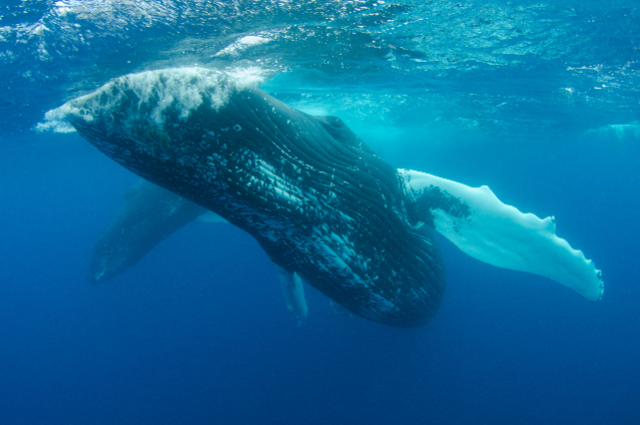
The blue whale is an animal that is difficult to conceive in its full size. It can grow up to more than 100 feet long. The largest specimens of the blue whale can weigh hundreds of thousands of pounds. Just consider its heart, which is very large and weighs up to 400 pounds, as stated by NOAA Fisheries. This whale is not only the largest living creature, but it is also the largest creature that has ever lived on Earth. However, the most interesting feature of the blue whale is not its enormous size. The most interesting part is the ability of the whales to influence the microscopic world under the ocean surface.
The main elements in this process include phytoplankton. These are tiny organisms that float at the surface layer of the oceans where there is enough sunlight energy for photosynthesis. These organisms are not visible to the human eye, but the accumulation of such organisms forms the most important biological chain on Earth. During the process of photosynthesis, phytoplankton consume CO2 and produce oxygen. It has been found that oceans account for about 50 percent of the oxygen produced during photosynthesis. These phytoplankton also act as an energy source for other organisms, which form the energy source for fish, birds, and whales.
This makes for an interesting connection between the tiniest organisms in the ocean and the largest animals in the world. This is partially due to something called the “whale pump” by scientists.
Whales do not always feed in the ocean’s surface layer. Many species of baleen whales, like blue and fin whales, feed on the productive layers of the ocean and eat huge amounts of their prey. Another example is the blue whale, which feeds primarily on krill, and some of the largest blue whales feed thousands of tons of krill each day. Once the whale has fed, it swims to the surface to breathe. During this process, it excretes nutrients such as nitrogen, phosphorus, and iron.
These nutrients are needed since sunlight alone is not sufficient for the successful functioning of phytoplankton. Nutrients are known to limit productivity of the marine ecosystem in many locations within the open sea. For instance, iron is particularly important in areas like the Southern Ocean, which is rich in other nutrients, but lacks iron. Whales may serve the role of transporting certain necessary nutrients to the upper layers of water where they can be used by phytoplankton.
Iron content in whale faeces is exceptionally high in comparison with the surface water nearby. A systematic review of the scientific literature reveals that iron content in whale faeces is known to be as high as ten million times the content of iron in Southern Ocean surface waters. Whale iron is therefore considered a source of phytoplankton growth.
It creates a biological cycle that can easily be overlooked. The whale eats creatures containing the nutrients. It migrates within the water body and then deposits some of these nutrients close to the surface. Phytoplankton absorbs them and thrives. Marine creatures feed on phytoplankton, while other bigger animals eat them. In this regard, the whale will be able to affect the productivity in the marine environment not only through predation but also by helping in nutrient cycling.
Whales affect the carbon cycle in the ocean in yet another manner. Phytoplankton absorb carbon dioxide as it grows. Some of the organic compounds produced will be transferred into deep water through the biological carbon pump mechanism. A portion of this carbon will remain isolated from the atmosphere for long periods of time. Since the whales have the potential to increase phytoplankton production through nutrient cycling, researchers have therefore looked into whether whale population recovery would lead to increased carbon export from the surface.
There is scientific basis for parts of this theory, but there is much more to the story than what media headlines would have you believe. The latest 2023 analysis on the science of whales and carbon suggests that the presence of whales might help in carbon cycles in the ocean; however, the exact quantities of carbon that the whales store remain unknown, and the number might be insignificant in changing the course of climate change. The researchers emphasised not to promote the concept of whales as an alternative to reducing the emission of greenhouse gases.
The difference is significant. While the protection of whales can be viewed as proper ocean conservation, they cannot be promoted as an alternative to reducing fossil fuel emissions. What makes the whales valuable is not their contribution as carbon storage in isolation from the environment but as part of a connected ecosystem.
There is yet another aspect of the issue of the role of whales for the ecosystem, which is connected to how the deaths of whales may affect the environment. The bodies of large whales, once dead, will fall to the bottom of the sea and be called whale falls. Instead of being decomposed without affecting the environment further, these bodies are likely to be the origin of a whole new ecosystem. Various bacteria and scavengers will make use of the remains, while the nutrients will be used by different organisms as well. It is worth noting that the falling of whale biomass may also contribute to the movement of carbon from the surface layer to the depths. Nevertheless, scientists highlight the fact that not all of this carbon will remain isolated forever, so the contribution to the climate should not be exaggerated.
Taking into account the history of whales, one can notice the additional ecological significance of these mammals. Commercial whaling resulted in the elimination of millions of whales worldwide. Particularly, blue whales suffered greatly, so there are only around ten percent left now, according to NOAA.
Several studies conducted in recent years prove that the consequences of the depletion of these marine mammals' population can extend beyond their natural environment. As was stated in the Nature Communications article of 2025, migration of baleen whales allows for transferring nutrients from high to low latitudes in order to breed. The scientists have calculated that the amount of nutrients transported by some whale species before commercial whaling was much bigger. Consequently, the decline in whale populations contributed to the disruption of connections between nutrient flows in different oceanic regions.
While it should be recognised that recovery of whale populations in certain regions, thanks to a decreased number of commercial whaling operations and international measures of protection of these animals, does exist, it is crucial to understand that the problems remain. Blue whales face ship strikes, entanglement in fishing gear and various other anthropogenic disturbances. Furthermore, climate change adds another uncertainty factor to the ecosystem of whales.
In addition, the blue whale stands for more than just a conservation icon. The example of this creature shows how closely connected the ocean is as an ecosystem. A microorganism affects the global carbon cycle, a whale distributes nutrients across the ocean, and a change in the number of giant creatures can have an effect on organisms living many meters underwater.
The main thing to understand from all this is that whales will not save the planet from climate change by themselves. They won't. But the main thing is that ecosystems are capable of performing many natural processes that people don't even begin to understand yet. Whales are part of those processes.
Whales were hunted and killed for their large bodies and resources for many years. Today, thanks to science, we know about the significance of whales for another reason. The blue whale is one of the components of the system of the nutrient cycle, food chain, and carbon cycle, the mechanism that ties micro-organisms of the ocean with the entire planet.
Conservation of the blue whale, therefore, means something more than just protection of an exotic creature from extinction. It means maintenance of a complex marine ecosystem working in a regular way with all of its elements being present. It is one of the most important lessons that can be learned from the blue whale in the depths of the oceans.
References:
- https://www.fisheries.noaa.gov/species/blue-whale?page=1
- https://www.fisheries.noaa.gov
- https://www.frontiersin.org
- https://www.frontiersin.org
- https://www.nature.com/articles/s41467-025-56123-2
- https://www.frontiersin.org