
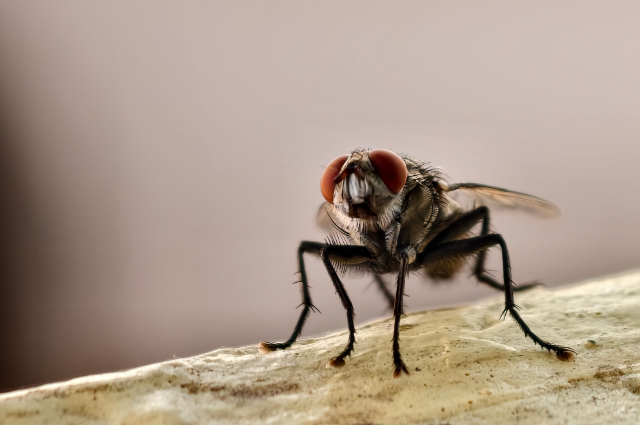
Imagine a tiny fly laying eggs on a small open wound on goat and this small act can cause that goat death. It may look strange, but it’s reality. It’s the goat's disease, which scientists thought North America had defeated decades ago,o but now they are back.
I am talking about New World Screwworm (NWS). Yeah, NWS known as Cochliomyia Hominiorax is a destructive parasitic insect that has historically wreaked havoc on cattle, sheep, and other warm-blooded animals across the Western Hemisphere. Unlike typical flies that feed on decaying matter, the female NWS is attracted to fresh wounds. Female flies can lay a lot of eggs in wounds or natural openings of animals that are warm blooded. These eggs will hatch into larvae in one to two days. The larvae have hooks in their mouths that they use to dig deeper into the healthy tissue of the animal. This can cause a lot of pain. The wound can get bigger. If we do not treat the wound, it can get infected. This can be very bad for the animal.
After one week, the larvae will fall to the ground,d and then they will turn into adult flies. Female flies do this too. In the year 20,26 there were cases of female flies in Mexico, and they were also found in southern Texas. This is a concern for people who take care of animals and for people who are worried about wildlife and public health. Female flies are a problem for livestock and female flies are a problem for wildlife and, for people too.
The New World screwworm starts to cause trouble when a grown up female fly smells blood or other body fluids from a cut, surgery, a bite from a tick, or even openings on newborn animals like the nose or belly button. The female New World screwworm lays a lot of eggs,s 100 to 300, near the edge of the wound. One female New World screwworm can lay eggs many times during her life.
After 12 to 24 hours the eggs turn into larvae which're like little worms. These New World screwworm larvae a, which areent from maggots because they eat healthy flesh, not just dead tissue. They use hooks in their mouth to dig into the flesh. As they eat, they make the wound bigger. Create painful sores that smell bad. This smell attracts female New World screwworm flies, which can lead to more infestations if not treated.
As the wound gets bigger, animals feel a lot of pain;n their wound swells. Smells very bad. Animals that are infected often get upset, do not want to eat, stay away from the rest of the animals and lose weight. They also produce milk. If the infestation is very bad, it can expose the muscles and other tissues inside the animal,l making them prone to getting infections.
If the New World screwworm infestation is not treated quickly, the damage to the tissues, blood loss, and infection can be so severe that it can lead to shock or even death in young, weak or heavily infested animals. The New World screwworm can spread quickly through groups of animals so veterinarians think it is very important to find the problem early,y treat it right away control the movement of animals and keep a close eye on them to prevent outbreaks and protect the livestock in areas where the New World screwworm is found.
There are many livestock animals that are in danger right now. It’s rare, but humans can also get infected by it if we don’t take action. The animals which are at risk include Horses, sheep, Goats, Cattle, Deer, Dogs, Cats and even Wildlife. It’s really essential for us until the PCATS solution arrives;e, we should do proper care of our animals. Don’t let them get hurt; if they do. Treat their wound immediately. Don’t let the wound open. Disinfect it properly. And before the condition gets worse, provide proper treatment. It’s because this is a deadly infection with worse pain. Don’t let your animals pass through it.
The fight against the New World screwworm is one of the wins in controlling animal diseases. In the 1950s, scientists created a method called the Sterile Insect Technique (SIT). They bred millions of male screwworm flies in places, made them unable to produce babies with radiation,n and set them free. Female screwworm flies mate once, so when they mated with sterile males,les they had no babies. As sterile males outnumbered wild males, the wild screwworm population kept dropping. This approach worked well because it only targeted screwworms, not other insects and did not rely heavily on pesticides. The parasite was wiped out in the United States, Mexico and much of Central America after years of releases and close monitoring. A barrier was set up in Panama to stop it from spreading north. However, new outbreaks in Central America and Mexico since 2024 have threatened that success. The United States, Mexico, Panama, the Food and Agriculture Organisation (FAO) and the International Atomic Energy Agency (IAEA) are now working together. They are increasing surveillance controlling animal movements and making sterile flies to stop the parasite before it gets a foothold in North America again. The goal is to protect against screwworms and keep the progress made so far. Screwworms are a concern, and these efforts aim to keep them under control.
After years of keeping it under control,l the New World screwworm is back due to more outbreaks in Central America and southern Mexico. This means it could spread northwards. In 2025 and 20,26 authorities in the U.S. found some human cases linked to travel. No local spread was reported. The barrier that has kept it eradicated for long is harder to maintain because animals are moved across borders, wild animals migrate and we need to keep releasing sterile flies and watching for the parasite. These challenges have led to international efforts to stop the parasite from getting re-established in North America and to keep the New World screwworm from spreading. The goal is to prevent the New World screwworm from becoming a problem in North America.
The New World screwworm is a problem. It causes a lot of trouble for farmers because it kills their livestock. When this happens, the animals do not gain weight as they should. The New World screwworm also makes it harder for the animals to have babies. Farmers have to pay a lot of money to take care of their animals. They need to pay for doctors to look at the animals, give them medicine,e and take care of their wounds. They also have to pay to prevent the New World screwworm from happening in the place.
When there are not many healthy cattle, le there is less beef and dairy. This causes problems for people who need these things to eat. It also costs money to make these things. To stop the New World screwworm from spreading, some countries will not let people bring livestock into their country from places that have the problem.
For example, the New World screwworm was a problem in Mexico in 2025 and 2026. Because of this the United States would not let people bring cattle, horses, and bison into their country from the places in Mexico that had the New World screwworm. This shows how much trouble the New World screwworm can cause. The New World screwworm has an impact on the economy.
Scientists think that warmer temperatures and changing weather could help the New World screwworm survive in areas. As tropical and subtropical regions get warmer, the parasite might move into areas and stay active for longer periods each year. This means it could breed for longer. However, researchers say that climate change is one of the factors. Theparasite'ss recent spread is also linked to the movement of livestock and wildlife and gaps in surveillance and control programs.
To stop the parasite from spreading, ng veterinary authorities are using the same strategy that worked decades ago. They are. Releasing millions of sterile male flies to reduce reproduction in wild populations. Governments are also monitoring livestock, wildlife and suspected cases closely. Quarantines and restrictions on animal movement are in place in areas. Border inspections are helping to prevent animals from entering areas that are disease-free. Farmers and ranchers are being trained to spot signs of infestation report suspected cases quickly and treat wounds before flies can lay eggs.
The return of the New World screwworm shows that disease eradication is not permanent. We need to keep monitoring working together across countries coming up with scientific solutions,utions and responding quickly to protect livestock. This will help keep our food secure and prevent the parasite from becoming a problem across North America.
References:
- https://www.cdc.gov/new-world-screwworm/about/index.html
- https://agrilifeextension.tamu.edu/
- https://www.cdc.gov
- https://www.aphis.usda.gov
- https://www.aphis.usda.gov
- https://www.aphis.usda.gov
- https://www.fao.org
- https://www.reuters.com
- https://pin.it/1Y28aVvTB
- https://pin.it/7k9N4mchH