
Part 1: The Shattered Baseline of Civilisation
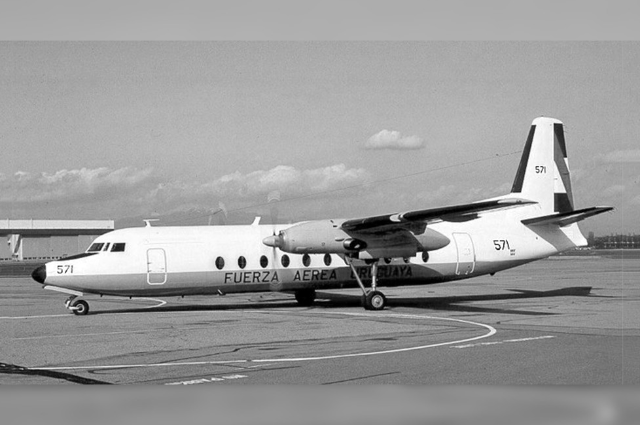
On October 12, 1972, Uruguayan Air Force Flight 571—a chartered twin-turboprop Fairchild FH-227D carrying the Old Christians Club rugby team, along with their friends, family, and 5 crew members—departed from Montevideo, Uruguay, bound for Santiago, Chile. Severe alpine weather forced an overnight delay in Mendoza, Argentina. The following afternoon, October 13, 1972, the flight resumed. Blinded by dense cloud cover, the pilot fatally miscalculated the flight time, misjudging their position over the mountains. Believing they had cleared the Andes, the aircraft descended directly into a mountain ridge. The impact severed the tail cone and right wing instantly, causing the remaining fuselage to slide down a remote glacier at 11,800 feet.
Of the 45 souls on board, only 33 survived the initial crash, stranded in a high-altitude wasteland where temperatures routinely plunged to minus 30 degrees Celsius. Within seconds, the social fabric of modern civilisation dissolved. Money, social standing, and standard legal systems were utterly useless. Survival was reduced to a brutal thermodynamic equation: calories expended versus heat conserved. While media history celebrates individual grit, the true mechanics of this ordeal lie in group structure. To survive 72 days in an absolute vacuum of resources required the immediate, organic construction of a new micro-society. The survivors had to systematically redesign human organisation, allocate critical duties based on psychological resilience, and navigate a monumental moral pivot.
Part 2: The Adaptive Machine and the Radio Verdict
Faced with severe injuries and a complete lack of winter gear, the group engineered an efficient, meritocratic hierarchy based entirely on immediate utility. The rugby team’s captain initially managed morale and distributed the sparse rations of chocolate and wine. However, the group soon reorganised into highly specialised, interdependent task forces:
- The Medical Unit: Medical students took absolute charge of treating complex fractures, head trauma, and infections using improvised tools and salvaged materials.
- The Hydrology Unit: To prevent fatal dehydration, a team built solar water collectors out of thin aluminium sheets stripped from the aircraft seats, melting snow drop-by-drop into empty wine bottles.
- The Expeditionary Force: The physically strongest survivors were shielded from heavy labour, given extra food, and permitted to sleep in the warmest sections of the cabin. Their singular mandate was to acclimate to the altitude and find an escape route.
On October 23, 1972—their eleventh day of survival—the survivors managed to locate a working, battery-powered transistor radio inside the debris. Gathered in absolute silence inside the dark hull, they listened to a live news broadcast announcing that the search operations had been officially terminated. The rescue teams believed no one could survive the freezing conditions and planned to look for bodies in the spring. Hearing their own deaths broadcast hit the group with devastating psychological weight. Yet, it also brought absolute clarity: no external help was coming. They were entirely on their own.
Part 3: The Ultimate Ethical Pivot
By late October, the meagre luggage rations were completely gone. Starvation was imminent, and the extreme cold accelerated their muscle wasting. The only available organic matter for miles was the bodies of their deceased companions, naturally preserved by the alpine frost. Facing this stark reality forced what sociologists call an ultimate ethical pivot. To survive, the group had to actively dismantle humanity's deepest cultural taboo. This transition was achieved through painful, highly structured democratic debate inside the fuselage.
- The Social Contract of the Mountain: The survivors gathered to forge a profound pact of mutual sacrifice. A collective consensus emerged: every individual gave the others explicit permission to use their body for sustenance if they were to pass away, transforming a horrifying necessity into a sacred duty of mutual protection.
This agreement shifted the psychological burden from individual guilt to a shared, collective responsibility. It protected their sanity by framing the act as a form of communal endurance. On October 29, 1972, their resilience was tested further when a massive avalanche struck the fuselage in the dead of night, burying the survivors completely in snow for three days and claiming eight more lives. Even as their shelter was filled with snow, the surviving core maintained their organisational structure, systematically digging out breathing holes and continuing their pact of survival.
Part 4: The Communication Attempt and the Final Trek
In mid-November, an expeditionary team managed to trek down the mountain slope to locate the severed tail section of the aircraft. Inside, they discovered a wealth of luggage, dry clothing, and the aircraft’s main radio transmitter system, along with its heavy 12-volt batteries.
An ingenious technical effort followed. Roy Harley, a survivor with basic electronics knowledge, spent days attempting to wire the heavy aircraft batteries to the radio transmitter. He worked to build an improvised circuit capable of converting the direct current (DC) power from the batteries to meet the alternating current (AC) requirements of the communications console. Ultimately, the effort failed because the transmitter required a cockpit antenna system that had been destroyed in the initial crash. This final technical setback left them with only one option: a physical escape on foot.
On December 12, 1972, Nando Parrado, Roberto Canessa, and Antonio Vizintín set out to climb the massive 15,000-foot glacier wall directly to the west without maps or gear. Upon scaling the peak and realising the immense distance ahead, Vizintín surrendered his food rations and made a treacherous slide back to the fuselage so Parrado and Canessa could push forward with more resources. Parrado brought an unyielding physical drive, while Canessa possessed the analytical medical mindset to budget their energy. They trekked through the rugged mountains for ten days until they encountered a Chilean cattle herder along a rushing river.
On December 22 and December 23, 1972, rescue helicopters finally reached the glacier. The search teams discovered a highly disciplined, functioning micro-society that had successfully kept 16 people alive for 72 days against absolute zero odds. Flight 571 stands as a powerful testament to human organisation, proving that when civilisation is stripped away, our deepest asset is our instinct to cooperate, sacrifice, and endure as a collective whole.