
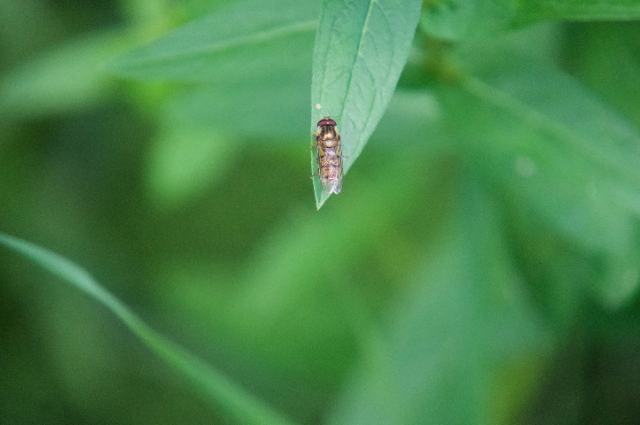
For many decades, the New World Screwworm turned out to be a problem of the past. The flesh-eating parasite was eliminated from the United States in 1966 and later eradicated from Mexico and most of Central America through one of the most successful pest-control campaigns in history. But now, the dangerous parasite is making a comeback, moving north through Central America and Mexico, nd it is raising concerns among health officials, veterinarians and cattle producers. The New World Screwworm is not a regular harmless worm. It is the larva of a metallic blue-green fly. What makes it particularly dangerous is its feeding habit. Unlike most fly larvae, which feed on dead or decaying tissue, Screwworm eats and survives on living flesh. They reside in open wounds and consume healthy tissue, causing severe pain and extensive damage.
The parasite primarily affects warm-blooded animals, including cattle, sheep, deer, dogs and even humans. Infestation begins when an adult female fly lays eggs in an open wound or natural body opening such as the nose or ears. Once the eggs hatch, the larvae forcibly feed on the host’s flesh. After a week, the larvae drop to the ground, emerge into the soil, and eventually turn into adult flies, restarting the cycle. A single female fly can lay up to 300 eggs at a time and 3000 eggs during her lifetime. If not treated on time, these parasites can be deadly. Animals often suffer severe wounds, infections and sometimes death within days.
The United States has dealt with this parasite before. Screwworm was first reported in the southwestern states in 1842 and created a major issue for cattle ranchers by the early twentieth century. Millions of dollars were lost each year as livestock were infected and died. The breaking point emerged in the mid-twentieth century when scientists came up with an innovative approach called the Sterile-Fly Technique. Scientists discovered that female screwworm flies mate only once in their lives. Researchers then sterilised male flies using radiation and set them free into the wild. When female flies mated with these sterile males, they laid eggs that would never hatch. This process helped in collapsing the population of these parasites.
Later, an early experiment on the Caribbean Island of Curacao eliminated the parasites in just seven weeks. A large-scale release of sterile male flies across the United States, Mexico, Central America and the Caribbean eventually led to the eradication of the screwworms in North America. However, eradication doesn’t mean extinction. The parasites still exist in parts of South America, and they can return if the surveillance weakens and the environment becomes favourable.
Unfortunately, it has happened in recent years. Panama and Costa Rica began reporting significant cases in 2023. In late 2024, Mexico detected cases in its southern state of Chiapas. In June this year, the U.S. Department of Agriculture confirmed a case in Texas. As of late June, at least 27 animal cases had been reported, indicating that the parasite may already have established a population rather than representing isolated incidents. Researchers believe several factors might have caused its return. One possibility is illegal cattle smuggling, which allows livestock to cross borders without proper health inspections. Another would be improper maintenance of the sterile-fly program and, most importantly, climate change. Warmer temperatures are rising in these tropical regions where these parasites can survive. Areas which were too cold for the screwworms to survive are now suitable enough for their survival and reproduction. Climate change becomes an important factor because it is changing the areas atmospherically for the parasite to survive. As the temperatures rise, parasites, insects, and disease-carrying organisms are gradually moving into new territories.
The return of the New World Screwworm is also a serious food-security issue. Cattle and Livestock Industries are highly vulnerable to these parasites. An outbreak can create significant animal losses, higher treatment costs, trade restrictions and disruptions in meat production. Reduced livestock could eventually affect consumers through higher meat prices and pressure on food supply chains. Governments have already begun to act on the return of the New World Screwworm. The United States has increased surveillance and expanded sterile-fly production. A facility in Panama currently produces and releases approximately 100 million sterile flies a week. New production facilities have been organised in Mexico and Texas to strengthen control efforts. Health authorities are also monitoring animals closely, setting traps and using sentinel animals to identify new cases early. Additional funding has also begun for improving early warning systems and developing better treatments for infected animals. The risk to humans is relatively low, but it is not nonexistent. People can be infected if the flies lay eggs in an open wound. Health administrators’ advice to keep all cuts and wounds clean and covered, using insect repellent and seeking immediate medical attention if unusual symptoms appear. Pet owners are also being warned to check their animals regularly for wounds, behavioural changes, foul odours,s or signs of larvae.
The return of the New World Screwworm is a reminder that victories against diseases are not permanent. Decades of eradication created a sense of security, not a cure. It also highlights how human health, animal health and environmental conditions are deeply interconnected. As climate change emerges day by day, diseases that seemed to be controlled re-emerge after decades. It is a warning that public health needs constant care, awareness and global cooperation. In an increasingly warming world, even parasites that survived in tropical lands may find their way to cooler grounds.
References:
- https://publichealth.jhu.edu
- https://apnews.com/article
- https://www.bbc.com/news/articles/c936r25grrlo
- https://edition.cnn.com
- https://www.cdc.gov/new-world-screwworm/about/index.html