
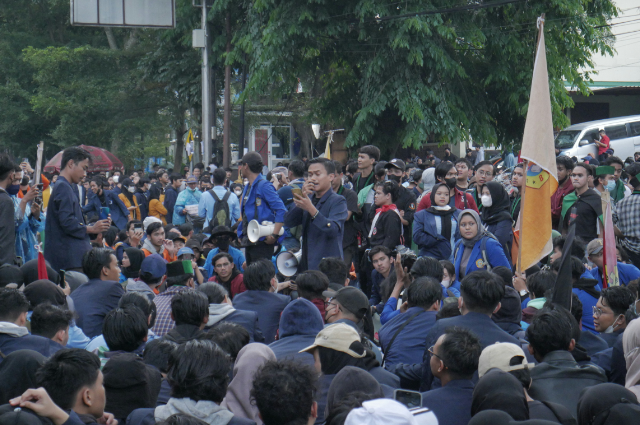
What first appeared as a violent attack on police soon looked very different through the videos recorded by the protesters and journalists on the ground. On 20th July, more than 10,000 students, parents and supporters from around the country gathered in New Delhi for the “Chalo Sansad” (March to Parliament) protest organised by Cockroach Janta Party (CJP). The march aimed to reach the parliament and demand education reforms along with the resignation of Union Education Minister Dharmendra Pradhan over repeated examination paper leaks. As the protesters moved from Jantar Mantar towards Parliament, Delhi police stopped them with multiple barricades, saying they were entering a high-security zone without permission. Within minutes, the situation turned tense. Police fired tear gas shells, carried out a lathi-charge and detained several protesters, including CJP founder Abhijeet Dipke. Official statements later said that force was used only after some protesters tried to break through barricades and damaged police vehicles.
However, videos shared by protesters, journalists and independent media presented a more vivid yet complicated picture. Several clips showed protesters marching peacefully with the Indian flag before the tear gas was fired. Others showed people running through smoke, people carrying injured protesters to safety, and police striking the protesters with batons as they tried to move away from the barricades. While some incidents of damage to the police vehicles were also recorded, many questioned whether the force used against the protesters was fair. These contrasting scenarios quickly sparked a nationwide debate; not only about the police response but also about how parts of the media reported the protest. These events of 20 July were a part of a bigger picture. This movement had been growing for weeks, led by the CJP. The youth’s frustration demands accountability and urgent reforms in India’s education system.
The Cockroach Janta Party is not a registered political party but a youth-led citizen movement founded in May 2026 by Abhijeet Dipke, a 30-year-old Political Communications Strategist and Master’s Graduate from Boston University. The idea of CJP was born after Chief Justice Surya Kant, during a Supreme Court hearing on fake educational degrees, used the word “cockroach” for the unemployed youth while criticising their attacks on institutions through social media and activism. Although the Chief Justice later clarified that his comment had been misunderstood and misinterpreted, but his remarks had spread and triggered anger among the youth who were already frustrated by unemployment and uncertainty about their future. In response, Dipke posted on X (formerly twitter) on 16 May, asking, “What if all the cockroaches came together?”. The post quickly gained attention and went viral amongst the youth of India. Within days, he launched the Cockroach Janta Party. Instead of treating the word “cockroach” as an insult, the supporters adopted the cockroach as a symbol of resistance and resilience. It represents young people who refuse to be ignored despite their repeated setbacks. The movement gained rapid support through social media, before becoming the face of the protest. While it initially highlighted issues such as unemployment, its focus soon shifted to education reforms after the NEET-UG paper leak. Led by Abhijit Dipke and spokesperson Saurav Das, their purpose for this movement vividly demands a transparent and accountable education system rather than a political organization seeking fame and power.
The NEET (National Eligibility Cum Entrance Test), conducted by the National Testing Agency (NTA), is India’s largest medical entrance exam, taken by nearly 20+ lakhs students annually. After reports of the paper leak, it exposed serious flaws in India’s examination system. Students’ years of preparation had been wasted, and the repeated irregularities of NTA and other recruitment exams, including leaks, delays and cancellation. The issue of NEET-UG paper leak became more serious when reports suggested that 20+ students had committed suicide. Neet aspirants, several students and parents blamed the exam pressure and repeated irregularities, calling it a systematic failure. The movement intensified when an Indian engineer, activist and education reformer Sonam Wangchuk began an indefinite hunger strike at Jantar Mantar. His protest inspired a few students present at Jantar Mantar and they began their hunger strike as well. After Wangchuk was forcibly hospitalized due to his declining health, public anger grew further. Soon after, the CJP announced the “Chalo Sansad” march on 20 July, urging students and supporters to gather at parliament for accountability and reforms.
Although the police crackdown disrupted the peaceful march “Chalo Sansad” on 20 July, it did not stop the movement. The Cockroach Janta Party has vowed to continue protesting until the government addresses its demands. CJP spokesperson Saurav Das said that the resignation of Union Education Minister Dharmendra Pradhan remains non-negotiable, along with Rs. 1 crore compensation for families of NEET paper leak-related suicides, all FIRs by the Central Government and NDA-ruled states will be withdrawn, and no action will be taken against anyone involved in these protests in the future. For most of the young people, this movement is no longer just about the NEET-UG 2026 paper leak. It has become a campaign for a transparent and trustworthy education system. Protesters argue that the repeated paper leaks, cancelled examinations and delays have shattered students’ confidence, while the reported deaths of students suggest the mental pressure and an urgent need for reform. At its core, the protest is about protecting the future of millions of students who deserve a fair chance to compete. CJP says it will keep fighting until meaningful reforms and accountability are achieved.
REFERENCES:
- “India's 'cockroach' protesters hold talks with government as stalemate continues” https://www.bbc.com
- “CJP protest: The youth movement India's Modi didn't see coming” https://www.bbc.com
- “Why are thousands protesting for education reform in India?” https://www.bbc.com
- “India's 'cockroach' protest continues a day after police crackdown” https://www.bbc.com
- “India has a new political superstar - a cockroach” https://www.bbc.com
- “The hunger-striking engineer demanding education reforms in India” https://www.bbc.com
- “Inside India’s Gen Z-led CJP movement: Why did Cockroach Janta Party protests turn violent in Delhi?” https://gulfnews.com
- “TV news showed the CJP protest live. Then it rewrote the story on primetime” https://theprint.in
- “CJP Protest in Delhi Live Updates | Demand for Dharmendra Pradhan's resignation is non-negotiable: CJP's Saurav Das after meeting with government” https://www.firstpost.com
- “CJP's protest stage dismantled after Parliament march; police vehicles damaged, teargas fired” https://www.telegraphindia.com