
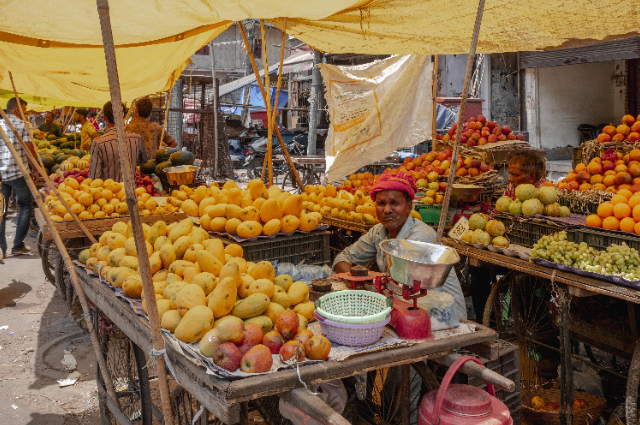
Harekala Hajabba’s life is the epitome of how a person who does not need money, power, or a high level of education to bring change to a community. For several years, he was known as a man who sold oranges at a bus stand in Mangaluru. He had never attended school and could not read or write. Yet, he became the reason why hundreds of children in his village got access to education. His journey from a fruit seller to a Padma Shri awardee is one of the most inspiring stories of determination in Karnataka. Hajabba was born on 17 October, 1956 in Harekala village in Dakshina Kannada district. He belonged to the Beary Muslim community, which has a strong presence in the coastal parts of Karnataka. His childhood was shaped by poverty, and education was not something his family could afford. He grew up speaking the languages of his community but never had the opportunity to sit in a classroom and learn how to read or write. In his younger days, he earned money by rolling beedis (a type of cigarette). His life changed again when a flood destroyed his home, forcing him to move towards Mangaluru in search of a better way to support his family.
He eventually started selling oranges near Mangaluru Central Bus Stand. This became his main source of income for many decades. Every day, he travelled from his village to the city, carrying the fruits and spending hours at the bus depot. His earnings were limited, and he had to take care of a family of five. For most people, such a struggling life would leave little time to think anything beyond survival. But for Hajabba, an ordinary day at the bus depot made him do an inspiring and extraordinary thing despite his financial condition and daily struggles. The moment that changed it all was when a foreign tourist approached his stall and asked him in English about the price of the oranges. Hajabba could not understand what the person was asking and was unable to reply. This incident made him feel embarrassed and made him ask himself a deep question: “Why wasn’t I able to communicate?” He realised his lack of education had limited opportunities his entire life. He also began to think about the children in his village, who had no proper schools nearby. He realised that if nothing changed, many children would face the same issues.
After that specific incident, Hajabba promised himself to build a school for the children of his village. The dream seemed unrealistic because he had very little money and no influential position. Still, he started saving money from whatever he earned from selling oranges. At the same time, he approached government officials and local leaders for assistance. The process was slow and getting support wasn’t easy. There were people who did not believe in him and quSome people dideducated fruit seller could achieve this goal?”. Even at home, his family was concerned because he had limited income. Spending money on building a school seemed difficult when necessities were a struggle. Hajabba continued with his efforts despite these difficulties. His persistence eventually brought support from people in public life and organisations that were willing to help him. In 2000, the school project began, with classes initially being held at a mosque. Hajabba had also contributed land for the purpose of building the school. Proper construction of the school happened later, and education gradually started to expand from the primary level to higher levels. Hajabba’s determination helped children who had to travel far away from their village for education choose to study closer to their homes. The school’s growth became a symbol of Hajabba’s efforts. Over time, the school expanded up to Class 10 and began serving 175 students. Gradually, he started receiving recognition for his contribution.
In 2009, he was honoured with the CNN-IBN Real Heroes Award, which included prize money. Instead of using the prize money to improve his personal lifestyle, he bought another piece of land beside the school to convert it into a playground for the children. This decision truly reflected his goals for his village’s children to excel academically and have everything he could not receive as a child. Years later, he received the Karnataka government’s Rajyostava Prashasti and was featured in the media. His story was even included in the syllabus of Mangaluru University. The man who could not receive formal education in his life was now being studied at a university. Later, he was recognised nationally when he received the Padma Shri. His contribution to social work and education was honoured in 2021 with the Padma Shri. Despite receiving such an honourable prize and being recognised by the whole nation, his focus solely remained towards the development of the school. It was never about fame to him; it was always for the education of the children in his village. He became popularly known as “Akshara Santa”, or the “Saint of Letters”, a title that carries a special meaning because he himself had never learned to read.
Hajabba remained the same simple and ordinary man, and continued selling oranges. His journey did not start with big plans or an immense amount of money but a newfound realisation of the value of education. His thought slowly but eventually changed so many lives. The school he built is a symbol of hope and opportunity. It shows how determination and constant efforts can help in creating a better future for the children who did not have proper access to education. This story is not about Hajabba being recognised by the nation or the awards he has received but about a man who was financially challenged yet built a school for the children of his village, for their future; which he had never received as a child.
References:
- https://thelogicalindian.com
- https://thebetterindia.com
- https://indianblog.co.in/harekala-hajabba-biography/
- https://en.wikipedia.org/wiki/Harekala_Hajabba
- https://mangalorediary.in